Florida's Business Purpose Only License lets you drive to work during DUI suspension, but DHSMV won't issue it until you enroll in DUI school and file FR-44 insurance. Here's how the application path works and what IID installation means for your timeline.
What DHSMV Calls the Work-Hardship License and What Business Purposes Actually Covers
Florida's work-hardship program is called a Business Purpose Only License, abbreviated BPO. The term "business purposes" is broader than employment-only driving. Florida Statutes § 322.271 authorizes BPO licenses for driving to and from work, for your employer's business purposes during work hours, to school or college classes, to church, and to medical appointments. This is significantly more permissive than many states' employment-only programs.
The restriction is not on hours. It is on trip purpose. You can drive during any time of day as long as the trip fits an approved category. Personal errands do not qualify. Grocery shopping, visiting friends, and recreational trips violate the restriction even if they occur during daylight hours.
If your job requires driving during work hours—deliveries, site visits, client meetings—the BPO covers that driving as long as it is for your employer's business. If you are self-employed, DHSMV treats trips required to perform your business operations as qualifying purposes. Gig work and commission-based roles qualify if you can document that driving is essential to earning income in that role.
The 30-Day Hard Suspension Period Before BPO Eligibility Opens
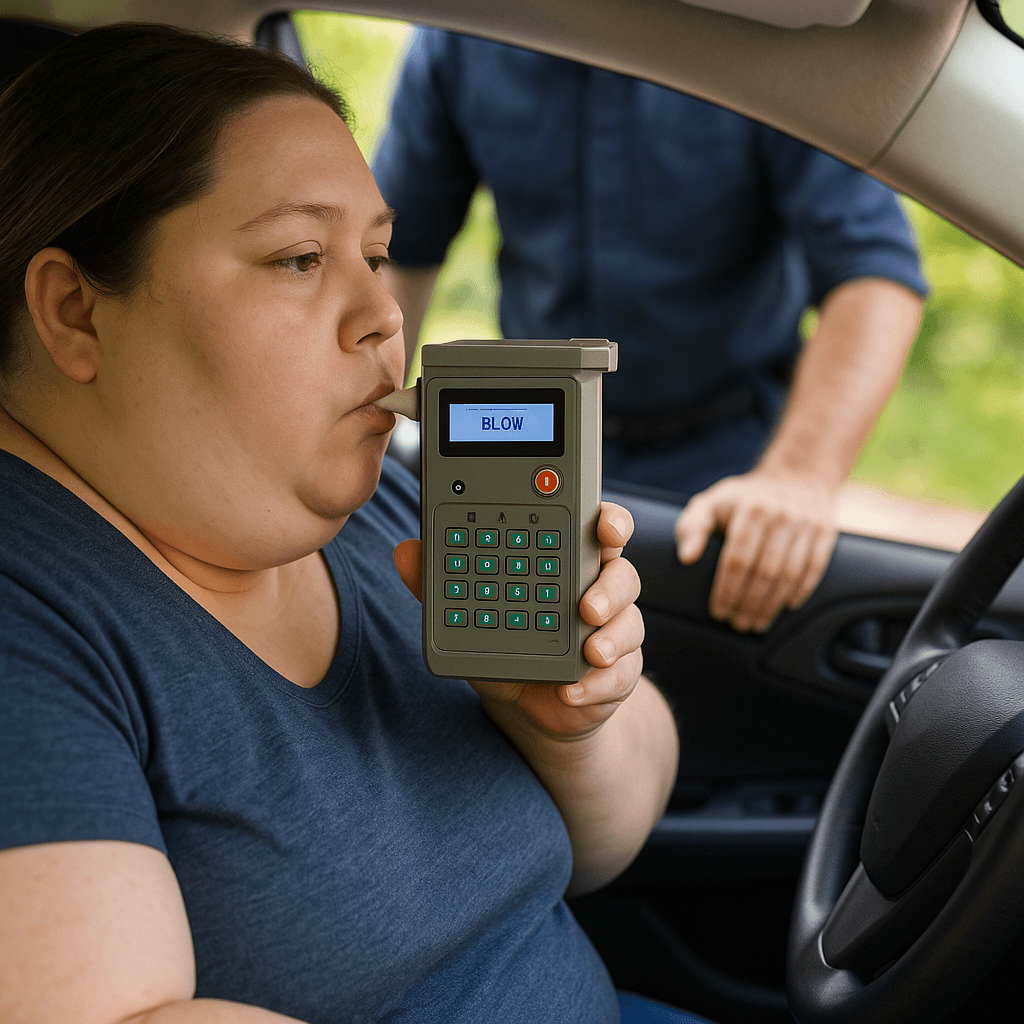
Florida imposes a 30-day hard suspension for first-offense DUI administrative suspensions when your BAC was 0.08% or higher. Hard suspension means no driving at all—not to work, not for emergencies, not with a BPO. The 30-day clock starts from the date of arrest if you did not request a formal review hearing, or from the date of the hearing decision if you did.
If you refused the breath test, the hard suspension period is 90 days, not 30. Refusal suspensions carry longer hard periods under Florida Statutes § 322.2615(7). The BPO application cannot be approved until the hard period expires.
Second DUI offenses within five years carry a 90-day hard suspension. Second DUI offenses beyond five years revert to the 30-day hard period. The distinction matters because many applicants assume all DUI cases follow the same timeline. DHSMV calculates the hard period from the conviction date for judicial revocations, not the arrest date, which can shift eligibility by months if your court case took time to resolve.
Compare car insurance rates in your state
Get quotes from licensed carriers — no obligation, no spam, results in minutes.
Get Your Free Quote✓ No Obligation Required✓ Licensed Carriers Only✓ Available Nationwide✓ Free to Compare
DUI School Enrollment Is a Prerequisite to BPO Application, Not a Parallel Track
DHSMV will not approve a BPO application for a DUI-related suspension until you enroll in a state-approved DUI program and submit proof of enrollment. Enrollment is distinct from completion. You do not need to finish the full program before applying for the BPO, but you must be actively enrolled and provide a confirmation letter from the DUI school.
Most applicants lose two to four weeks waiting for school enrollment slots and confirmation letters. DUI schools in Florida are licensed by the Department of Highway Safety and Motor Vehicles under Florida Administrative Code Rule 15A-10. Not every substance abuse program qualifies. Verify the program is DHSMV-approved before enrolling, because enrollment in a non-approved program will not satisfy the BPO requirement.
The court may also order DUI education as part of sentencing. That court-ordered program and the DHSMV DUI school requirement are separate. DHSMV does not accept court-ordered treatment programs as substitutes for state-approved DUI school enrollment unless the court-ordered program is also DHSMV-licensed. Most drivers need to satisfy both the court and DHSMV separately.
FR-44 Filing Setup: Higher Liability Limits and the Three-Year Maintenance Period
Florida is one of only two states that require FR-44 certificates rather than SR-22 for DUI-related financial responsibility filings. The FR-44 mandates substantially higher liability coverage: $100,000 per person bodily injury, $300,000 per incident bodily injury, and $50,000 property damage. This is written as 100/300/50. Florida's standard minimum liability is 10/20/10 for PIP and property damage, meaning the FR-44 multiplies your required bodily injury coverage by ten.
The FR-44 filing must remain active for three years from the date DHSMV reinstates your license, not from the date of conviction or the date you obtain the BPO. If you let the FR-44 lapse at any point during those three years, DHSMV suspends your license again automatically. The suspension for FR-44 lapse carries its own reinstatement fee and hard period.
Not all carriers write FR-44 policies. In Florida, employment-hardship SR-22 insurance specialists like GEICO, Progressive, State Farm, Acceptance, Bristol West, Dairyland, Infinity, and The General all confirm FR-44 capability on their Florida pages. Farmers, Liberty Mutual, and Travelers do not confirm FR-44 availability through their online quote systems. Monthly premiums for FR-44 coverage typically range from $190 to $340 per month for drivers with one DUI and clean records otherwise. Estimates based on available industry data; individual rates vary by age, county, vehicle, and prior claims history.
Ignition Interlock Device Installation and the Timeline It Adds to Your Application
Florida requires ignition interlock devices (IID) for most DUI suspensions during the BPO period. First-offense DUI convictions with a BAC of 0.15% or higher mandate IID installation. All second DUI offenses require IID. Refusal suspensions also trigger IID requirements in most cases.
The IID must be installed by a DHSMV-approved vendor before DHSMV will issue the BPO. Installation appointments typically take one to two weeks to schedule after you contact the vendor. The device itself costs $70 to $150 to install, then $60 to $90 per month for monitoring and calibration. You pay these costs out of pocket; insurance does not cover IID expenses.
DHSMV will not process your BPO application until the IID vendor files confirmation of installation electronically with the state. Most vendors file within 24 hours of installation, but processing delays of three to five business days are common. If your job timeline is tight, schedule the IID installation as soon as the hard suspension period expires, not after you submit the BPO application. The installation confirmation is a blocking requirement.
The DHSMV Application Process: Fee, Documentation, and Employer Verification Letter
Florida's BPO application is filed directly with DHSMV, not through the court system. The application fee is $12. You submit the application in person at any DHSMV office or by mail to the Bureau of Administrative Reviews. Processing typically takes 7 to 10 business days after DHSMV receives all required documentation.
Required documentation includes: proof of DUI school enrollment (the confirmation letter from the school), FR-44 insurance certificate (filed by your carrier directly with DHSMV), proof of IID installation if applicable (filed by the vendor), and an employer verification letter. The employer letter must be on company letterhead, signed by a supervisor or HR representative, and state your job title, work address, scheduled work hours, and confirmation that driving is essential to your job duties.
Self-employed applicants submit a notarized affidavit stating their business name, business address, nature of work, and an explanation of why driving is necessary to perform that work. DHSMV does not require tax returns or business licenses at the application stage, but having those documents available strengthens the case if DHSMV requests additional proof during review.
What Happens If You Are Caught Driving Outside Approved Business Purposes
Driving outside the approved purposes listed on your BPO is a criminal violation under Florida law. If law enforcement stops you for any reason and determines your trip does not fit the business-purpose restriction, they will arrest you for driving while license suspended. That charge is a first-degree misdemeanor, punishable by up to one year in jail and a $1,000 fine.
DHSMV will also revoke the BPO immediately upon notification of the violation. Revocation of a hardship license during the underlying suspension period extends the full suspension term and eliminates BPO eligibility for the remainder of that term. Most drivers who lose their BPO mid-suspension cannot reapply until the original suspension expires and they go through full reinstatement.
The scope of "business purposes" is interpreted strictly. Stopping for gas on the way to work qualifies because it is incidental to an approved trip. Stopping for groceries on the way home from work does not, even if the detour adds only five minutes to your route. If your employer asks you to pick up office supplies on your way to work, that trip qualifies as employer business. If you pick up office supplies for your home, it does not.
CDL Holders and the BPO Restriction on Commercial Driving
If you hold a Commercial Driver's License, the BPO does not authorize you to operate commercial motor vehicles, even for your job. Federal law under 49 CFR 383.51 disqualifies CDL holders from operating CMVs for one year after a DUI conviction in any vehicle, personal or commercial. Florida's BPO restriction mirrors this: the license authorizes personal-vehicle driving for business purposes only.
If your job requires you to drive a semi-truck, delivery van over 26,001 pounds GVWR, or any vehicle requiring a CDL, the BPO will not cover that driving. Employers in those roles typically cannot retain drivers on BPO licenses due to liability and compliance concerns. You may be able to drive your personal vehicle to and from the worksite, but you cannot perform the driving portion of your job duties.
Some CDL holders assume they can apply for a separate hardship CDL. Florida does not issue hardship commercial licenses. The CDL disqualification is federal, not state-specific, and no state workaround exists during the disqualification period.