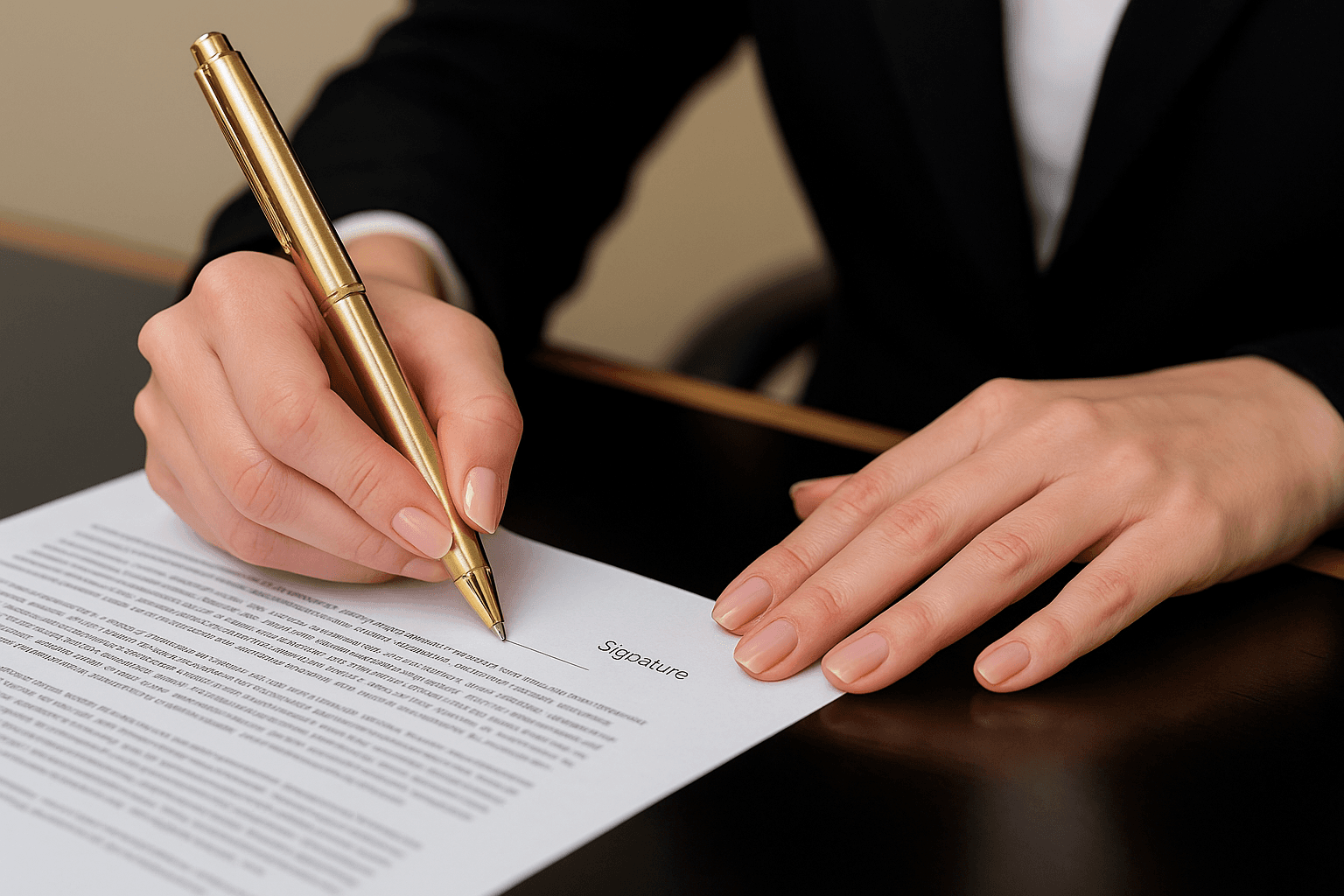
Your hardship application requires employer verification, but your employer refuses to sign. Most states don't require employer participation for employment-hardship licenses — you have other documentation routes.
Why Employers Refuse to Sign Hardship License Documentation
Your employer's refusal to sign hardship license verification isn't personal — it's liability management. Most companies fear that signing documentation for a restricted license creates responsibility if you're caught driving outside approved hours or routes. HR departments treat these requests as legal exposure, not employee support.
Some employers believe signing the letter makes them liable for your commute, even though state hardship programs place all driving restrictions and consequences on the license holder, not the employer. Others refuse because company policy prohibits participation in any employee legal proceedings, and they categorize hardship applications this way incorrectly.
A smaller subset refuses because they don't want a driver with a suspended license on their insurance. If your job requires you to drive a company vehicle, this concern is legitimate — most commercial auto policies exclude drivers with active suspensions. If your job doesn't involve driving company vehicles during work hours, the refusal is procedural risk aversion, not a substantive barrier.
What Documentation States Actually Require for Work-Purpose Hardship
Most states require proof of employment necessity, not employer participation. The distinction matters. You can prove you need to drive to work without your employer signing a verification letter.
Acceptable alternative documentation typically includes: recent pay stubs showing consistent employment, an offer letter or employment contract stating your work location and schedule, a W-2 from the previous year if you've worked at the same employer continuously, and a signed personal affidavit detailing your work address, hours, and commute route. Some states accept a business card, employee badge photocopy, or timecard printout as secondary corroboration.
The burden is demonstrating that driving to work is necessary and that your proposed restricted hours align with genuine work necessity. Judges and hearing officers care about the route, the hours, and whether approval creates public safety risk — not whether your employer participated in the paperwork. If you can prove the work requirement independently, employer cooperation becomes optional.
Check your state's hardship application instructions carefully. Many list employer verification letters as one option among several acceptable forms of proof, not a mandatory singular requirement.
Compare car insurance rates in your state
Get quotes from licensed carriers — no obligation, no spam, results in minutes.
Get Your Free Quote✓ No Obligation Required✓ Licensed Carriers Only✓ Available Nationwide✓ Free to Compare
How to Document Employment Without Employer Cooperation
Submit a personal affidavit as your primary documentation. In most states, a notarized affidavit stating your employer name, work address, work hours, job title, and commute route satisfies the employment verification requirement. Include a statement that your job does not provide remote work options and that loss of driving privileges will result in job loss.
Attach three months of consecutive pay stubs showing consistent employment at the stated location. Pay stubs prove ongoing employment and work schedule stability better than a single employer letter. If your employer uses direct deposit and you can't access physical stubs, download bank deposit records showing employer name and regular paydays, then attach a bank statement.
Include a printout of your work location's address and operating hours from the company website or Google Maps. Hearing officers verify that the route you're requesting matches a real commute to a real business operating during the hours you claim. A business operating 9 a.m. to 5 p.m. won't support a hardship request for 6 a.m. to 11 p.m. driving privileges.
If your state requires employer participation specifically and won't accept alternatives, request that your employer provide a letter on company letterhead confirming only your job title, work location, and work hours — without any language about hardship licenses, driving, or legal proceedings. Frame it as employment verification for a government application, not as participation in your license case. Most employers will sign a neutral employment confirmation even when they refuse hardship-specific letters.
What Happens If You Can't Prove Work Necessity
Hardship applications fail most often because applicants can't document that driving is actually necessary for employment. Stating you need to drive to work isn't sufficient — you must prove no reasonable alternative exists.
If public transportation, rideshare, carpool, or remote work options are available, your hardship petition will be denied in most states. Judges evaluate whether the hardship you're claiming is genuine or whether it's convenience-based. A 20-minute bus commute that requires one transfer typically disqualifies you. A 90-minute multi-transfer route starting before bus service begins may qualify.
Documenting the absence of alternatives requires specificity. Print the public transit route map for your commute showing no service during your work hours, or showing a multi-hour trip for a 15-mile commute. Include screenshots of rideshare cost estimates if the monthly cost exceeds your take-home pay. If your work hours are nonstandard (overnight shifts, early morning, late evening), document that transit doesn't operate during those windows.
Some applicants assume they can claim work necessity because they've always driven. That's not the legal standard. The standard is whether losing your license creates an undue employment hardship that outweighs the public safety risk of allowing you to drive under restriction. If alternatives exist, the state's interest in keeping suspended drivers off the road wins.
When Employer Refusal Actually Blocks Your Application
A small number of states require employer participation by statute, not just as preferred documentation. If your state's hardship statute specifically mandates an employer-signed verification letter and provides no alternative documentation pathway, employer refusal is a blocking condition.
In these jurisdictions, your options narrow to three: negotiate with your employer using a template letter that limits their stated involvement to neutral facts, seek legal representation to petition the court for a waiver of the employer-signature requirement, or explore whether your state offers a different restricted license category that doesn't require employer involvement.
Some states offer medical-necessity hardship licenses, education-necessity licenses, or family-care hardship licenses with different documentation requirements. If your state's work-hardship path is blocked by employer refusal, check whether you qualify under a different hardship category. A parent driving children to daycare before work might qualify under family-necessity rules that don't require employer participation.
If no alternative category applies and your state won't waive the employer-signature requirement, you're facing a choice: find new employment that will cooperate with hardship documentation, or arrange non-driving transportation until your full reinstatement eligibility date arrives. The second option is often shorter than applicants assume — many first-offense suspensions allow full reinstatement after 30 to 90 days, while hardship applications take 15 to 45 days to process and approve.
How This Affects Your SR-22 Filing and Insurance Setup
Employer refusal to sign hardship documentation doesn't change your SR-22 filing obligation if your suspension trigger requires it. SR-22 is a state-mandated proof-of-insurance filing, not a license type. You need SR-22 coverage in place before your hardship hearing, whether your employer cooperates or not.
If you don't currently own a vehicle, non-owner SR-22 for commuters covers your state's liability minimum while you're driving under hardship restriction. If you own a vehicle, you'll need a standard auto policy with SR-22 endorsement that meets your state's filing requirement.
Some applicants delay SR-22 setup until after hardship approval, assuming they'll only need coverage if the license is granted. That's backward. Most states require proof of insurance as part of the hardship application packet — you can't get approved without showing active SR-22 coverage already on file. Expect monthly premiums between $85 and $160 for non-owner SR-22, or $140 to $280 for owned-vehicle SR-22 if your suspension involved a high-risk trigger like DUI or uninsured driving.
Employer refusal doesn't reduce your insurance obligation, but it may limit your approved driving hours if you're forced to use alternative documentation. Narrower approved hours sometimes result in lower risk assessment by carriers, though the SR-22 filing requirement itself is the dominant premium factor.