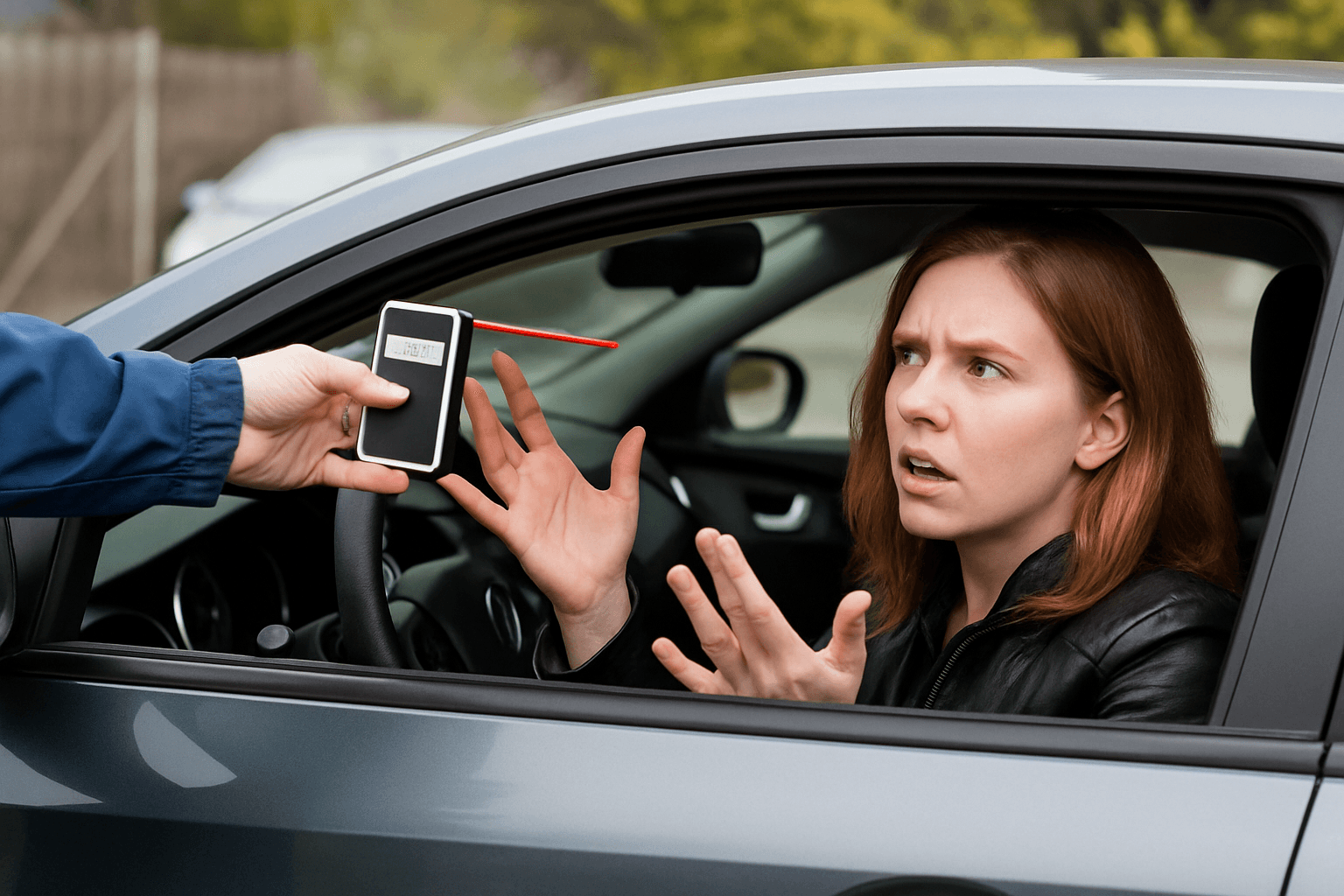
Reckless driving suspensions typically require proof of employment need and IID installation before work-permit approval. Most states close the work-hardship pathway during the mandatory hard-suspension period, which varies by jurisdiction and prior record.
When Work-Permit Eligibility Opens After Reckless Driving Suspension
Reckless driving suspensions typically impose a hard-suspension period during which no restricted driving is permitted. The length varies by state and prior record: first-offense reckless in Virginia carries a mandatory 10-day hard suspension before work-permit eligibility opens, while California suspends for 30 days with no early hardship pathway for reckless combined with DUI.
The eligibility clock starts from the effective suspension date shown on your DMV notice, not the conviction date or the date you received the court order. Missing this distinction costs days. If your suspension became effective on a Monday and your state imposes a 15-day hard period, your earliest application date is the third Tuesday.
Some states close the work-hardship pathway entirely for reckless driving combined with specific aggravating factors. Pennsylvania denies occupational licenses to drivers suspended for reckless with injury. Washington State closes restricted-license eligibility to reckless drivers with prior DUI within seven years. Read your suspension notice for the specific administrative code cited—this tells you whether work-hardship is legally available at all.
The IID Installation Requirement and Pre-Approval Dependency
Most states with work-permit programs require ignition interlock device installation before issuing the restricted license for reckless driving suspensions. The stated rule is clear: install the IID, submit proof of installation, receive the work permit. The operational problem: IID installers require proof of DMV approval before scheduling installation, and the DMV requires proof of installation before issuing approval.
The resolution path varies by state. Some states issue a conditional approval letter after your petition is granted but before you submit IID proof—this letter satisfies the installer's requirement. Others require you to apply for IID vendor certification separately from the work-permit petition, creating two parallel approval tracks that must converge before you can drive legally.
Call your state's IID program administrator before filing your work-permit petition. Ask whether conditional approval letters are issued, or whether IID vendor certification must be completed first. The phone number appears on your suspension notice under reinstatement requirements. Most IID vendors will not answer this question accurately because they are not the licensing authority.
Compare car insurance rates in your state
Get quotes from licensed carriers — no obligation, no spam, results in minutes.
Get Your Free Quote✓ No Obligation Required✓ Licensed Carriers Only✓ Available Nationwide✓ Free to Compare
Employment Verification Documentation That Judges Actually Accept
Every state's work-permit statute requires proof of employment need. The documentation threshold varies dramatically. Texas accepts a simple employer letter on company letterhead stating your job title, work address, and required commute hours. Illinois requires a notarized affidavit from your direct supervisor confirming you cannot perform your job duties without driving and that no alternative transportation is available.
The letter must address three elements: your specific job duties that require driving or commuting, the hours and days you must drive to perform those duties, and the consequence to your employment if driving is not permitted. Generic letters stating "this employee needs to drive to work" are denied in most jurisdictions. Judges look for specificity: shift start and end times, job site addresses, and whether the role can be performed remotely or relocated.
Some employers refuse to provide hardship-license verification letters due to liability concerns. If your employer will not provide documentation, your petition will be denied in most states. Self-employed drivers face a higher documentation threshold: business registration documents, client contracts showing work addresses, tax filings proving active business income, and sometimes a letter from a CPA confirming the business cannot operate without your ability to drive.
Approved Driving Hours and Route Restrictions on Work Permits
Work permits authorize driving for employment purposes only during specified hours. The restriction is not symbolic—it is criminal. Driving outside approved hours or routes while on a work permit triggers immediate revocation and, in most states, a separate criminal charge for driving under suspension.
Typical approved hours include a two-hour commute window before your shift starts, the duration of your shift if your job requires driving during work hours, and a two-hour window after your shift ends. The buffer accounts for traffic delays and minor errands directly related to employment (stopping for work uniforms, for example). It does not cover taking your child to school on the way to work, grocery shopping after work, or driving to a second job unless that second job was disclosed and approved in your petition.
Route restrictions depend on state practice. Some states require you to list the specific streets and highways you will use to commute and prohibit deviation. Others allow any direct route between your home address and work address. If your job requires driving to multiple client sites during the day, every address must be listed in your petition, and many states cap the number of approved destinations at five to seven locations.
The SR-22 Filing Requirement and Insurance Cost Stack
Reckless driving suspensions typically trigger SR-22 filing requirements lasting one to three years depending on state law and prior record. The SR-22 is not insurance—it is a certificate your insurer files with the state DMV confirming you carry at least minimum liability coverage. The filing itself costs $15 to $50 depending on the carrier. The premium impact is larger.
Drivers with reckless convictions pay approximately $140 to $220 per month for liability-only SR-22 coverage in most states. The premium reflects the reckless conviction, not the SR-22 filing. If you owned a vehicle before suspension, expect $180 to $290 per month for full coverage with collision and comprehensive. High-risk carriers dominate this market because standard carriers typically decline reckless drivers during the active filing period.
If you do not own a vehicle, non-owner SR-22 policies provide the liability coverage and SR-22 filing without insuring a specific car. This covers you when driving employer-owned vehicles during approved work hours under your restricted license. Monthly cost typically ranges from $60 to $110 depending on state minimums and your driving record. The SR-22 must remain active and continuously filed for the entire mandated period—a lapse triggers automatic re-suspension even if your work permit is otherwise valid.
Work-Permit Application Fees, IID Costs, and Timeline to Approval
The cost to obtain a work permit after reckless driving suspension stacks across multiple agencies. Application fees range from $50 to $150 depending on state. IID installation costs $75 to $150, with monthly monitoring and calibration fees of $60 to $90. SR-22 filing fees add $15 to $50, plus the elevated insurance premium for the filing period. Total first-month cost typically exceeds $400 before you receive approval to drive.
Processing time from petition filing to work-permit issuance varies by jurisdiction workload. States with administrative approval (no court hearing required) process petitions in 10 to 20 business days if documentation is complete. States requiring a court hearing schedule those hearings 3 to 6 weeks out. If your petition is denied at the hearing, most states impose a waiting period of 30 to 90 days before you can refile.
The IID must remain installed for the full restricted-license period and often extends beyond it. If your work permit is valid for 90 days and your state requires 6 months of IID, you will pay monitoring fees for 3 additional months after your full license is reinstated. Budget the full IID contract term, not just the work-permit duration.
What Happens If You Drive Outside Approved Work Hours
Driving outside approved hours or routes while on a work permit is treated as driving under suspension in most states. The work permit is immediately revoked. You face a new criminal charge for violating the restriction, which carries jail time in some jurisdictions. Your eligibility for future hardship licenses is closed for a period ranging from one year to permanent disqualification depending on state law.
Law enforcement has access to your restricted-license status and approved hours during traffic stops. If you are stopped at 9 PM on a Saturday and your approved work hours are Monday through Friday, 7 AM to 6 PM, the officer will see the discrepancy immediately. Some states issue restricted licenses with the approved hours printed on the card. Others maintain the restriction data in the state database only.
There is no grace period and no leniency for "I forgot" or "it was an emergency." Medical emergencies are not an approved purpose under most work-permit statutes. If you need to drive to an emergency room outside approved hours, call an ambulance or arrange alternative transportation. The legal risk of driving under a restriction violation exceeds the inconvenience.