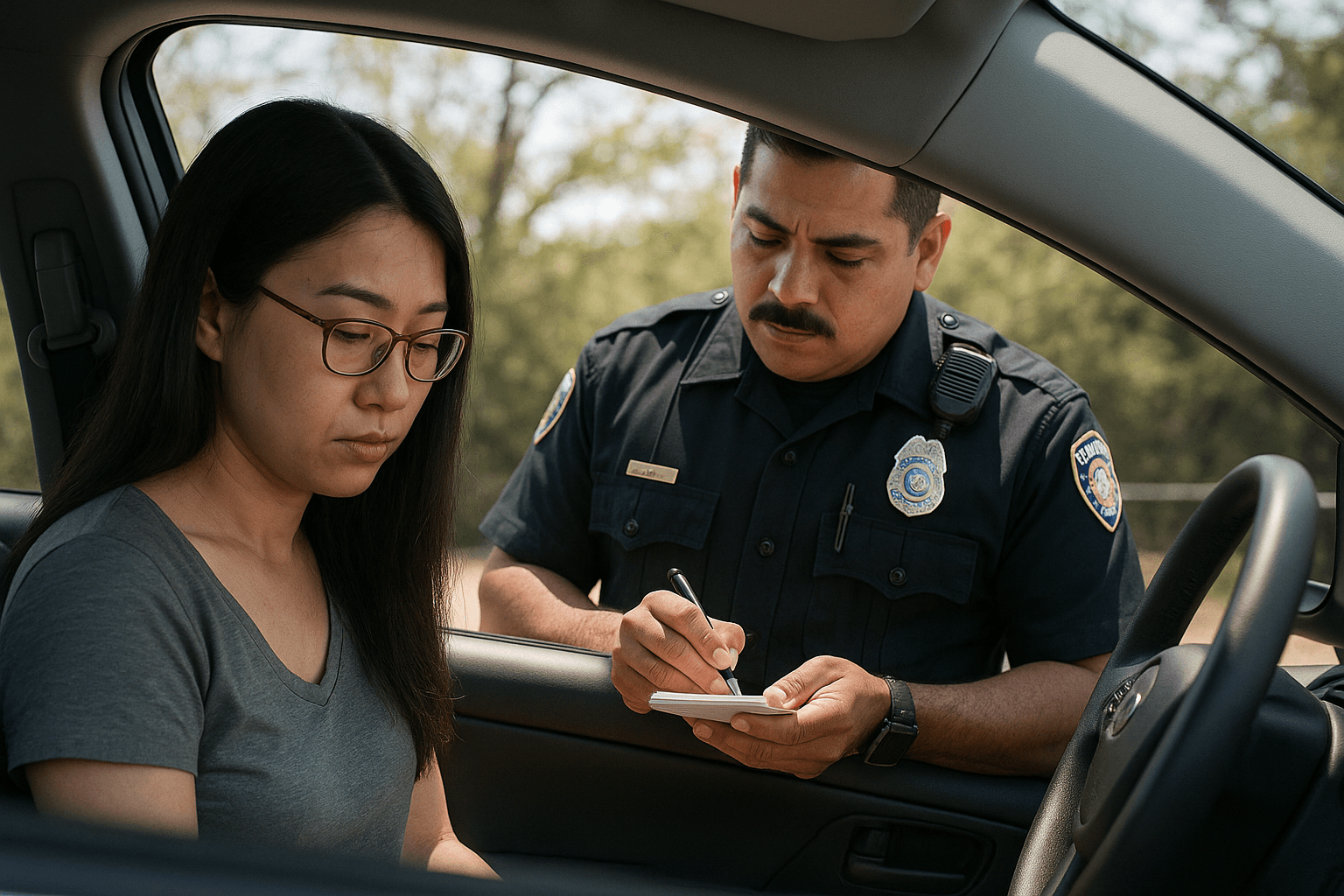
When your license was suspended for multiple violations at once, most states process hardship applications sequentially by cause — meaning you'll face separate waiting periods, separate documentation, and separate denials even when violations arose from the same traffic stop.
Why Compound-Cause Suspensions Break Standard Hardship Timelines
Your license was suspended for driving while license suspended (DWLS) plus failure to maintain insurance, unpaid tickets, or a points accumulation that hit threshold on the same date. You need a work permit immediately. Here's what stalls most applications: states treat each suspension cause as a separate eligibility determination even when violations occurred during the same traffic stop or conviction date.
Most hardship-license statutes evaluate eligibility by violation type, not by incident. If you were cited for DWLS and uninsured operation on the same day, the DMV processes two suspension tracks. Each track carries its own statutory waiting period before hardship eligibility opens. In jurisdictions that impose mandatory ineligibility windows for DWLS convictions (commonly 30 to 90 days from conviction date), the uninsured-operation suspension runs concurrently but does not pause the DWLS clock.
The practical consequence: you cannot apply for work-purposes driving until the longest ineligibility period expires. If your DWLS conviction bars hardship applications for 60 days and your insurance-lapse suspension allows immediate application, you still wait the full 60 days because the DWLS cause governs. Judges reviewing compound-cause petitions require proof that all underlying causes now meet eligibility thresholds, not just the shortest-wait cause.
How DWLS Convictions Interact With Insurance-Lapse and Points Suspensions
DWLS is itself a moving violation that typically adds points to your record. When your license was already suspended for points accumulation or insurance lapse and you drove anyway, the DWLS conviction compounds the original suspension rather than replacing it. Most states extend the original suspension period and add a consecutive DWLS suspension period on top.
If your original suspension was 90 days for points and the DWLS conviction adds 180 days, your total suspension runs 270 days unless the statute specifies concurrent service. Few states allow concurrent service for DWLS violations because the policy intent is punitive stacking. Hardship-license eligibility for the original cause (points or lapse) does not open until the DWLS-extension period is satisfied or until you meet the DWLS-specific hardship criteria, whichever is longer.
CDL holders face an additional layer: DWLS convictions recorded in a personal vehicle disqualify you from commercial driving privileges for one year under federal disqualification rules (49 CFR 383.51). Even if your state grants a personal-vehicle work permit, that permit excludes commercial operation. If your job requires CDL use, the work permit does not solve your employment problem.
Compare car insurance rates in your state
Get quotes from licensed carriers — no obligation, no spam, results in minutes.
Get Your Free Quote✓ No Obligation Required✓ Licensed Carriers Only✓ Available Nationwide✓ Free to Compare
Documentation Requirements for Compound-Cause Hardship Applications
Standard hardship applications require proof of employment need, SR-22 filing, and payment of reinstatement fees. Compound-cause applications require documentation proving resolution of each underlying cause before the petition will be reviewed. Courts and administrative hearing officers treat unresolved causes as disqualifying.
For DWLS plus insurance-lapse suspensions, you must file SR-22 for the insurance-lapse cause and maintain continuous coverage through the entire hardship period. The DWLS conviction itself does not typically trigger SR-22 unless your state imposes SR-22 on all moving violations after suspension. Verify your state's filing requirement by checking the suspension notice language. If the notice cites specific statutes, SR-22 applies only to causes where statute explicitly mandates it.
For DWLS plus unpaid-ticket suspensions, you must provide receipts proving full payment or approved payment-plan enrollment for all tickets listed on the suspension order. Partial payment does not satisfy the eligibility test. If five tickets triggered suspension and you paid four, the application will be denied pending resolution of the fifth. Courts will not grant hardship driving while financial obligations remain unresolved because the suspension is administrative, not safety-based.
For DWLS plus points-accumulation suspensions, you must wait out the points-suspension ineligibility period (commonly 30 to 90 days) before applying, then prove completion of any court-ordered driver improvement courses. Some states allow hardship applications during points suspensions if the driver enrolls in remedial education; others bar hardship entirely until the points suspension expires. Read your suspension notice for the specific statute citation and cross-reference your state's hardship-eligibility rules.
State-Specific Hardship Restrictions for DWLS Convictions
States vary sharply on whether DWLS convictions categorically bar hardship-license approval or merely extend waiting periods. New Jersey and Pennsylvania do not offer work-restricted licenses for drivers with DWLS convictions on record within the prior three years. Washington State bars hardship applications for DWLS convictions arising from ignition-interlock violations or prior DUI suspensions. If your DWLS occurred while suspended for DUI, Washington treats the violation as aggravated and closes the hardship pathway entirely.
Texas evaluates DWLS convictions under the Occupational License statute but imposes a 90-day post-conviction waiting period before petitions will be heard. The waiting period applies regardless of whether the underlying suspension cause was resolved. If you paid the tickets, filed SR-22, and satisfied all other conditions on day one, you still wait 90 days from the DWLS conviction date before filing the petition. The petition hearing occurs 10 to 30 days after filing, meaning total time from conviction to license issuance runs approximately four months.
Florida's Business Purposes Only (BPO) license program allows DWLS petitions after a 30-day waiting period if the DWLS was a first offense and did not involve personal injury. Second-offense DWLS or DWLS with bodily injury closes hardship eligibility for a minimum of one year. Florida judges also require proof that the driver has not operated a vehicle during the waiting period; any additional traffic citations during suspension disqualify the application.
Illinois offers Restricted Driving Permits (RDP) for most suspension causes but treats DWLS convictions as evidence of intentional noncompliance. Judges reviewing RDP petitions after DWLS convictions typically impose stricter route and time restrictions, require ignition interlock even when not statutorily mandated, and limit approval duration to six months rather than the standard 12-month period. Renewal petitions face heightened scrutiny and often require updated employer verification and clean MVR since initial approval.
How Ignition Interlock Requirements Layer Onto Compound Suspensions
If one of your suspension causes was DUI, reckless driving, or refusal to submit to chemical testing, your state likely requires ignition interlock (IID) as a condition of hardship-license approval. The IID requirement applies regardless of whether other suspension causes (DWLS, lapse, points) would not independently trigger IID mandates. Compound-cause suspensions inherit the strictest condition from any contributing cause.
IID installation must occur before the hardship petition hearing in most states. You cannot apply, receive approval, then install the device. The court or DMV requires proof of installation (typically a vendor-issued certificate with device serial number and calibration date) as part of the application packet. Installation costs range from $70 to $150, with monthly monitoring fees of $60 to $90. If your employment involves multiple vehicles (delivery, sales, service calls), you must install IID in every vehicle you intend to operate under the hardship license or restrict your petition to a single employer-owned vehicle.
Violating IID conditions during the hardship period (failed rolling retest, circumvention attempt, missed calibration appointment) triggers automatic hardship-license revocation in most states. The revocation is immediate and does not require a hearing. Your suspension period restarts from the revocation date, and you become ineligible for future hardship petitions until the full original suspension term is served. Employers receive no notification of revocation; you are responsible for ceasing work-related driving immediately upon device lockout.
Some states impose IID on DWLS convictions even when the underlying suspension was not alcohol-related. Arkansas, for example, requires IID for any hardship license issued after a DWLS conviction if the driver has any prior alcohol-related violation within the past five years, regardless of whether that prior violation triggered the current suspension. Cross-reference your full driving record against your state's IID statutes before assuming the requirement does not apply.
Insurance Setup for Work-Restricted Licenses After Compound Suspensions
SR-22 filing is required when one of your suspension causes was insurance-related (lapse, uninsured operation, failure to provide proof) or when your state mandates SR-22 for all suspended drivers seeking hardship licenses. The SR-22 must remain active for the entire filing period, which typically runs two to three years from the date you regain full driving privileges, not from the hardship-license issuance date.
If you do not own a vehicle, non-owner SR-22 policies cover your liability when driving employer-owned or borrowed vehicles. Non-owner policies cost approximately $40 to $80 per month for drivers with clean records but rise to $90 to $180 per month for drivers with DWLS convictions, points suspensions, or recent lapse violations. Carriers view compound suspensions as higher risk than single-cause suspensions because the violation pattern suggests repeated noncompliance.
If you own a vehicle, standard liability-plus-SR-22 policies cost $140 to $250 per month for drivers with compound suspensions, depending on your state's minimum liability limits and the severity of contributing causes. DUI-plus-DWLS combinations produce the highest premiums because the risk score compounds exponentially. Expect quotes in the $200 to $300 per month range if DUI is one of your suspension causes.
Some carriers will not write policies for drivers with active DWLS convictions on record. The underwriting rule varies by carrier, but State Farm, Allstate, and Nationwide commonly decline applications until the DWLS conviction is at least 12 months old. Progressive, The General, and Bristol West specialize in non-standard auto insurance and accept DWLS risks but charge higher premiums. Shop at least three non-standard carriers before assuming coverage is unavailable.
Your hardship license restricts you to specific routes and times. If you are involved in an accident outside approved hours or routes, your liability coverage may still respond (most policies do not exclude coverage based on license restrictions), but your hardship license will be revoked and you will face additional criminal charges for violating court-ordered restrictions. Employers should be notified of route and time limitations to avoid scheduling you outside approved windows.
What Happens If Your Hardship Application Is Denied
Denials occur most frequently when documentation is incomplete, when one suspension cause remains unresolved, or when the judge determines your driving need does not meet statutory standards for essential-purposes driving. DWLS convictions signal intentional disregard for suspension orders, and judges apply heightened scrutiny to these petitions. If your petition is denied, the denial order will specify the deficiency.
Most states allow reapplication after 30 to 90 days if you can cure the deficiency. If the denial was based on unpaid tickets, paying the balance and filing an amended petition typically succeeds on the second hearing. If the denial was based on insufficient proof of employment need (for example, your employer letter did not specify daily work hours or did not confirm that alternative transportation is unavailable), obtaining a revised employer affidavit and reapplying usually resolves the issue.
If the denial was based on the judge's discretionary finding that your violation history is too severe, reapplication within the same calendar year is unlikely to succeed unless you can demonstrate changed circumstances (completion of driver improvement courses, extended period of compliance, new employment with documented hardship). Some states limit hardship petitions to one application per suspension period; if your first petition is denied on discretionary grounds, you must serve the full suspension term.
Driving on a suspended license after a hardship denial compounds your suspension further and typically adds criminal misdemeanor charges. Most states treat second-offense DWLS as a jailable offense with mandatory minimums ranging from 10 to 30 days. Employers conducting MVR checks will see the denial and subsequent DWLS charge, which often results in termination even if you were not driving for work purposes when cited.