You received approval for a work-restricted license, but the DMV won't issue it until your IID install is verified—and your job starts Monday. Most states require install confirmation before issuing the permit, not after.
Why Your Work Permit Won't Issue Until IID Install Is Verified
Your state requires ignition interlock device installation as a condition of your work-restricted license, not a step you complete after receiving it. The DMV will not issue your occupational license, hardship license, or business-purposes-only permit until the IID provider submits installation confirmation directly to the state licensing authority.
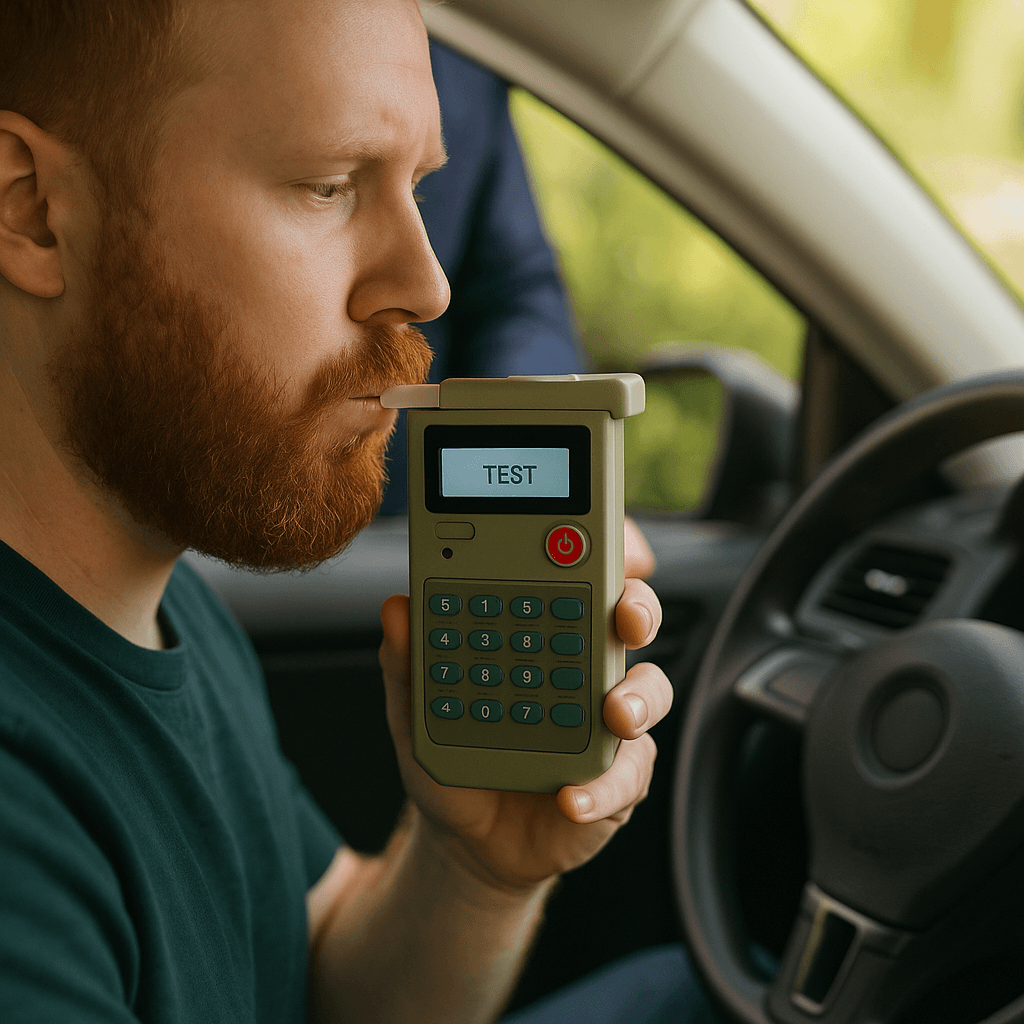
Most drivers misunderstand the sequence. You cannot drive to work on a pending application while waiting for an IID appointment. The device must be physically installed in the vehicle you plan to drive, calibrated by a state-certified provider, and reported to the DMV before your restricted license becomes active. This process typically requires 3-7 business days from installation to DMV confirmation, depending on your state's reporting system.
The equipment appointment is the bottleneck. State-certified IID providers in high-volume metro areas book 10-14 days out during peak suspension seasons. If you received your hardship approval letter Friday and your job requires you to drive Monday, you cannot legally drive until installation is confirmed and your restricted license is issued. Schedule the IID install immediately after filing your hardship application, not after approval.
Coordinating IID Install Timing With Your Approved Work Hours
Your work-restricted license specifies approved driving hours, typically your employment shift plus a 60-90 minute commute buffer before and after. Your IID must be installed and verified before those approved hours begin, or you cannot legally drive during them.
Most hardship licenses restrict driving to employment purposes only during documented work hours. If your approval specifies Monday-Friday 7:00 AM to 6:00 PM, and your IID install appointment is Tuesday at 10:00 AM, you cannot drive Monday or Tuesday morning even though your hardship license shows an effective date of Monday. The device must be installed and active before your first approved drive.
Some states allow you to drive to the IID installation appointment itself on your restricted license once issued, but only if the device was already scheduled and the appointment falls within your approved hours. Verify this with your DMV before assuming the exception applies. Most judges deny this reasoning if challenged. Safer approach: arrange for someone else to drive your vehicle to the installation appointment, or schedule the install at a mobile provider who comes to your home or workplace.
Compare car insurance rates in your state
Get quotes from licensed carriers — no obligation, no spam, results in minutes.
Get Your Free Quote✓ No Obligation Required✓ Licensed Carriers Only✓ Available Nationwide✓ Free to Compare
What Happens If Your Job Hours Change After Approval
Your hardship license specifies fixed approved hours based on the employer verification letter you submitted with your application. If your employer changes your shift, extends your hours, or moves you to a different location after your license is issued, your approved driving parameters do not automatically update.
You must file an amendment with the court or DMV that issued your restricted license, typically requiring a new employer verification letter documenting the schedule change. Most states process amendments within 5-10 business days, but you cannot legally drive the new hours until the amendment is approved. Driving outside your documented approved hours, even for legitimate employment reasons, is treated as a violation of your hardship license terms and can result in immediate revocation.
Your IID does not enforce time restrictions. The device prevents the vehicle from starting if alcohol is detected, but it does not know what hours you are approved to drive. Law enforcement verifies your approved hours by checking your physical restricted license or the DMV record during a traffic stop. If you are pulled over at 9:00 PM and your approved hours end at 6:00 PM, the IID will not save you from a hardship violation charge.
How SR-22 Filing Timing Affects Your Work Permit Start Date
SR-22 insurance filing is required before most states issue a work-restricted license after DUI suspension. Your carrier must submit the SR-22 certificate directly to the DMV, and the DMV must process it before your hardship application is approved.
Most carriers file SR-22 certificates electronically within 24-48 hours of policy binding, but DMV processing adds 2-5 business days depending on your state's system. If you secure your policy Monday, expect DMV confirmation by Thursday or Friday at earliest. Some states batch-process SR-22 filings weekly, extending the window to 7-10 days. Your hardship license cannot be issued until the SR-22 is on file and verified.
The timing cascade matters. If your hardship application is approved but your SR-22 is still processing, you cannot drive. If your SR-22 is on file but your IID install is not yet confirmed, you cannot drive. Both requirements must be satisfied simultaneously before your restricted license becomes active. Coordinate all three steps in parallel: file your hardship application, secure your SR-22 policy, and schedule your IID install appointment the same week.
IID Violations That Revoke Your Work Permit Immediately
Your restricted license requires continuous IID compliance for its entire duration. A failed breath test, a missed rolling retest, or a tamper alert reported to the DMV can trigger automatic hardship revocation without a hearing in most states.
IID providers report violations to the state licensing authority within 24-72 hours. A single failed startup test typically does not revoke your license, but three failed tests in 30 days, one failed rolling retest while driving, or any evidence of circumvention (disconnecting the device, using compressed air, having another person blow) results in immediate termination of your driving privileges. Your employer will not receive advance notice. You will receive a revocation letter and lose your ability to drive to work the day the DMV processes the violation report.
Most drivers lose their hardship licenses to rolling retest failures, not startup failures. A rolling retest requires you to blow into the device while driving, typically every 15-45 minutes depending on state requirements. If you miss the retest window because you are in a drive-through, on a phone call, or simply did not hear the alert, the device logs a failure. Three missed rolling retests in a monitoring period is treated the same as three failed breath tests. Turn off the radio, keep the device within reach, and respond to every retest prompt immediately.
What Your Employer Needs to Know About Your Restricted License
Your employer must provide verification documentation for your hardship application, but they also need to understand the restrictions your license imposes. Most HR departments have never processed a work-restricted license and will ask questions your DMV approval letter does not answer.
Your restricted license allows driving to and from work during approved hours, and typically allows on-the-job driving if your employment requires it and your employer documented that need in their verification letter. It does not allow you to drive company vehicles in most states unless the IID is installed in every vehicle you operate. If your job requires you to drive a company truck, van, or fleet vehicle, you must either arrange for IID installation in that vehicle at your expense, or your employer must assign you to non-driving duties during your restriction period.
Some employers terminate employees with restricted licenses due to liability concerns, even when the employee's job does not require driving. This is legal in most states. If your employer's insurance policy excludes drivers with IID requirements, or if their risk management department flags your restricted license as a liability exposure, they can choose not to retain you. Ask your HR contact whether your restricted license creates a policy conflict before assuming your job is secure.
Getting Back to Full Coverage After Your Hardship Period Ends
Your work-restricted license expires when your underlying suspension period ends and you complete all reinstatement requirements. Your SR-22 filing obligation typically extends beyond your hardship period—most DUI suspensions require 3 years of continuous SR-22 coverage starting from your conviction date, not your hardship approval date.
When your full driving privileges are reinstated, your SR-22 requirement continues. You cannot drop the SR-22 filing until your state-mandated filing period is satisfied. Canceling your policy or allowing it to lapse before the filing period ends triggers an automatic license re-suspension in most states, and you will not be eligible for another hardship license during the re-suspension period.
Your premium will decrease once your restricted license converts to full reinstatement, but the SR-22 filing fee and high-risk classification remain in effect for the entire mandated period. Expect to pay $140-$210 per month for liability-only coverage with SR-22 during the first year post-reinstatement, dropping to $95-$150 per month in year two as your violation ages. Shop your policy annually—high-risk carriers re-rate aggressively once you pass 12 months without a new violation.