Administrative license revocation suspends your license before conviction—most states offer work-restricted permits, but the filing path differs from standard hardship routes and carries deadlines clean-record drivers never face.
Why ALR Hardship Applications Follow Different Deadlines Than Conviction-Based Suspensions
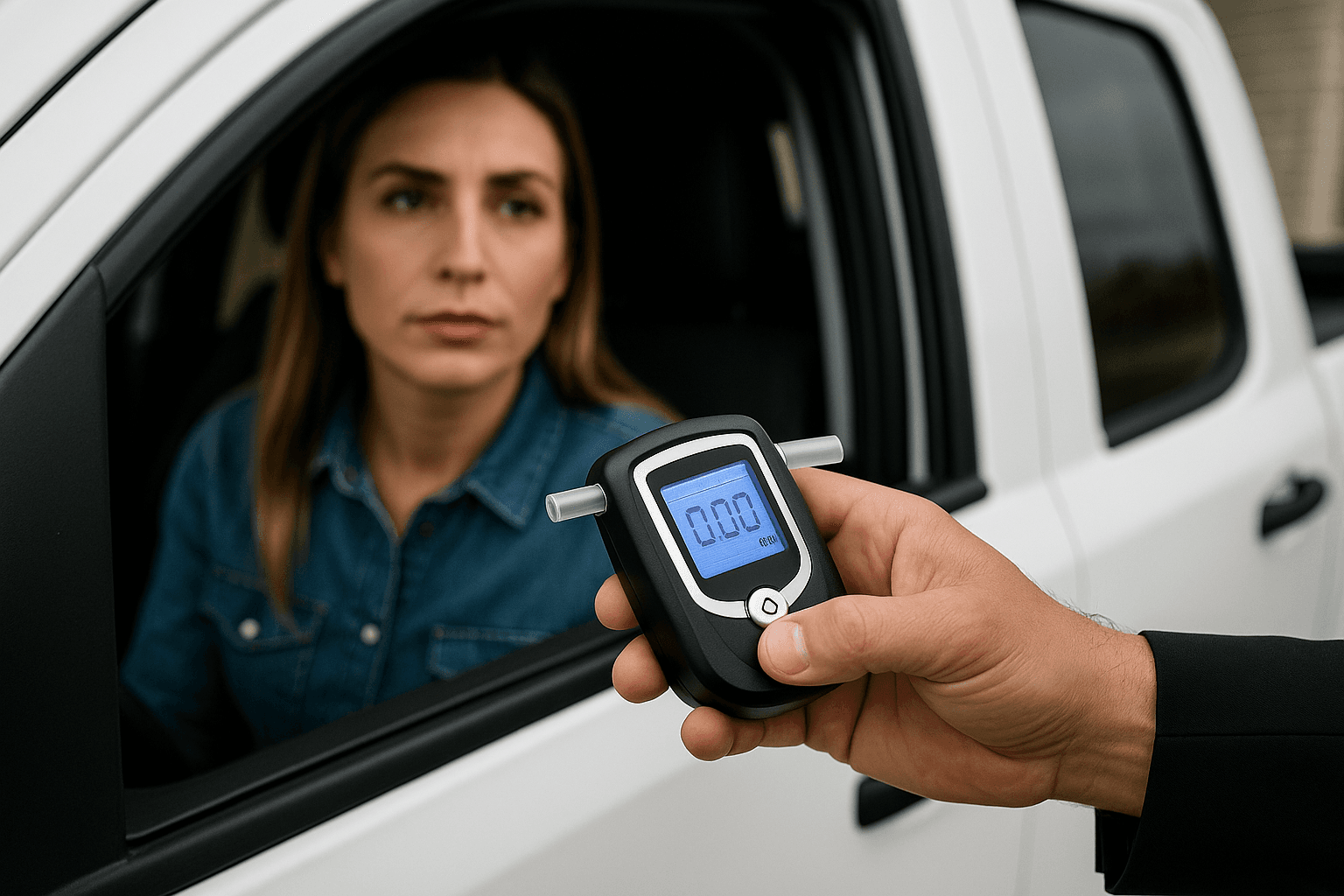
Administrative license revocation starts the hardship application clock from your arrest date, not your conviction date or hearing outcome. In states with ALR programs—Texas, Minnesota, Florida, Georgia, and 37 others—your license suspends automatically after refusing a breathalyzer or failing one, typically 30 to 45 days post-arrest. The hardship petition window opens immediately, but most drivers wait for their hearing result before applying, missing the earliest filing opportunity.
Conviction-based suspensions begin after court sentencing, giving you weeks to prepare documentation. ALR suspensions begin whether or not you're convicted—refusal or test failure alone triggers the administrative suspension. The two suspension tracks run parallel: ALR through your state DMV, criminal DUI through the courts. Each carries separate hardship pathways with separate filing requirements.
States label these permits differently: Texas calls it an Occupational Driver License, Florida uses Business Purposes Only license, Georgia issues a Limited Driving Permit, Minnesota offers a Limited License. The approval criteria remain similar—documented work need, SR-22 filing, ignition interlock device installation in most cases, and employer verification. Filing early gives you the best chance at approval before your suspension takes effect.
What Documents Your Employer Must Provide for Work-Restricted Permit Applications
Employer verification letters are required in 42 states for ALR-related hardship applications. The letter must state your job title, work address, scheduled work hours, and confirm that driving is essential to your employment. Generic confirmation of employment letters do not satisfy most DMV hearing officers—the document must explicitly address your need to drive to and from work, or during work hours if your position requires it.
Some states require the employer to specify routes. Texas, Oklahoma, and Georgia ask for primary commute routes in the petition itself, not just hours. Florida and Minnesota focus on time windows rather than specific routes but require the employer to confirm shift start and end times. If your work hours vary week to week, most states allow a range—for example, "Monday through Friday, 6 AM to 6 PM"—but require you to drive only during actual scheduled shifts, not the full approved window.
CDL holders face an additional restriction: work-restricted permits cover personal vehicle operation only. If your job requires driving a commercial vehicle, ALR hardship permits do not restore CDL privileges. You can drive to the job site in your personal vehicle under the permit, but you cannot operate the commercial vehicle itself until full reinstatement. Most states exclude commercial driving explicitly in the permit language.
Compare car insurance rates in your state
Get quotes from licensed carriers — no obligation, no spam, results in minutes.
Get Your Free Quote✓ No Obligation Required✓ Licensed Carriers Only✓ Available Nationwide✓ Free to Compare
SR-22 Filing Requirements Specific to ALR Suspensions
SR-22 filing is required for ALR hardship permits in 45 states, with the filing period beginning the day your hardship permit is issued, not the day your full license is reinstated. The filing duration runs three years in most states, measured from the permit issuance date. If you delay your hardship application by six months, your three-year SR-22 clock starts six months later than it would have if you filed immediately.
Carriers treat ALR differently than conviction-based DUI for underwriting purposes. An administrative suspension for breathalyzer refusal triggers high-risk classification immediately, even if your criminal case is later dismissed or reduced. The carrier underwrites based on the DMV suspension record, not the court outcome. Expect premiums between $180 and $320 per month for liability-only coverage with SR-22 endorsement during the hardship permit period.
Non-owner SR-22 policies work for ALR hardship permits if you do not own a vehicle. These policies cost $90 to $140 per month and satisfy the state's financial responsibility requirement without insuring a specific car. If you share a household vehicle or use a family member's car for your commute, non-owner SR-22 covers your liability while driving that vehicle under your hardship permit. The SR-22 filing itself costs $25 to $50, paid to the carrier at policy purchase.
How Ignition Interlock Device Requirements Affect Hardship Permit Approval
Ignition interlock devices are mandatory for ALR hardship permits in 34 states if your suspension resulted from a failed breath test showing BAC above the state's threshold—typically 0.08% or higher. Refusal cases sometimes avoid the IID requirement depending on state law, but Florida, Texas, Arizona, and Washington require IID for both refusal and test-failure ALR suspensions.
Installation costs range from $70 to $150, with monthly monitoring fees between $60 and $90. The device must be installed before your hardship hearing in most states—you cannot receive the permit without proof of installation. Calibration appointments are required monthly or bimonthly, adding another $20 to $40 per visit. Budget $150 to $200 per month for IID costs during the hardship period.
Violations—failed rolling retests, missed calibration appointments, or attempts to bypass the device—trigger automatic permit revocation in 48 states. The revocation is immediate and most states do not allow a second hardship petition for the same suspension period. Your work commute protection disappears the day the violation is recorded. Employers rarely retain workers who lose their hardship permit mid-suspension for IID violations because it signals noncompliance with court or DMV orders.
Approved Driving Hours and Route Restrictions Under ALR Hardship Permits
Most states approve driving during work hours plus a 30- to 60-minute buffer before and after your shift. If you work 8 AM to 5 PM, your approved window typically runs 7 AM to 6 PM. Driving outside that window—even for emergencies—violates the permit terms and triggers revocation in 44 states. Law enforcement officers can verify your approved hours by calling the DMV's hardship permit verification line during a traffic stop.
Route restrictions vary by state. Texas and Oklahoma require you to list specific routes in your petition—home to work, work to daycare, daycare to home. Georgia and Louisiana allow broader language like "within a 20-mile radius of work and home" but require you to document the need for stops beyond direct commute. Florida's Business Purposes Only license covers any driving reasonably necessary for business purposes, the broadest interpretation in the country, but still excludes personal errands unrelated to work.
Some states allow additional approved purposes beyond work: medical appointments, DUI education classes, court-ordered counseling, and childcare. You must petition for each category separately, with documentation for each need. Adding medical appointments requires a letter from your healthcare provider confirming recurring appointment necessity. Adding DUI classes requires enrollment confirmation from the program. Most judges approve work-only permits more readily than multi-purpose permits because enforcement is simpler.
What Happens If You're Stopped While Driving on an ALR Hardship Permit
Officers verify hardship permits electronically in 39 states—your permit status, approved hours, and restrictions appear in the same system that shows your license status. If you're stopped at 9 PM and your approved window ends at 6 PM, the officer sees the violation immediately. Most states treat driving outside approved hours as driving on a suspended license, a misdemeanor carrying 10 to 90 days in jail and $500 to $2,500 in fines.
Your permit is revoked on the spot in 31 states for out-of-window violations. The officer confiscates the physical permit card and your driving privilege ends that day. You cannot reapply for another hardship permit until your full suspension period ends and you complete reinstatement. If your underlying suspension runs two years, losing your hardship permit at month six means no legal driving for the remaining 18 months.
Some employers terminate workers immediately after hardship permit revocation because it signals unreliability and legal noncompliance. Others allow a grace period if you can arrange alternative transportation, but commission-based and route-based jobs—delivery, sales, home services—cannot accommodate a worker who cannot drive. The risk is not just criminal penalties; it's the loss of the employment anchor that justified the hardship permit in the first place.
How to Set Up SR-22 Coverage Before Your Hardship Hearing
SR-22 filing must be active before most states schedule your hardship hearing. Call a high-risk carrier or independent agent as soon as you receive your ALR suspension notice—do not wait for your hearing date assignment. The carrier files the SR-22 electronically with your state DMV within 24 to 48 hours of policy purchase, but processing delays of three to five business days are common. Filing too close to your hearing date risks postponement.
Bring SR-22 proof to your hearing: the policy declarations page showing the SR-22 endorsement and the filing confirmation from the carrier. Most states accept electronic proof on your phone, but print a hard copy as backup. Hearing officers deny petitions when SR-22 proof is missing, even if the filing is in process. Your next available hearing slot may be 30 to 60 days later, extending the period you cannot drive legally.
If your current carrier drops you after the ALR suspension—common with standard-market carriers—start with non-standard auto carriers that specialize in suspended-license drivers. Bristol West, Acceptance, Titan, and Direct Auto write policies for ALR suspensions in most states and file SR-22 the same day you purchase coverage. Premiums are higher than standard-market rates, but approval is faster and coverage is guaranteed regardless of your violation history.