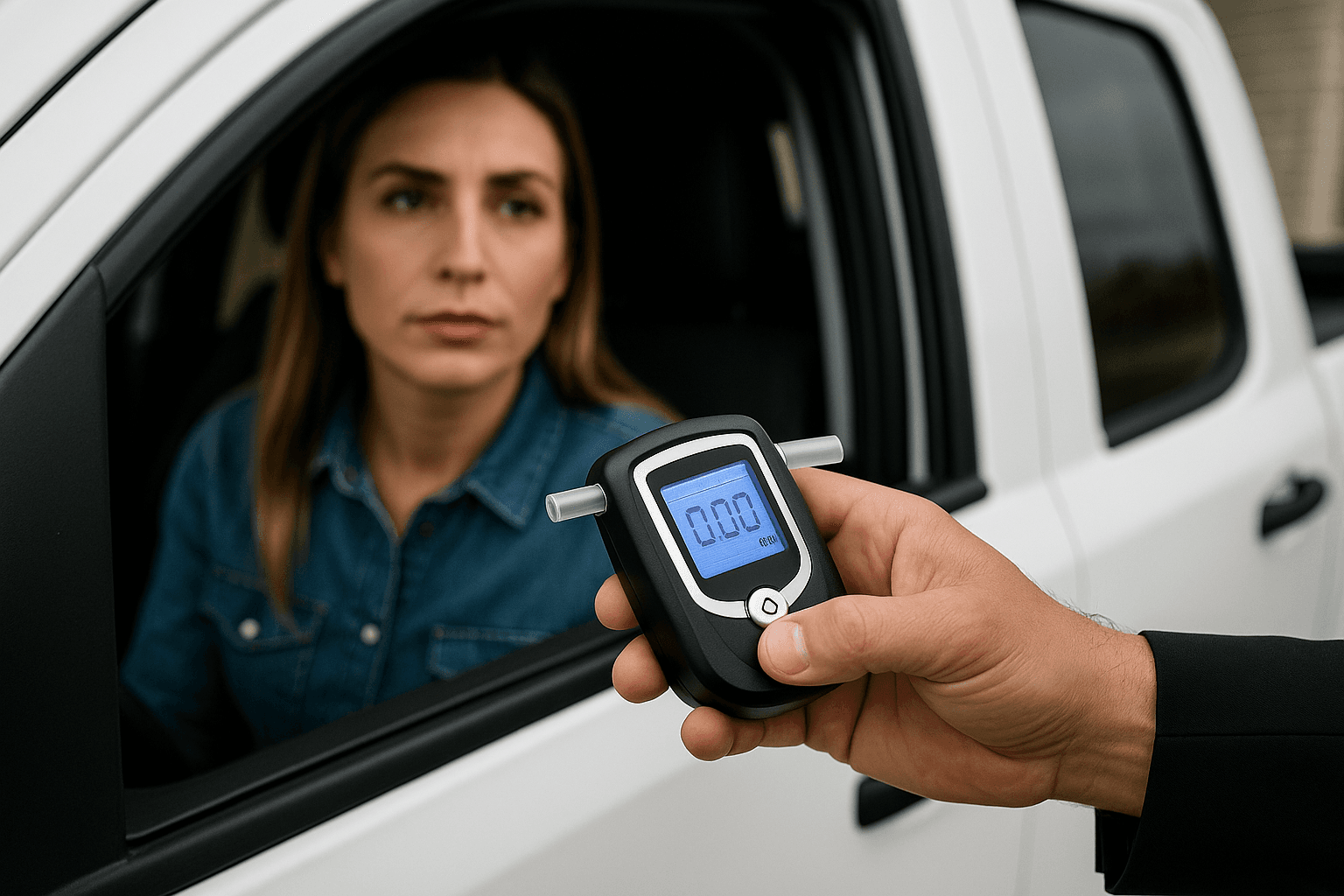
Refusing a breathalyzer triggers administrative suspension before criminal conviction, but most states still grant work-purpose hardship licenses if you file during the appeal window and meet SR-22 requirements.
When Hardship Filing Opens After Refusal Suspension
Administrative license suspension for breathalyzer or blood test refusal begins 30 to 45 days after arrest in most states, separate from any criminal DUI charge. Your hardship license application window opens immediately after the administrative hearing or during the appeal period, not after criminal court conviction. Missing this window means waiting months longer for work driving privileges.
Most states treat refusal as an administrative violation triggering automatic suspension: 90 days to 1 year for first refusal, 1 to 2 years for subsequent refusals. The criminal DUI case proceeds separately. If you lose the administrative hearing or do not request one within the statutory deadline (typically 10 to 15 days after arrest), the suspension becomes effective and you can file for hardship immediately in states that permit it.
Texas, Georgia, Illinois, and Florida allow hardship applications during refusal suspension, but each state sets different eligibility waiting periods. Texas allows occupational license filing immediately after administrative suspension begins. Georgia requires a 30-day hard suspension before Limited Driving Permit eligibility. Illinois and Florida impose similar waiting periods. Verify your state's specific timeline before assuming immediate eligibility.
Why Refusal Cases Differ From Conviction-Based Suspensions
Refusal suspension is civil, not criminal. The administrative hearing uses a lower burden of proof than criminal court: the state must show the officer had probable cause for the stop, properly requested the test, and you refused. You do not need a criminal conviction for the suspension to take effect.
This creates a documentation problem for hardship applications. Most hardship petitions require court records or conviction orders. In refusal cases, you submit the administrative hearing decision or the notice of suspension from the DMV instead. Some judges and hearing officers unfamiliar with refusal-only cases reject petitions because they expect criminal case numbers. Bring both the administrative order and the criminal case docket number if charges were filed, even if the criminal case is still pending.
SR-22 filing requirements attach to the administrative suspension, not the criminal conviction. If your state requires SR-22 for refusal suspension, the filing period begins when the administrative suspension starts. Waiting for criminal court resolution delays your ability to drive legally under a hardship license.
Compare car insurance rates in your state
Get quotes from licensed carriers — no obligation, no spam, results in minutes.
Get Your Free Quote✓ No Obligation Required✓ Licensed Carriers Only✓ Available Nationwide✓ Free to Compare
Required Documentation for Work-Purpose Hardship After Refusal
Every state that permits hardship licenses after refusal requires an employer verification letter. The letter must state your job title, work address, work hours, and whether driving is essential to perform your duties or commute to the job site. Generic letters stating "this employee needs to drive" are rejected. The letter must specify routes and hours.
You also need proof of SR-22 insurance filing if your state requires it for refusal suspension. The SR-22 certificate must show the policy effective date matches or precedes your hardship application date. Applying for hardship before securing SR-22 coverage results in automatic denial in states that require filing for refusal cases.
Most states require proof you completed or enrolled in a DUI education or substance abuse evaluation program, even if your criminal case is still pending. Some states waive this requirement for first-time refusal with no prior DUI history, but most do not. Georgia, Florida, and Illinois require evaluation completion before hardship eligibility. Texas requires enrollment proof but not completion at the time of filing. Confirm your state's specific education requirement before filing your petition.
Ignition Interlock Requirements for Refusal Hardship Licenses
Most states mandate ignition interlock devices for refusal-based hardship licenses, even for first-time refusals. The IID requirement applies to the hardship license period, not just post-conviction. You pay for installation, monthly monitoring, and removal: typically $75 to $150 installation, $60 to $90 per month, and $50 to $100 removal.
Your hardship petition cannot be approved until you provide proof of IID installation. Some states require the IID provider to submit a compliance report directly to the court or DMV before the hardship license is issued. Schedule installation before your hardship hearing date. Showing up without installation proof wastes the hearing and delays your work driving by weeks.
Violating IID terms during the hardship period triggers immediate revocation. Tampering, missed calibration appointments, or failed rolling retests are reported to the DMV automatically. Most states revoke hardship privileges without a hearing if the IID provider files a violation report. The revocation applies even if your criminal DUI case is later dismissed or reduced.
Approved Routes and Hours Under Refusal Hardship Licenses
Work-purpose hardship licenses for refusal cases restrict driving to employment commute, work hours, DUI education classes, ignition interlock service appointments, and sometimes medical appointments or childcare. Driving outside approved hours or routes results in a new criminal charge: driving on a suspended license, a misdemeanor in most states carrying additional suspension time and fines.
Your hardship order specifies exact hours and routes. Texas occupational licenses allow broad work-hours language and employer-certified driving during work. Georgia Limited Driving Permits restrict driving to a 12-hour window covering commute and work hours. Florida Business Purpose Only licenses cover work and business-related driving but exclude personal errands. Read your order carefully and carry it with proof of insurance and IID compliance whenever driving.
Getting pulled over outside approved hours is not excused by work emergencies or route changes. If your work schedule changes after the hardship license is issued, file an amended petition with updated employer documentation before driving under the new schedule. Driving first and amending later is treated as a violation.
SR-22 Filing Setup for Refusal-Based Work Permits
Refusal suspension typically requires SR-22 filing for the full suspension period plus an additional monitoring period after reinstatement. First-time refusal in most states requires 3 years of SR-22 filing from the date the administrative suspension began. Subsequent refusals extend filing duration to 5 years or more.
You need high-risk auto insurance that files SR-22 certificates with your state DMV. Not all carriers write policies for refusal suspension cases. Standard carriers like State Farm and Allstate often non-renew policies after refusal suspension notices, even before conviction. Employment-hardship SR-22 insurance from non-standard carriers like Bristol West, The General, or state assigned-risk pools provides the required filing.
Monthly premiums for SR-22 coverage after refusal suspension range from $140 to $250 per month depending on state, age, and prior driving history. Non-owner SR-22 policies cost $50 to $90 per month if you do not own a vehicle but need proof of financial responsibility for the hardship license. Letting the policy lapse during the filing period triggers automatic re-suspension and you lose hardship privileges immediately. No grace period applies.
What Happens If You Drive Outside Hardship License Terms
Driving outside approved hours, routes, or purposes under a refusal hardship license is prosecuted as driving on a suspended license. The charge is separate from your underlying DUI case and carries its own penalties: additional suspension time, fines up to $1,000, possible jail time, and permanent revocation of hardship privileges.
Most violations occur during weekend personal errands or late-night drives outside approved work hours. Officers run your license during routine traffic stops and the hardship restrictions appear immediately. Explaining that you forgot the terms or that the errand was necessary does not prevent arrest. The hardship order is a court document with criminal penalties for violation.
Violation also triggers SR-22 policy review. Carriers receive suspension notices and many non-renew policies after a hardship violation charge, even if the criminal case is later dismissed. Finding replacement SR-22 coverage after a violation charge is difficult and expensive. Premiums increase 30% to 60% and some drivers are pushed into state assigned-risk pools.