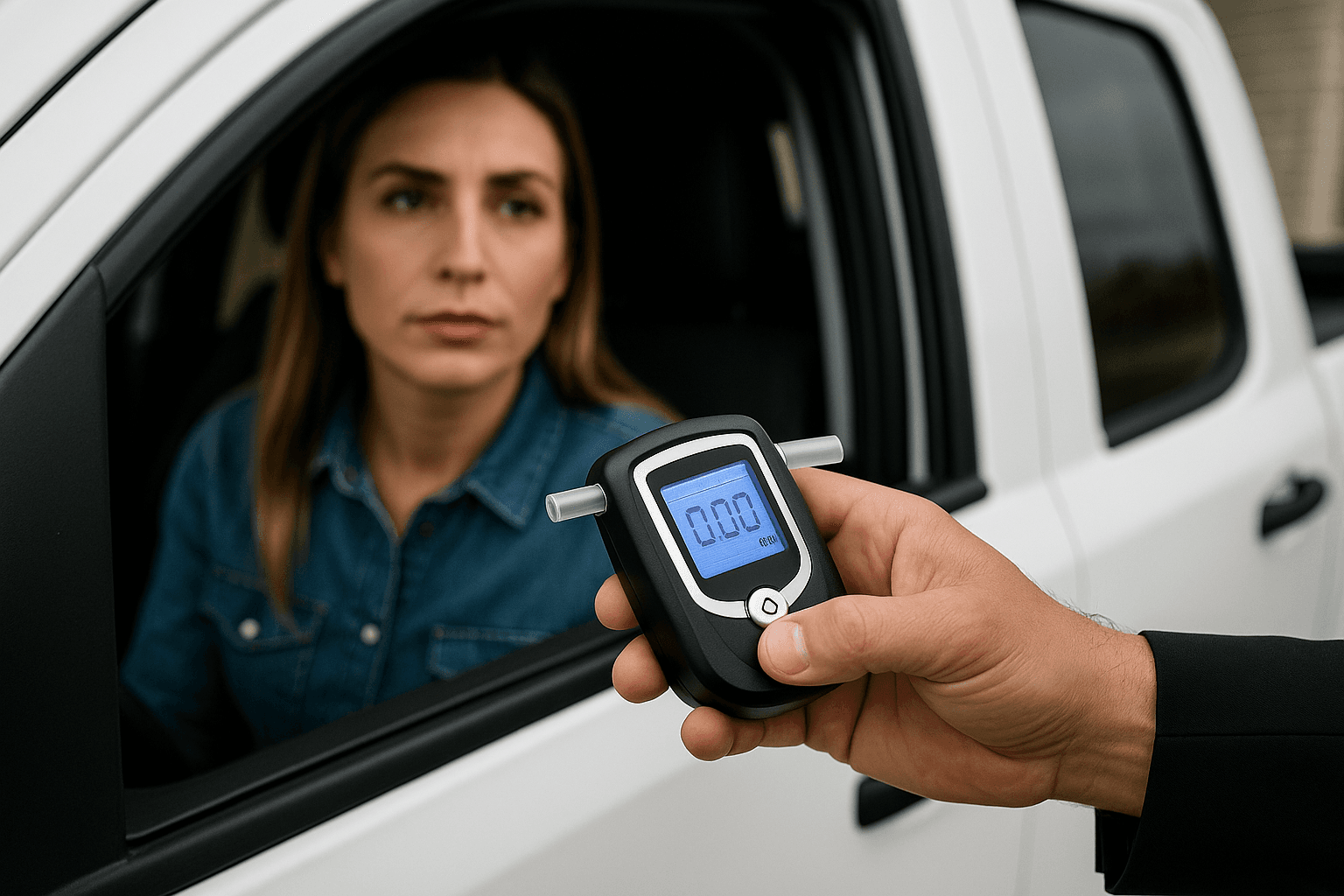
Most states offer work-restricted driving after DUI suspension, but program names, employer documentation requirements, and route restrictions vary dramatically. Seven states close hardship pathways entirely after DUI convictions.
Which States Allow Employment-Restricted Driving After DUI
Forty-three states and DC permit some form of employment-restricted driving after DUI suspension. Seven states close hardship pathways entirely for DUI convictions: Delaware, New Jersey, New York, Rhode Island, South Dakota, Vermont, and West Virginia. If you live in one of these states and hold a DUI suspension, no hardship license program exists regardless of employment need.
The remaining 43 states use different program names for the same core function. Texas calls it an occupational driver's license. Illinois uses occupational driving permit. Nebraska issues employment driving permits. Florida labels it business purposes only license. California uses restricted license. The terminology matters because searching your DMV website for "hardship license" may return no results even when the program exists under a different name.
Eligibility windows vary significantly. Most states require a minimum suspension period before hardship application — typically 30 to 90 days for first-offense DUI. Second and subsequent offenses face longer waiting periods or permanent closure of hardship pathways. Arkansas, for example, closes employment-hardship eligibility entirely after a second DUI within five years.
What Employer Documentation States Require
Most states require employer verification as part of the hardship application. The typical format: a notarized letter on company letterhead confirming your position, work schedule, job address, and necessity of driving for employment. Some states provide standardized employer verification forms through the DMV.
Georgia requires employers to specify exact work hours and confirm whether alternative transportation (rideshare, public transit, carpool) is available. If your employer states alternatives exist, judges frequently deny petitions. Nebraska requires employers to confirm whether driving is required during work hours or only for commute purposes — this distinction affects approved route breadth.
Some employers refuse to provide verification letters due to liability concerns. Their insurance carrier or HR policy prohibits retaining drivers with restricted licenses. This creates a catch: you cannot get the hardship license without employer verification, but you cannot keep the job without the license. No state DMV forces employers to provide documentation. If your employer refuses, your hardship application will fail regardless of legal eligibility.
Compare car insurance rates in your state
Get quotes from licensed carriers — no obligation, no spam, results in minutes.
Get Your Free Quote✓ No Obligation Required✓ Licensed Carriers Only✓ Available Nationwide✓ Free to Compare
Route and Time Restrictions on Work Permits
Work permits do not restore full driving privileges. Approved purposes typically include commute to and from work, driving during work hours if employment requires it, and sometimes medical appointments or DUI education classes. Personal errands, social driving, and non-approved destinations remain prohibited.
Route restrictions vary by state. Texas allows driving to work, during work hours for work purposes, to and from DUI education classes, and for essential household duties including childcare and grocery shopping — the broadest scope among all states. Florida's business purposes only license covers work, education, church, and medical care but excludes personal errands. Illinois restricts driving to employment, medical treatment, alcohol evaluation appointments, and court-ordered programs only.
Time restrictions mean you must drive only during approved hours. If your work shift is 8 AM to 5 PM, driving at 7 PM triggers a violation even if you are headed to an approved destination. Some states allow 30-minute buffer windows before and after work hours. Others do not. Getting pulled over outside approved hours results in immediate revocation of the work permit and extension of the underlying suspension.
Ignition Interlock Device Requirements for Work-Hardship Cases
Most states require ignition interlock devices on work permits after DUI suspension. The IID requirement typically applies regardless of BAC level or whether the conviction is first or subsequent offense. Cost ranges from $75 to $150 per month for device lease, calibration, and monitoring.
Some states waive IID for first-offense DUI work permits if BAC was below a threshold — typically 0.15 or 0.20 percent. Others mandate IID for all DUI-related hardship licenses without exception. California requires IID for all restricted licenses after DUI conviction starting from the first offense. Texas requires IID only for BAC above 0.15 percent or second and subsequent offenses.
Employers sometimes refuse to allow IID installation in company vehicles. If your job requires driving a company car and your employer prohibits IID, the work permit becomes functionally useless even if the state grants it. Some drivers apply for work permits intending to drive only personal vehicles, then discover their job duties require the company vehicle they cannot legally operate.
SR-22 Filing Requirements for Employment Hardship Licenses
All states require SR-22 certificate of financial responsibility to obtain a work permit after DUI suspension. The SR-22 filing proves you carry liability insurance meeting state minimum coverage levels. Your insurance carrier files the SR-22 form directly with the state DMV — you cannot file it yourself.
SR-22 filing fees range from $25 to $50 as a one-time charge, but the larger cost is the premium increase. DUI convictions combined with SR-22 filing typically raise premiums 80 to 200 percent. Monthly premiums for minimum liability coverage after DUI with SR-22 typically range from $140 to $280 depending on state, age, and prior insurance history.
SR-22 filing must remain active for the state-mandated period, typically two to five years after license reinstatement. If your policy lapses or cancels for any reason during the filing period, your carrier notifies the DMV within 24 hours and your license suspends immediately. This includes lapse due to non-payment, policy cancellation for any reason, or switching carriers without ensuring continuous SR-22 filing.
Application Process and Timeline to Work-Permit Approval
Application processes vary by state but typically require: completed hardship application form, employer verification letter, proof of SR-22 insurance filing, proof of IID installation if required, DUI education enrollment confirmation, court order or suspension notice, and application fee ranging from $50 to $200.
Processing times range from same-day approval in states with administrative DMV-issued permits to 30 to 60 days in states requiring court hearings. Texas processes occupational license petitions through county courts with hearings typically scheduled two to four weeks after filing. Illinois processes through the Secretary of State's office with approval or denial typically issued within 10 business days for straightforward cases.
Denial is common. Judges and DMV hearing officers deny petitions when documentation is incomplete, when the suspension period has not met minimum threshold, when prior hardship violations appear on record, or when the stated employment need does not meet state-specific criteria. Some states deny petitions if the applicant has outstanding fines, missed court dates, or incomplete DUI education requirements even when those issues are unrelated to hardship eligibility.
What Happens If You Violate Work-Permit Restrictions
Violating work-permit restrictions results in immediate revocation and extension of the underlying suspension. Common violations: driving outside approved hours, driving to non-approved destinations, failing IID calibration appointments, failing to appear for DUI education classes, and any new traffic violation including minor infractions.
Most states treat hardship violations as separate offenses with additional penalties. Getting pulled over for speeding while driving on a work permit triggers three consequences: the speeding ticket itself, immediate revocation of the work permit, and extension of the DUI suspension by six months to two years depending on state. Some states convert hardship violations into criminal charges rather than administrative violations.
Police do not always verify hardship restrictions during traffic stops. You may receive a citation and continue driving, only to discover weeks later that your work permit was revoked effective the date of the stop. By that time, every day you drove constituted driving under suspension — a separate criminal charge per occurrence in most states.