You filed your hardship petition and now face a judge. Most denials happen in the first 90 seconds when judges assess whether you understand the restriction scope and your employer actually verified your need.
What Actually Happens When You Walk Into the Courtroom
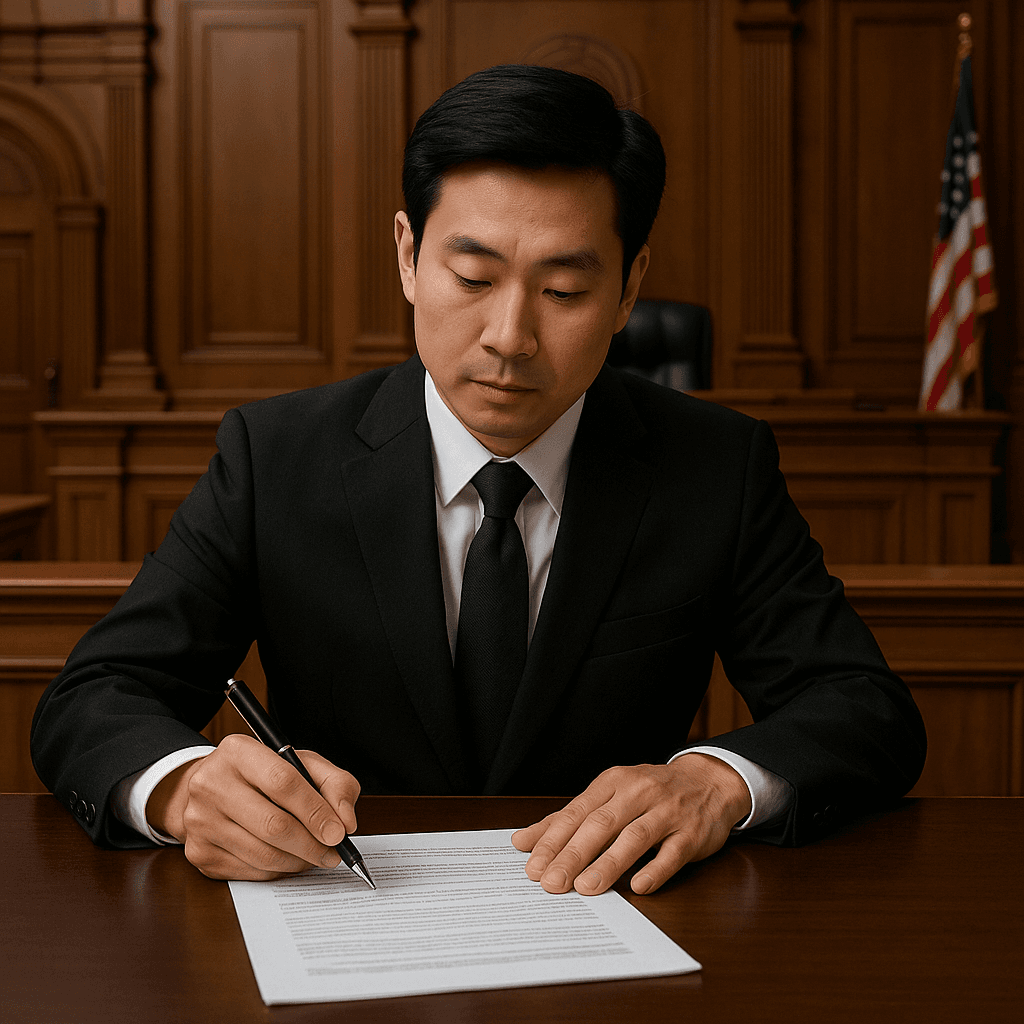
You arrive at the designated courtroom 15 minutes early. The bailiff calls your case name from the docket. You step forward to the petitioner's table. The judge has your written hardship petition, your driving abstract, the suspension order, and any documentation you submitted — employer letter, proof of insurance, SR-22 filing confirmation, IID installation receipt if required. The judge will ask you questions directly. There is no jury. This is not a trial of the underlying violation. The only question before the court is whether granting you restricted driving privileges serves a legitimate hardship purpose without posing unreasonable risk to public safety.
Most hearings last 5 to 10 minutes. Judges in high-volume suspension dockets hear 20 to 40 hardship petitions per day. They are evaluating procedural compliance first and hardship merit second. If your petition fails a procedural test — missing employer verification, SR-22 not filed, IID not installed when required, proposed route documentation insufficient — the judge will deny the petition immediately and you will need to refile after curing the deficiency. The 90-second assessment window is real.
Bring three copies of every document: one for the judge, one for the clerk, one for your own reference during questioning. Judges become irritated when petitioners cannot produce documentation they claim to have submitted. If your employer provided a verification letter, bring the original and two copies even if you already filed it with your written petition. Courts lose paperwork.
The Questions Judges Ask and Why Most Petitioners Fail Them
The judge will ask you to describe your proposed route. This is where most denials occur. Saying "I need to drive to work" is insufficient. The judge needs to know your home address, your employer's address, the specific route you intend to drive, the days of the week, and the time windows. If your employer letter states you work Monday through Friday 8 a.m. to 5 p.m. but you tell the judge you need to drive to work at 7 a.m., the discrepancy will trigger denial. The route you describe in the hearing must match the route and hours documented in your employer verification letter exactly.
Judges will ask whether your job requires driving during work hours. If yes, they will ask for documentation of job duties that require driving — not just a statement that you drive for work. Delivery drivers, home health aides, sales representatives, and service technicians need employer letters that specify driving is an essential job function and list the geographic service area. If your job does not require driving during work hours, state that clearly. Commute-only hardship licenses are easier to approve than during-work driving privileges.
The judge will confirm your insurance status. If SR-22 filing is required for your suspension trigger, the judge will ask for proof of filing. Bring your SR-22 certificate and your current insurance declarations page showing the policy effective date. If you installed an ignition interlock device, bring the installation receipt and the IID provider's compliance report. Judges deny petitions when required compliance steps are incomplete even if the petitioner intends to complete them after approval. The compliance must precede the hearing.
Compare car insurance rates in your state
Get quotes from licensed carriers — no obligation, no spam, results in minutes.
Get Your Free Quote✓ No Obligation Required✓ Licensed Carriers Only✓ Available Nationwide✓ Free to Compare
What Happens If the Petition Is Granted
The judge signs the order granting restricted driving privileges. The clerk files the order and provides you with a certified copy. You take the certified order to the DMV within the timeframe specified by the court — typically 10 business days. The DMV issues the hardship license after verifying compliance with all conditions stated in the court order. You pay the hardship license issuance fee at the DMV counter. Processing takes 30 minutes to 2 hours depending on the location and time of day.
The hardship license is valid only for the purposes, routes, and time windows stated in the court order. Driving outside those restrictions is a separate criminal offense in most states — typically charged as driving while suspended or violating a court order. If you are stopped outside your approved route or time window, the officer will likely arrest you on the spot and impound your vehicle. The hardship license does not restore your regular driving privileges. It creates a narrow exception.
You must maintain SR-22 insurance continuously for the entire restriction period. If your policy lapses or cancels, the insurance carrier notifies the state and your hardship license is automatically suspended. Reinstatement after a hardship-license suspension is more difficult than obtaining the original hardship approval because judges view compliance failures as evidence you cannot manage restricted privileges responsibly.
What Happens If the Petition Is Denied
The judge states the reason for denial on the record. Common denial reasons include incomplete employer verification, failure to install required IID, SR-22 not filed, proposed route too broad or poorly documented, insufficient hardship showing, or prior hardship-license violations on your record. The clerk provides you with a written denial order that specifies the deficiency. You may refile after curing the stated deficiency — there is no waiting period in most states unless the denial order specifies one.
If the denial was procedural, cure the deficiency and refile within 2 weeks. If the denial was substantive — the judge found your hardship claim insufficient or your suspension trigger ineligible for hardship relief — consult an attorney before refiling. Some suspension triggers are categorically ineligible for hardship licenses in certain states. Refiling the same petition after a substantive denial wastes time and filing fees.
Denial does not extend your suspension period. Your underlying suspension continues to run. If your suspension is 6 months and you are denied hardship relief at month 2, you still regain full driving privileges at month 6 assuming you complete all reinstatement requirements.
How to Prepare for the Hearing So You Don't Waste the Appearance
Write out your route in advance. Include street names, highway numbers, and the total mileage. If your route varies by day of the week, document each variation separately. Bring a printed map with your route highlighted if the hearing is in a county unfamiliar with your city's geography. Judges approve specific routes, not general geographic areas.
Rehearse your answers to the standard questions. Practice stating your home address, employer address, work hours, and route without hesitation. Judges interpret hesitation as uncertainty about whether you actually need the hardship or whether you are attempting to game the system for broader driving access. Confidence signals preparation and honesty.
Dress as you would for a job interview. Courtrooms assess credibility visually. Showing up in work attire signals you have a legitimate job and a legitimate need. Avoid clothing with logos, slogans, or graphics. Judges are human and biased — appearing organized and respectful improves outcomes even when the legal standard is neutral.
Arrive 30 minutes early. Locate the courtroom, check in with the clerk, and confirm your case is on the docket. If your case is not listed, the clerk may have scheduled it for a different date or the petition may not have been filed correctly. Discovering a scheduling error 5 minutes before your listed hearing time creates unnecessary stress and rushed problem-solving.
The Insurance Setup You Need Before the Hearing Date
Most hardship petitions require proof of liability insurance at the hearing. If your suspension trigger requires SR-22 filing, obtain SR-22 coverage before filing your hardship petition. The SR-22 certificate takes 3 to 7 business days to process after you purchase the policy. Waiting until the week before your hearing creates unnecessary risk of continuance or denial.
If you do not own a vehicle, you need non-owner SR-22 insurance. Non-owner policies provide liability coverage when you drive a vehicle you do not own — typically a family member's car or a vehicle provided by your employer. Most states accept non-owner SR-22 for commuters as sufficient proof of financial responsibility for hardship license purposes. Verify your state allows non-owner SR-22 before purchasing the policy.
Bring your insurance declarations page and your SR-22 certificate to the hearing. The declarations page shows your policy effective date, coverage limits, and named insured. The SR-22 certificate shows the state filing and the filing date. Judges want both documents. An insurance ID card is not sufficient — it does not prove SR-22 filing status.
What to Do If Your Employer Won't Provide the Verification Letter
Some employers refuse to provide hardship verification letters because they fear liability exposure if you cause an accident during your commute or they have blanket policies against employing drivers with suspended licenses. If your employer refuses, ask for the refusal in writing and bring that documentation to the hearing. Judges occasionally grant hardship petitions based on job-offer letters or paycheck stubs combined with a signed statement from you describing your work hours and commute need, but this is discretionary and inconsistent.
If you are self-employed, provide business registration documentation, recent tax returns showing self-employment income, and a signed affidavit describing your business location and the driving required to operate it. Judges are more skeptical of self-employment hardship claims because the work hours and route restrictions are harder to verify and enforce. Bring client contracts, invoices, or appointment schedules that corroborate your stated work driving need.
If you work multiple part-time jobs, obtain verification letters from each employer and document each commute route separately. Judges can approve multi-stop routes but only when each stop is documented with the same specificity as a single-employer commute.