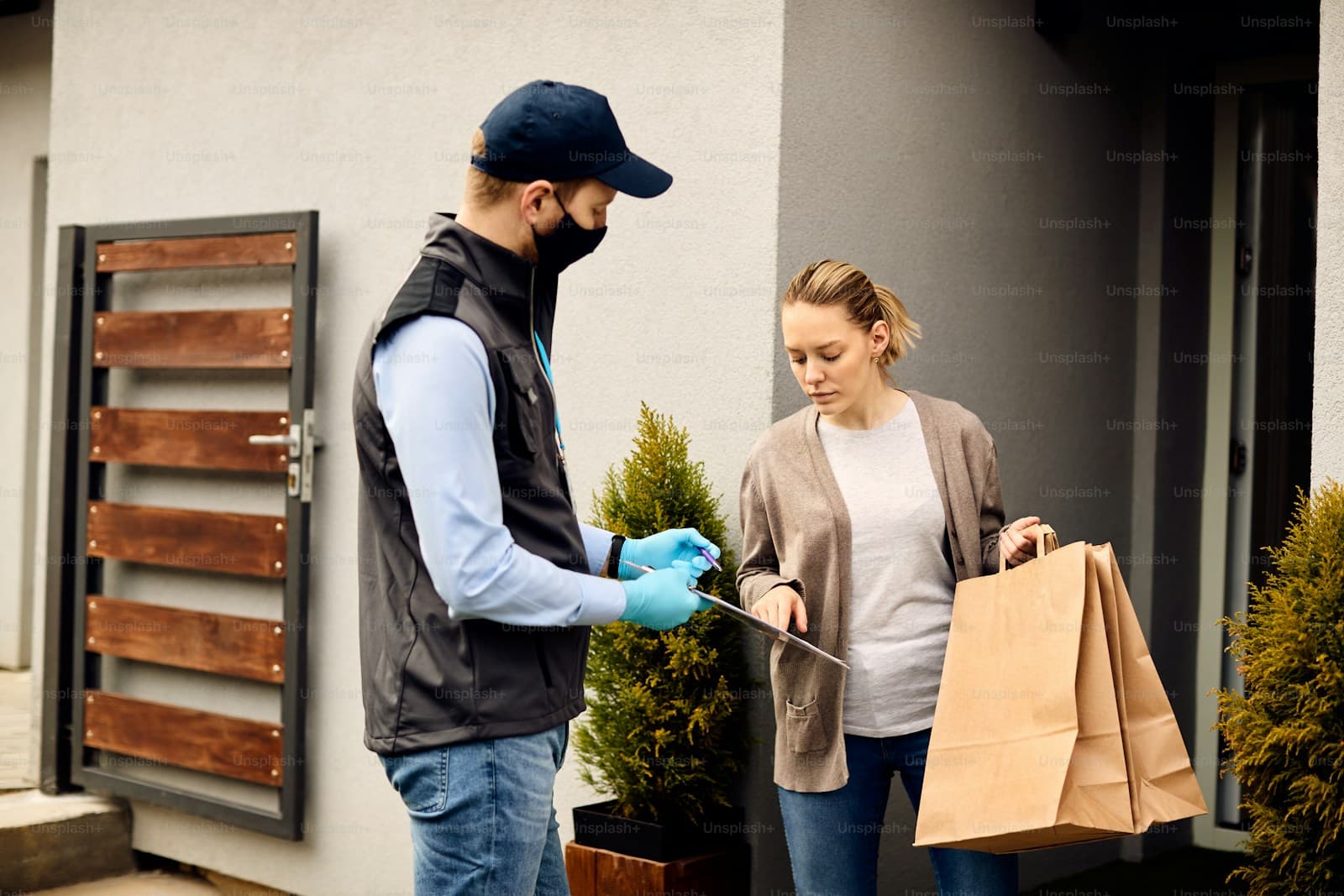
California delivery drivers on restricted licenses face a documentation problem most don't see coming: your employer must verify essential driving, but gig apps don't issue employer letters, and route-only restrictions don't cover dynamic delivery zones.
Why California's Restricted License Creates a Documentation Gap for Delivery Work
California issues restricted licenses for DUI and negligent operator suspensions, allowing driving to and from work and within the scope of employment. The DMV requires proof of SR-22 insurance filing and documentation showing the essential driving need.
Delivery drivers hit a wall at the documentation stage. California expects an employer verification letter confirming work location, hours, and route. DoorDash, Uber Eats, Instacart, and similar platforms operate as app-based contractor relationships, not traditional employment. They don't issue employer letters because you're not an employee. The DMV's forms were written for W-2 workers commuting to a fixed job site.
The route-restriction problem compounds the employer problem. California's restricted license ties approved driving to documented routes between home and work, plus driving within the scope of employment. Delivery work by definition covers dynamic zones that change order-by-order. You can't pre-document a route when the app assigns addresses in real time. Most drivers applying for restricted licenses frame the request as personal commute plus employment-scope driving, but that framing assumes the DMV will accept non-employer verification and zone-based route descriptions rather than fixed-path documentation.
What California DMV Actually Requires for Restricted License Approval
California's restricted license application goes through the DMV, not the courts. The $125 reissue fee covers the application processing. For DUI-triggered suspensions, you must show proof of DUI program enrollment and maintain an SR-22 filing for the entire restricted period and three years beyond full reinstatement.
The required documentation includes proof of SR-22 insurance filing, completion of DUI program enrollment if applicable, payment of the reissue fee, and verification of the essential driving need. For standard employment cases, that verification comes from an employer letter on company letterhead confirming job title, work address, required hours, and confirmation that driving is essential to job performance.
Ignition interlock device installation is required for all DUI-triggered restricted licenses in California. The IID must be installed before the restricted license is issued, and the device logs every ignition event. Delivery drivers must budget for IID installation cost (typically $70–$150) plus monthly lease and calibration fees (typically $60–$90/month). The IID requirement runs for the full restricted period: 12 months for first-offense DUI drivers who opt into the AB 91 IID program immediately after the 30-day hard suspension.
Compare car insurance rates in your state
Get quotes from licensed carriers — no obligation, no spam, results in minutes.
Get Your Free Quote✓ No Obligation Required✓ Licensed Carriers Only✓ Available Nationwide✓ Free to Compare
How Gig Delivery Drivers Document the Work-Driving Need Without an Employer
Gig platforms won't issue traditional employer verification letters, but California DMV will accept alternative documentation proving the essential driving need. The workaround requires assembling a documentation packet that substitutes contractor-status proof for an employer letter.
Start with a signed statement on plain paper describing your work as an independent contractor for the delivery platform, listing the app name, your average weekly hours, and your approximate service area by city or ZIP codes. Attach recent earnings statements or 1099 forms from the platform showing consistent income over the past 60–90 days. Include screenshots from the app showing active contractor status and recent completed deliveries with dates visible.
Add a cover letter to the DMV explaining that you work as an independent contractor, not a W-2 employee, and that the nature of app-based delivery work means routes change dynamically based on customer orders assigned by the platform's algorithm. Frame the request as employment-scope driving within your service zone rather than fixed-route driving between two addresses. Some DMV offices accept this documentation packet; others reject it and require traditional employer verification. The outcome depends on the examiner reviewing your application and whether your local DMV office has seen similar gig-worker cases before.
What Happens When DMV Denies Your Restricted License Application
California DMV denies restricted license applications when documentation doesn't meet standard employment verification requirements or when the suspension type isn't eligible for restricted privileges. Unpaid fines and failure-to-appear suspensions under Vehicle Code 13365 have no restricted license pathway. You must resolve the underlying violation by paying fines or appearing in court before reinstatement.
If your restricted license application is denied because the DMV won't accept gig-work documentation, you have two options. Request an administrative hearing within 10 days of the denial notice to present your case to a hearing officer with authority to override the initial decision. Bring the same documentation packet plus any additional proof of income dependency: bank statements showing regular deposits from the platform, a letter from your landlord or mortgage company showing your housing payment obligations, or a personal statement explaining why losing delivery income would create financial hardship.
The second option is converting to non-owner SR-22 coverage and finding ride-based transportation to a different job that doesn't require driving. Non-owner SR-22 maintains your filing requirement without covering a personal vehicle. This path makes sense only if you can't successfully appeal the DMV denial and can't afford to stop working for the full suspension period.
How SR-22 Filing Setup Works for Delivery Drivers on Restricted Licenses
California requires continuous SR-22 filing for DUI and negligent operator restricted licenses. The SR-22 certificate must be on file with the DMV before the restricted license is issued, and any lapse in coverage triggers immediate re-suspension. The filing must remain active for three years from the date of reinstatement.
Delivery drivers face higher SR-22 premiums than standard drivers because insurers classify delivery work as commercial use even when performed in a personal vehicle. Most personal auto policies exclude coverage for business use, and adding delivery exposure increases the carrier's risk. Expect monthly premiums between $140 and $240 for minimum liability coverage with SR-22 filing, depending on your age, vehicle, and violation history.
Carriers writing SR-22 in California include Progressive, GEICO, The General, Bristol West, Dairyland, and National General. Not all carriers will cover delivery use under a personal policy. Some require a commercial policy or a business-use endorsement that adds $30–$80/month to the base premium. When you request quotes, disclose the delivery work upfront. Hiding commercial use and filing a claim later gives the carrier grounds to deny coverage entirely, leaving you personally liable for damages and facing policy cancellation that re-triggers your suspension.
What Route Violations and IID Failures Mean for Your Restricted License
California restricted licenses limit driving to approved purposes: commute to and from work, driving within the scope of employment, and travel to and from DUI treatment programs if applicable. Any driving outside those purposes violates the restriction terms and triggers revocation.
Delivery drivers face elevated violation risk because service zones overlap with personal-use areas. If you're pulled over while off-duty in the same city where you deliver, you must prove you were driving for an approved purpose at that moment. Keep dated screenshots of active delivery orders in your vehicle. If you can't show proof of an active delivery or a commute to start your shift, the officer can cite you for violating restricted license terms. That citation usually results in immediate revocation and reinstatement of the full suspension with no further restricted privileges.
Ignition interlock device failures carry separate consequences. California IID systems record every failed start attempt (BAC above 0.00%) and every missed rolling retest. Two failed start attempts or one missed rolling retest within a 12-month period extends your IID requirement by six months. Four violations within 12 months revokes the restricted license entirely and adds 12 months to your total suspension period. The IID device logs are automatically transmitted to the DMV; you can't hide violations or missed calibrations.
Whether CDL Holders Can Use a Restricted License for Delivery Work
California restricted licenses do not restore commercial driving privileges. If you hold a CDL and your personal license is suspended, the restricted license allows personal-vehicle use only. You cannot drive commercial vehicles under a restricted license even if your delivery job requires a box truck or cargo van over 10,001 pounds GVWR.
Most app-based delivery platforms (DoorDash, Uber Eats, Instacart) use personal vehicles under CDL thresholds, so a restricted license covers that work. If your delivery job requires a CDL vehicle, you cannot perform that work during the restricted period. The CDL disqualification runs parallel to your personal license suspension, and restricted privileges don't transfer to the commercial credential.
CDL holders also face federal disqualification periods that override state restricted license rules. A DUI conviction in a personal vehicle disqualifies you from operating commercial vehicles for one year minimum under 49 CFR 383.51, regardless of California's restricted license availability. If your delivery income depends on CDL operation, the federal disqualification blocks that work entirely until the one-year period ends and you apply for CDL reinstatement separately from your personal license.