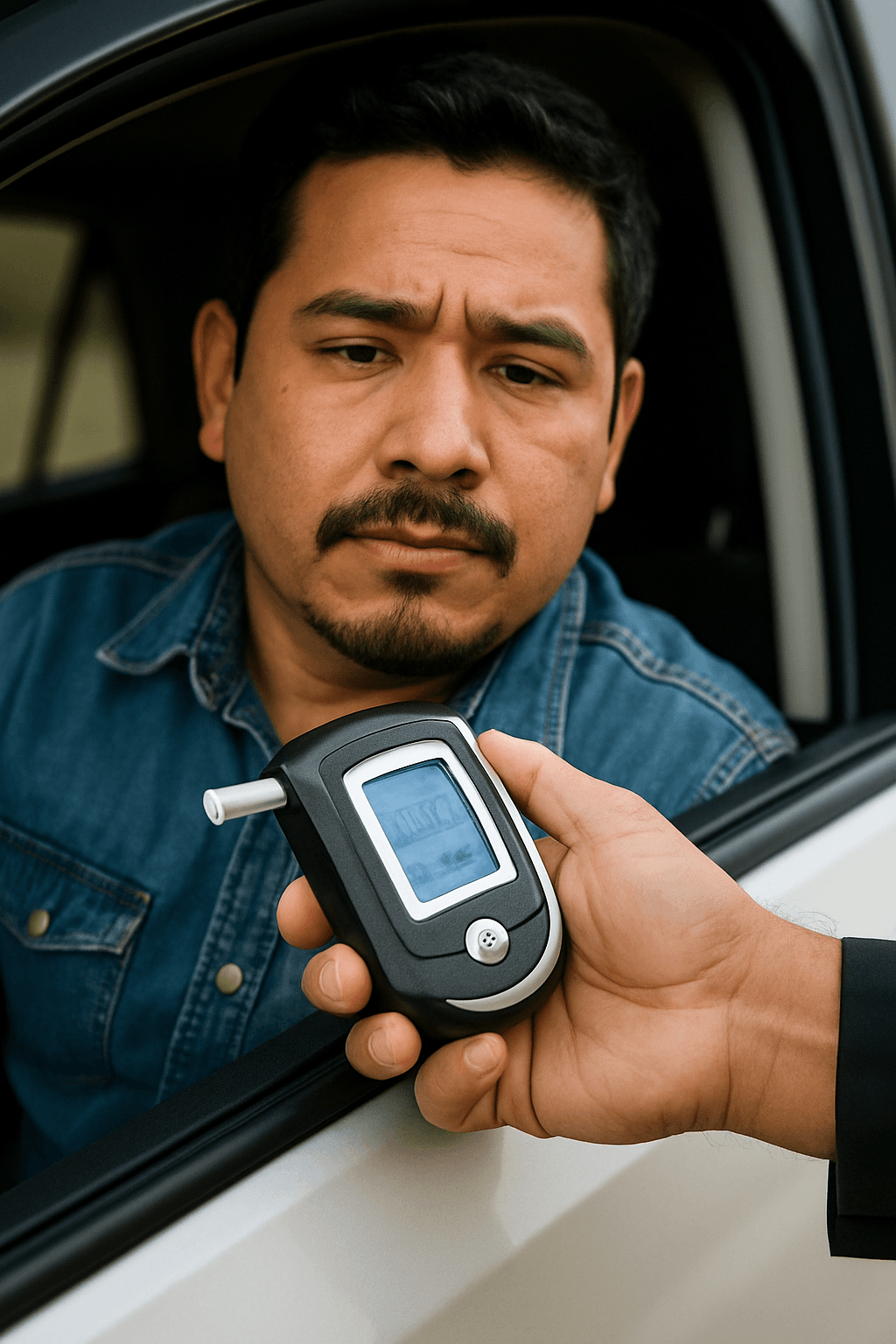
Delaware's Conditional License lets suspended drivers keep their jobs, but the DMV requires approved routes, employer documentation, and SR-22 filing before approval. Ignition interlock is mandatory for DUI cases.
What Delaware Calls Its Work-Purposes Hardship License and Who Qualifies
Delaware issues a Conditional License to drivers whose licenses are suspended but who need to drive for work, school, or medical appointments. This is not a generic hardship program. The DMV evaluates your specific employment need, requires employer verification, and restricts you to documented routes and hours.
DUI offenders qualify after completing initial administrative suspension requirements and enrolling in Delaware's Ignition Interlock Program. Points-based suspensions also qualify, provided you meet all reinstatement conditions first. Unpaid fines, child support arrears, and uninsured driving suspensions require clearing the underlying issue before the DMV will consider your application.
The state does not use the term "hardship license" or "occupational license" in official documents. If you call the DMV or submit paperwork, use the term Conditional License to avoid confusion. The application path runs through the Delaware Division of Motor Vehicles, not the courts.
Required Documentation: Employer Letters, SR-22 Filing, and IID Enrollment Proof
Delaware requires proof of employment or essential need before issuing a Conditional License. Your employer must provide a signed letter on company letterhead stating your job title, work address, required work hours, and whether your job requires driving during work hours (delivery, sales, home healthcare, etc.). The letter must include a supervisor's contact information for DMV verification.
You must file SR-22 insurance before the DMV will approve your application. The SR-22 is a certificate your insurer files directly with the DMV proving you carry at least Delaware's minimum liability coverage: $25,000 per person, $50,000 per accident for bodily injury, and $10,000 for property damage. PIP coverage is also required in Delaware. Non-owner SR-22 policies are available if you do not own a vehicle but need to drive for work.
If your suspension stems from a DUI, you must enroll in Delaware's Ignition Interlock Program and provide proof of IID installation before the DMV will issue your Conditional License. This requirement applies to first-time DUI offenders, not just repeat cases. The IID must remain installed for the duration of your restricted driving period and typically extends beyond your Conditional License term into full reinstatement.
Compare car insurance rates in your state
Get quotes from licensed carriers — no obligation, no spam, results in minutes.
Get Your Free Quote✓ No Obligation Required✓ Licensed Carriers Only✓ Available Nationwide✓ Free to Compare
Approved Routes and Hours: What the DMV Allows and What Triggers Revocation
Delaware restricts your Conditional License to essential purposes: commuting to and from work, driving during work hours if your job requires it, attending school or vocational training, reaching medical appointments, and other court- or DMV-approved destinations. The DMV does not issue a blanket "work" approval. Your application must document specific routes: home address to work address, work address to client sites if applicable, and any regular stops required for your job.
Time restrictions are tied to your documented work schedule. If your employer letter states you work Monday through Friday, 7 a.m. to 5 p.m., the DMV will restrict your Conditional License to those hours plus reasonable buffer time for commuting. If you work night shifts or rotating schedules, your employer must document that in the verification letter. The DMV does not assume flexibility.
Violating your route or time restrictions triggers immediate revocation of your Conditional License without hearing. If a police officer stops you outside your approved hours or off your documented route, your Conditional License is void on the spot, and you face a new charge for driving under suspension. Delaware does not offer grace periods or warnings for first violations. CDL holders should note that Conditional Licenses do not permit commercial vehicle operation, even if your job requires a CDL. You must arrange alternative transportation for commercial driving duties.
Application Process, Timeline, and the $25 Reinstatement Fee
You apply for a Conditional License directly with the Delaware Division of Motor Vehicles. Delaware operates a centralized DMV structure, so all applications are processed at the state level rather than through county offices or courts. Processing timelines vary by case complexity and current DMV workload. Typical approval takes several weeks, though delays occur when employer documentation is incomplete or SR-22 filing is not verified in the DMV system.
The base reinstatement fee for most suspensions is $25, but additional fees apply depending on your suspension cause. DUI cases require IID installation fees, monthly IID monitoring fees, and higher SR-22 insurance premiums. Points-based suspensions may require completion of a driver improvement course before the DMV will approve your Conditional License application. Unpaid fines must be cleared in full before the DMV will process any hardship application.
Once approved, your Conditional License is valid only for the specific period and purposes documented in your application. The DMV does not issue indefinite work permits. If your employment changes, your work hours shift, or you change addresses, you must notify the DMV immediately and submit updated documentation. Failure to report changes is treated as a route violation and can result in revocation.
How SR-22 Insurance Works with Delaware's Conditional License and What It Costs
SR-22 is not a type of insurance. It is a filing your insurer submits to the Delaware DMV certifying you carry continuous liability coverage. The SR-22 filing fee itself is typically $15 to $50, depending on your carrier. The premium increase is the larger cost. Drivers with DUI suspensions or multiple violations typically pay $140 to $190 per month for liability-only coverage with SR-22 filing, compared to $80 to $120 per month for clean-record drivers.
Not all carriers write SR-22 policies in Delaware. Geico, Progressive, The General, Dairyland, National General, and Direct Auto all file SR-22 in the state and work with suspended-license drivers. State Farm files SR-22 but typically does not write new policies for DUI cases. Many preferred-tier carriers (Amica, USAA, Hartford, Travelers) either do not file SR-22 or will not write policies for suspended drivers.
If you do not own a vehicle but need to drive for work, you can purchase non-owner SR-22 insurance. This covers liability when you drive someone else's vehicle, including employer-owned vehicles. Non-owner policies cost less than standard policies because they exclude collision and comprehensive coverage. Typical non-owner SR-22 premiums in Delaware range from $50 to $90 per month.
Your SR-22 filing must remain active for the entire duration of your suspension and reinstatement period. If your policy lapses or cancels, your insurer notifies the DMV electronically, and your Conditional License is revoked immediately. Delaware does not offer grace periods for SR-22 lapses.
What Happens If Your Conditional License Is Revoked or You Are Caught Driving Outside Approved Hours
Driving outside your approved routes or hours is treated as driving under suspension, a criminal offense in Delaware. The penalty is not a civil infraction or a traffic ticket. You face arrest, a new suspension period, and fines starting at several hundred dollars. Your Conditional License is revoked without hearing, and you must wait until your full suspension period ends before reapplying for any driving privileges.
If your SR-22 filing lapses because you miss a payment or your policy cancels, the DMV receives electronic notification within 24 hours. Your Conditional License is suspended immediately, and you are barred from driving until you file a new SR-22 and pay any additional reinstatement fees. Some drivers assume they have a few days to fix a lapse. Delaware's system does not work that way.
CDL holders face additional federal consequences. A DUI or major violation that triggers a personal-vehicle suspension also suspends your CDL, and the Conditional License does not restore commercial driving privileges. Federal Motor Carrier Safety Administration rules prohibit operating a commercial vehicle under any state hardship license. If your job requires a CDL, the Conditional License allows you to commute to work in a personal vehicle but does not permit you to perform commercial driving duties.
Comparing Delaware's Conditional License to Full Reinstatement and Planning Your Path Forward
A Conditional License is not full reinstatement. It is a stopgap that keeps you employed while you serve your suspension period and meet all reinstatement conditions. Full reinstatement requires completing your suspension term, paying all fees, maintaining continuous SR-22 filing, and completing any required driver improvement or DUI education programs.
DUI cases typically require three years of SR-22 filing in Delaware, measured from the conviction date. Your Conditional License may end before that three-year period expires, meaning you must maintain SR-22 and IID compliance even after transitioning to an unrestricted license. Points-based suspensions and uninsured driving cases have shorter SR-22filing periods, but you must verify your specific requirement with the DMV.
The cost of full reinstatement includes the $25 base fee, any outstanding fines or court fees, SR-22 insurance premiums over the filing period, and IID costs if applicable. A three-year SR-22 filing period at $150 per month totals $5,400 in premium costs alone. Adding IID installation ($100 to $150) and monthly monitoring fees ($70 to $100) increases the total significantly. These costs are unavoidable if you need to drive for work. The alternative is job loss.