Delaware's Conditional License allows essential-purpose driving after suspension, including work commutes. The DMV requires employer documentation, SR-22 filing, and ignition interlock for DUI cases before approval.
What Delaware's Conditional License Actually Permits
Delaware's Conditional License restricts your driving to essential purposes: work commutes, school attendance, medical appointments, and other DMV-approved destinations. The license does not restore full driving privileges. You drive the documented route during approved hours only.
The Division of Motor Vehicles administers the program centrally. No county-level variation exists. Every application flows through the same state DMV process, which simplifies documentation requirements but makes employer verification paperwork decisive. If your employer letter omits required details, the DMV denies the application without a hearing.
If you hold a CDL, the Conditional License covers personal vehicle operation only. You cannot use it for commercial driving, even to commute to a CDL-required job. Most employers requiring CDL operation will not retain drivers on restricted licenses due to liability exposure.
Who Qualifies for a Conditional License in Delaware
Delaware grants Conditional Licenses to DUI offenders and drivers suspended for points accumulation. Other suspension types may qualify depending on the underlying cause. The DMV evaluates each application against the documented essential need and the suspension record.
DUI eligibility requires completing the Ignition Interlock Program enrollment before the DMV processes the Conditional License application. The ignition interlock device installation happens first. You cannot receive conditional driving approval without IID enrollment proof, per 21 Del. C. § 2742A.
Points-based suspensions typically qualify if the suspension period allows hardship consideration and you demonstrate an employment or medical need the DMV considers essential. Unpaid fines or child support arrears may block approval until resolved. Administrative per se suspensions following DUI arrest run concurrently with court-ordered suspensions following conviction. Both tracks must allow conditional driving before the DMV issues the license.
Compare car insurance rates in your state
Get quotes from licensed carriers — no obligation, no spam, results in minutes.
Get Your Free Quote✓ No Obligation Required✓ Licensed Carriers Only✓ Available Nationwide✓ Free to Compare
How to Apply Through Delaware DMV
Submit your Conditional License application directly to the Delaware Division of Motor Vehicles. The application requires proof of employment or essential need, an SR-22 insurance certificate, and a completed application form. Additional documentation varies by suspension type.
Your employer verification letter must state your job title, work address, required work hours, and the necessity of driving to perform the job. Generic letters stating "employee needs to drive" fail. The DMV wants specifics: shift start and end times, whether the job requires driving during work hours, and whether public transportation serves the route.
DUI cases require ignition interlock enrollment documentation before the DMV reviews the Conditional License application. The IID provider issues a compliance certificate after installation. Submit that certificate with your application. Processing time varies but typically takes several weeks after the DMV receives complete documentation.
Employer Documentation Delaware DMV Requires
The employer verification letter is the application's centerpiece. Delaware DMV rejects applications with incomplete or generic employer statements. Your employer must provide a letter on company letterhead, signed by a supervisor or HR representative, confirming your employment status and the necessity of driving.
The letter must document your work schedule with precision. State your shift hours, not "full-time" or "varies." If your job requires driving during work hours (delivery driver, sales rep, home health aide), the letter must describe those duties specifically. If your job does not require mid-shift driving, state that clearly so the DMV knows your restriction applies to commute only.
Some employers refuse to write verification letters due to liability concerns. If your employer will not provide documentation, the DMV has no basis to approve essential-purpose driving. Self-employed applicants face additional scrutiny. You must document business operations, client locations, and why driving is necessary rather than remote work or public transit.
SR-22 Filing Requirement and Cost Impact
Delaware requires SR-22 filing for Conditional License approval. The SR-22 certificate proves you carry liability insurance meeting state minimums: $25,000 per person, $50,000 per accident for bodily injury, and $10,000 property damage. Your insurer files the SR-22 form electronically with the DMV on your behalf.
SR-22 filing itself costs $15 to $50 depending on the carrier. The premium impact is larger. Drivers with DUI suspensions typically pay $140 to $220 per month for minimum liability coverage with SR-22 filing, compared to $85 to $120 per month for clean-record drivers. The rate increase reflects the suspension on your record, not the SR-22 form itself.
If you do not own a vehicle, non-owner SR-22 insurance satisfies the filing requirement. Non-owner policies cover liability when you drive borrowed or rented vehicles. Premiums for non-owner SR-22 run $30 to $60 per month in Delaware, significantly lower than standard policies because the carrier assumes lower exposure.
Ignition Interlock Installation Timeline for DUI Cases
DUI offenders must enroll in Delaware's Ignition Interlock Program before receiving Conditional License approval. The IID requirement applies regardless of BAC level or offense number. You cannot skip this step.
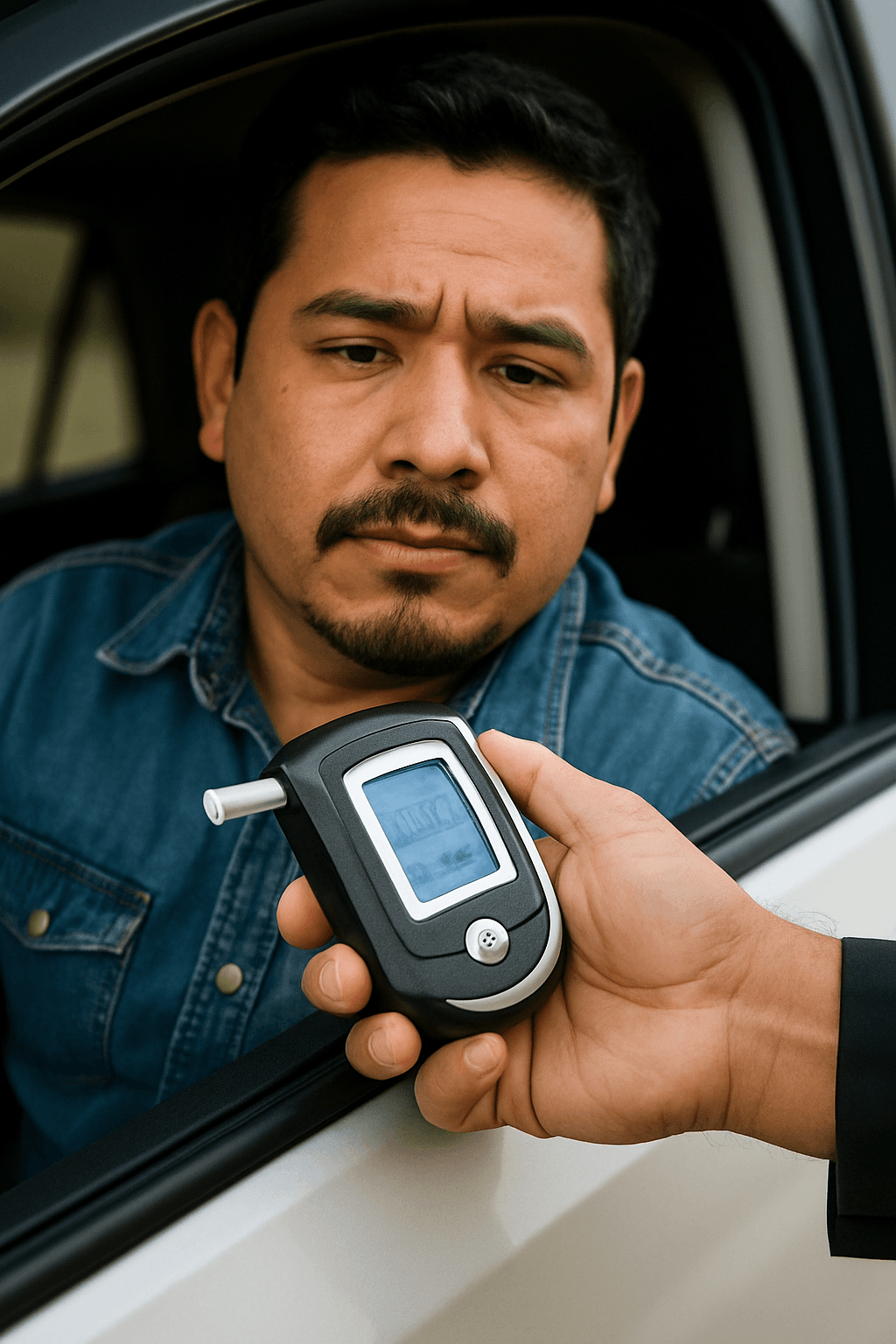
The ignition interlock device connects to your vehicle's starter system and requires a breath sample before the engine starts. Installation costs $75 to $150. Monthly monitoring and calibration fees run $60 to $90. The device records every start attempt, failed test, and missed rolling retest. The IID provider reports compliance data to the DMV monthly.
Violations trigger immediate consequences. If you fail a breath test, attempt to tamper with the device, or miss a required calibration appointment, the IID provider notifies the DMV. Delaware revokes the Conditional License without advance warning for program violations. Your suspension period restarts from the revocation date.
Approved Routes and Time Restrictions
The Conditional License restricts you to documented routes for approved purposes during approved hours. Work commute approval typically covers the direct path from your residence to your workplace during your documented shift hours, plus a reasonable buffer for traffic or weather delays.
If your job requires driving during work hours, the DMV may approve broader route authorization. Delivery drivers, sales representatives, and home health aides typically receive permission to drive within a defined geographic area during work hours. The employer verification letter must document this need specifically, including typical service areas or client locations.
Driving outside approved hours or routes violates your Conditional License terms. Law enforcement officers who stop you will verify the current time and your destination against your license restrictions. If you are driving at 9 PM when your approved work hours end at 5 PM, you face arrest for driving under suspension. The original suspension period restarts, and reinstatement becomes significantly more difficult.
What Happens If Your Application Is Denied
Delaware DMV denies Conditional License applications that lack complete documentation, fail to demonstrate essential need, or involve suspension types the program does not cover. The denial letter states the reason. Most denials result from incomplete employer verification or missing SR-22 filing proof.
You can reapply after correcting the deficiency. If your employer letter was too generic, obtain a revised letter with specific shift hours and job duties. If your SR-22 filing had not yet reached the DMV when you applied, confirm your insurer transmitted the form and resubmit. The application fee applies each time you submit.
Some suspension types do not qualify for conditional driving under any circumstances. If your denial letter states your suspension category is ineligible, reapplying with better documentation will not change the outcome. In those cases, you wait until the full suspension period ends and pay the $25 reinstatement fee to restore full privileges.