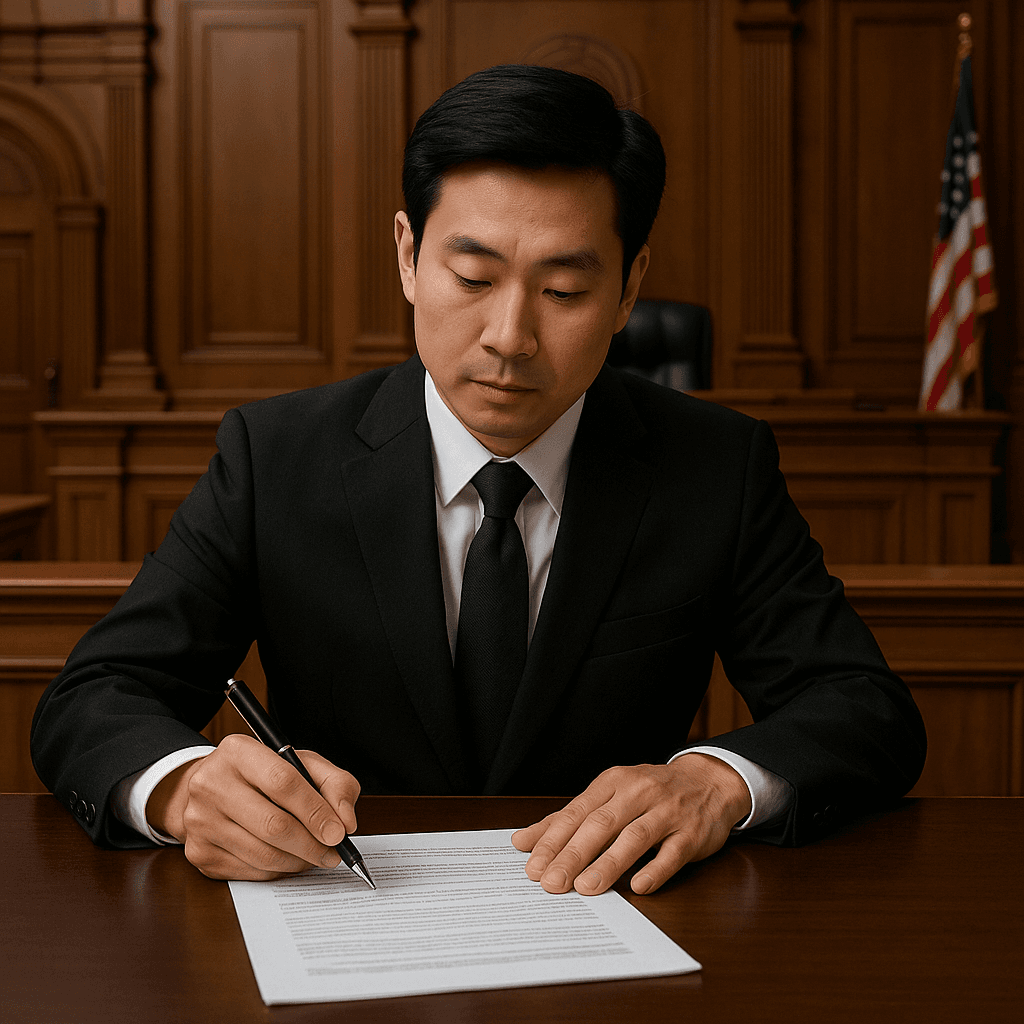
Some states require a judge's approval for work-driving permits during suspension. Others let the DMV issue them administratively. The difference determines whether you wait 3 weeks or 3 months to drive again.
Why the Pathway Matters More Than the Suspension Type
Your suspended license came from the DMV, but in 14 states the work permit that lets you keep your job requires a court hearing with a judge's approval. The suspension itself is administrative. The remedy is judicial. That structural split creates a timeline gap most drivers discover only after they've already lost two paychecks.
DMV-path states issue employment driving permits through the same agency that suspended you. You submit paperwork, pay a fee, wait for processing. Court-path states require a petition filed with the court, a hearing date scheduled weeks out, and a judge's discretionary approval before the DMV will issue anything. The timeline difference is not cosmetic: DMV-path permits typically process in 10-21 days. Court-path permits take 45-90 days from petition filing to approved license in hand.
The underlying suspension cause does not predict the pathway. DUI suspensions in Ohio go through the BMV. DUI suspensions in Indiana require a court hearing. Both are administrative license actions. The difference is state legislative structure, not your violation.
The 14 Court-Path States and What They Require
Indiana, Kentucky, Louisiana, Maryland, Missouri, Montana, New Mexico, North Dakota, Oklahoma, South Dakota, Tennessee, Utah, West Virginia, and Wyoming all require judicial approval for employment-restricted licenses during most suspension types. The specifics vary: Indiana requires a petition to the circuit court in the county where you were convicted or where you reside. Missouri requires a petition to the associate circuit court with proof of SR-22 filing already completed before the hearing. Montana requires a show-cause hearing where the judge evaluates whether your work need outweighs public safety risk.
Each state uses different terminology: Indiana calls it a Specialized Driving Privileges petition. Missouri calls it a Limited Driving Privilege. Montana calls it a Probationary License. The procedural anchor is the same: you are asking a judge, not a DMV examiner, to grant the privilege.
The petition itself is a legal filing. Most require: a notarized affidavit describing the suspension, proof of SR-22 insurance already filed, an employer verification letter on company letterhead stating your work hours and job-related driving need, a proposed driving schedule with specific routes and times, and a filing fee paid to the court clerk. Indiana's fee is typically $150-$200. Missouri's ranges from $50-$100 depending on county. The hearing itself occurs 3-6 weeks after filing in most jurisdictions.
Compare car insurance rates in your state
Get quotes from licensed carriers — no obligation, no spam, results in minutes.
Get Your Free Quote✓ No Obligation Required✓ Licensed Carriers Only✓ Available Nationwide✓ Free to Compare
The DMV-Path States and Why They Move Faster
The remaining 36 states plus DC issue work permits administratively. You submit an application to the DMV or its equivalent agency, provide required documentation, pay the fee, and wait for the agency to process and mail the restricted license. No judge. No hearing. No court filing.
Texas issues Occupational Driver's Licenses through the Department of Public Safety after you complete an online application, submit proof of SR-22 coverage, and pay a $10 administrative fee. Processing typically takes 7-14 business days. California issues Restricted Licenses for work and necessary travel after you complete the DL 205 form, provide employer verification, install an IID if required for your suspension type, and pay a $125 reissue fee. Processing is 10-20 business days in most counties.
Florida's Business Purposes Only License requires completion of the DHSMV 78-065 form, proof of enrollment in DUI school if applicable, SR-22 filing confirmation, and a $45 administrative fee. The agency processes applications in 5-10 business days for non-DUI suspensions, 15-25 days for DUI cases after mandatory waiting periods.
The DMV-path advantage is speed and predictability. You are not asking for discretionary approval. You are meeting a checklist the agency must honor if the statutory requirements are satisfied.
How SR-22 Filing Timing Changes Between Pathways
Court-path states typically require SR-22 filing before the hearing date. The judge will not approve a work permit if proof of high-risk insurance is not already on file with the DMV at the time of the hearing. Missouri explicitly requires the SR-22 certificate number in the petition itself. Indiana requires the SR-30 state filing confirmation attached to the petition as Exhibit B.
This creates a procedural trap: you cannot get SR-22 coverage without knowing whether the permit will be approved, but you cannot get the permit approved without SR-22 already filed. The resolution is upfront cost. You file SR-22, pay the first month's premium, and proceed with the petition understanding that if the judge denies the request, you're locked into a policy you cannot use until full reinstatement.
DMV-path states allow simultaneous filing. You submit the work permit application and the SR-22 filing confirmation together. Some states process them as a single transaction: the restricted license and the SR-22 compliance are recorded in the same system update. The financial risk is lower because the administrative approval is more predictable than judicial discretion.
What Employer Verification Must Include in Each Pathway
All employment-restricted licenses require employer verification. The content required differs by pathway structure. DMV-path states typically accept a simple letter on company letterhead confirming: your name, your job title, your regular work hours, whether the job requires driving during work hours, and the employer's contact information for DMV follow-up if needed. Texas requests this but does not require notarization. California requests it and requires the employer's signature but not notarization.
Court-path states require notarized affidavits in most cases. The employer must sign the verification letter in front of a notary public, and the notary must stamp and sign the document certifying the employer's identity. Indiana, Missouri, and Montana all require notarized employer affidavits as part of the petition filing. Kentucky does not require notarization but does require the employer to provide a phone number where court staff can verify the letter's authenticity before the hearing.
The employer coordination timeline matters. If your employer's HR department takes two weeks to produce the verification letter, that delay stacks on top of the court hearing wait in court-path states. In DMV-path states, the delay only affects your application submission date, not a downstream hearing calendar.
Why Some Petitions Get Denied Even When Requirements Are Met
Court-path permits involve judicial discretion. Meeting the statutory checklist does not guarantee approval. Judges evaluate: the nature of the underlying suspension, your prior driving record, whether alternative transportation is genuinely unavailable, and whether the proposed driving schedule is narrowly tailored to the stated need.
Missouri judges frequently deny petitions when the proposed schedule includes evening or weekend hours not directly tied to documented work shifts. A petition requesting Monday-Friday 7 a.m. to 6 p.m. driving for a job with documented hours of 8 a.m. to 5 p.m. will draw scrutiny: the extra buffer time is seen as personal-use driving disguised as work necessity.
Indiana judges deny petitions when the employer verification letter does not specify whether the job requires driving as a core function or only as occasional necessity. If your job is warehouse work and driving is only needed for the commute, the petition must frame that honestly. If the letter implies the job itself requires driving when it does not, the judge will catch the inconsistency during questioning and deny on credibility grounds.
DMV-path permits are checklist-based. If you meet the statutory requirements, the agency issues the license. Discretionary denial is rare and typically limited to cases where documentation is incomplete or facially inconsistent.
What Happens to Your Job Timeline in Court-Path States
Court-path states create a forced gap between suspension effective date and work-permit effective date. Most employers cannot hold a position open for 60-90 days without the employee able to perform the essential function of commuting. The petition process does not pause the suspension. You are unlicensed from the suspension effective date forward, even while the petition is pending.
Some court-path states allow emergency or temporary work permits while the full petition is pending. Missouri offers a 15-day Temporary Restricted Driving Privilege if you can demonstrate immediate job loss without interim driving ability, but it requires a separate expedited hearing with a higher filing fee. Indiana does not offer temporary relief: the suspension is absolute until the circuit court approves the petition and the BMV processes the restricted license.
The employer conversation must happen early. If your suspension notice gives you 10 days before the effective date, you need to file the petition, schedule the hearing, and explain to your employer that you will be unable to drive legally for 6-12 weeks even if everything goes smoothly. Some employers terminate immediately. Others will accommodate if they understand the timeline upfront and the employee demonstrates they are actively navigating the process.
DMV-path states compress this gap to 2-3 weeks in most cases. The risk of job loss is not eliminated, but it is substantially lower when the employee can say "I will have my work permit in hand by [specific date]" rather than "I'm waiting on a court hearing that may or may not be approved."