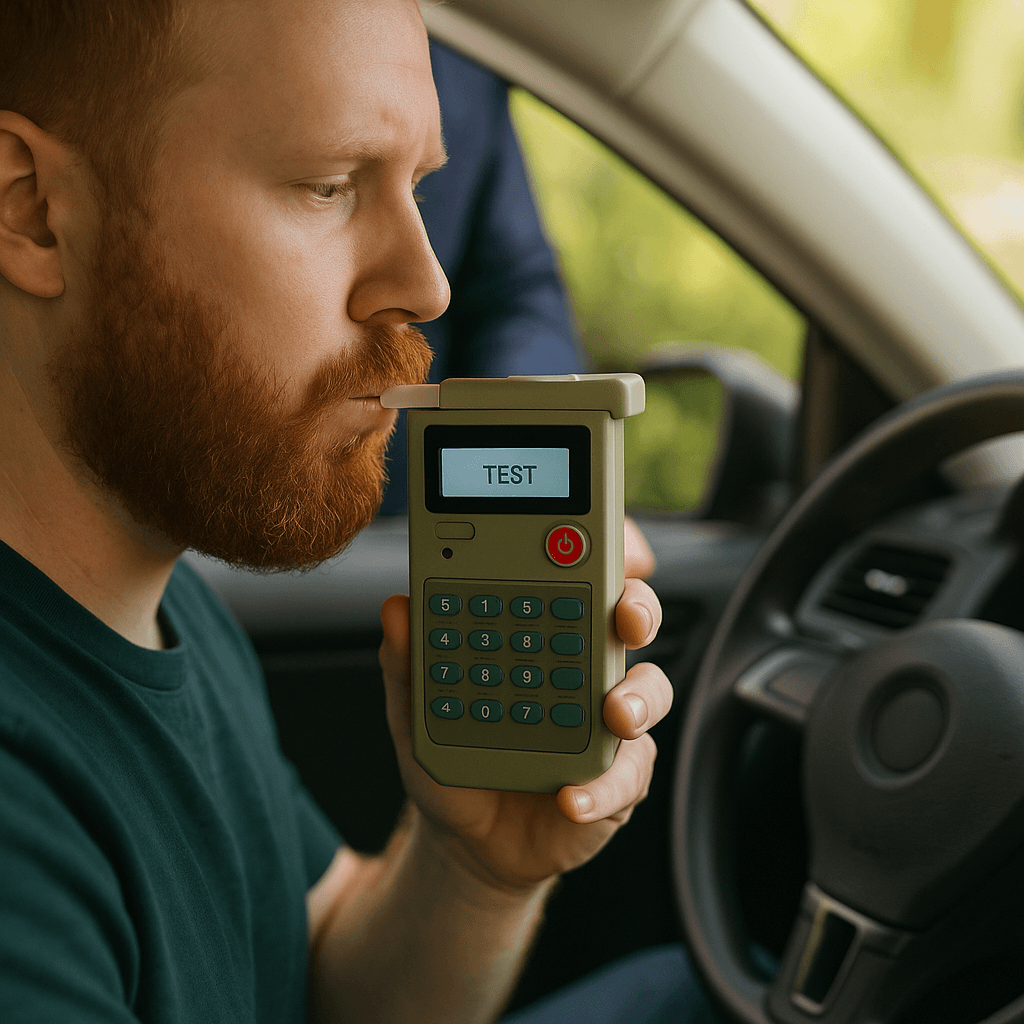
Connecticut requires SR-22 filing and ignition interlock installation before your Special Operation Permit approval for DUI-related suspensions. You must serve a 45-day hard suspension before any restricted driving begins.
What Connecticut Calls the Work-Restricted License and When You Qualify
Connecticut issues a Special Operation Permit (SOP) for essential driving purposes including employment, medical treatment, and education. The permit is available after specific suspension types, but DUI-related suspensions carry a mandatory 45-day hard suspension period before you qualify. No driving is permitted during those 45 days—not for work, not for emergencies, not for any reason.
The permit requires DMV approval through a formal application process. You must submit proof of employment or other essential need, an SR-22 insurance certificate for DUI-related suspensions, and any additional documentation the DMV specifies. Most applicants underestimate the documentation burden: your employer verification letter must detail your work schedule, start time, end time, job duties requiring driving, and the specific route from home to work.
Ignition interlock installation is required for DUI-related suspensions before the DMV will approve your SOP application. The device must be installed by a state-approved vendor, and you must provide the installation certificate as part of your application packet. Skipping this step delays approval by weeks.
Approved Routes and Hours Under the Connecticut SOP
Your SOP restricts driving to essential purposes only: employment, medical appointments, alcohol education programs, and court-ordered obligations. The permit does not allow discretionary errands, social visits, or recreational driving. Hours are restricted to the specific schedule of your essential activities as documented in your application.
The DMV defines your approved route on a case-by-case basis. If your job requires driving during work hours—delivery routes, service calls, client visits—you must document those routes in your employer verification letter. The DMV may approve broader driving windows for jobs with variable routes, but the default assumption is home-to-work commute only.
If your work schedule changes after permit approval, you must notify the DMV and request an amendment. Driving outside your approved hours or routes triggers immediate revocation. Connecticut does not issue warnings for first violations. One stop outside your approved window ends the permit, and you serve the remainder of your suspension with no restricted-driving option.
Compare car insurance rates in your state
Get quotes from licensed carriers — no obligation, no spam, results in minutes.
Get Your Free Quote✓ No Obligation Required✓ Licensed Carriers Only✓ Available Nationwide✓ Free to Compare
SR-22 Filing Requirements for the Special Operation Permit
DUI-related suspensions require SR-22 filing before the DMV will process your SOP application. The SR-22 certificate proves you carry Connecticut's minimum liability coverage: $25,000 per person for bodily injury, $50,000 per accident, and $25,000 for property damage. Your carrier files the SR-22 electronically with the Connecticut DMV.
SR-22 filing typically costs $15 to $50 as a one-time fee, but the liability coverage itself raises your premium. Expect monthly premiums between $140 and $240 for minimum coverage with an SR-22 endorsement, depending on your violation history and county. Carriers writing SR-22 in Connecticut include Geico, Progressive, The General, Dairyland, Bristol West, and National General.
Connecticut requires SR-22 maintenance for 3 years from the date your license is reinstated, not from the date of conviction or filing. If your SR-22 lapses at any point during that window—because you miss a payment, switch carriers without transferring the filing, or cancel the policy—the DMV suspends your license again immediately. You start the 3-year filing period over from zero.
Ignition Interlock Device Installation and SOP Approval
Connecticut mandates ignition interlock installation for DUI-related Special Operation Permits. The device prevents the vehicle from starting unless you provide a clean breath sample. Random rolling retests occur while driving, typically every 5 to 15 minutes after ignition.
Installation costs range from $70 to $150, and monthly monitoring fees run $60 to $90. You pay these costs directly to the approved vendor. The DMV provides a list of approved vendors; using an unapproved installer voids your SOP eligibility. The installation certificate must accompany your SOP application—most applicants schedule installation the week before submitting their packet to avoid delays.
If the device records a failed breath test, a skipped rolling retest, or tampering, the vendor reports the violation to the DMV within 48 hours. One confirmed violation revokes your SOP immediately. You do not get a second chance to correct the issue. The remainder of your suspension is served without restricted driving.
What Happens If You're Caught Driving Outside Approved Hours or Routes
Connecticut law enforcement can verify SOP restrictions in real time during traffic stops. Officers check your permit status against the DMV database, which lists your approved hours and general route purpose. Driving outside those parameters is operating under suspension, not a lesser violation.
A conviction for violating SOP terms carries the same penalties as driving on a fully suspended license: up to 30 days in jail, fines up to $500, and automatic revocation of your SOP. The DMV does not reinstate restricted driving privileges after revocation. You serve the full remaining suspension period with no work driving.
If your employer changes your schedule or requires an unplanned route—client emergency, shift swap, temporary job site—you must request DMV approval before driving that route. Most DMV offices require written requests submitted 5 to 10 business days in advance. The assumption is you plan all essential driving; spontaneous route changes are your responsibility to avoid.
CDL Holders and Commercial Vehicle Exclusions
Connecticut's Special Operation Permit does not authorize commercial vehicle operation. If you hold a CDL and your job requires driving a commercial vehicle, the SOP allows you to commute to work in a personal vehicle only. You cannot operate the commercial vehicle itself, even if your employer verifies the need.
This restriction applies even if your DUI occurred in a personal vehicle and your CDL was not directly suspended. Federal Motor Carrier Safety Administration regulations prohibit restricted CDL privileges for alcohol-related violations. Your personal-vehicle SOP and your CDL suspension run on separate tracks.
If your job depends on commercial driving and your employer cannot reassign you to non-driving duties, the SOP does not preserve your employment. Some CDL holders apply for the SOP to commute to a different job while serving their suspension. Others pursue full reinstatement through the standard timeline rather than relying on restricted privileges that do not cover their actual work need.
Timeline from Application to Permit Issuance
Connecticut DMV processing times for Special Operation Permit applications vary by case complexity and current caseload. Typical processing ranges from 2 to 6 weeks after submission of a complete application packet. Incomplete applications—missing employer verification, unsigned SR-22 certificate, missing IID installation proof—add 3 to 4 weeks to the timeline.
You cannot drive on a pending SOP application. The 45-day hard suspension for first-offense DUI must be fully served before the DMV will issue the permit, even if your application is approved earlier. Submit your application during the hard suspension window so approval timing aligns with your eligibility date.
If the DMV denies your application, you receive a written explanation specifying the deficiency. Common denial reasons include incomplete employer documentation, failure to install ignition interlock, unpaid reinstatement fees, and unresolved court obligations. You may reapply after correcting the issue, but each reapplication restarts the processing clock. Address all documentation requirements in the first submission.