Your state's hardship license approval depends on using a pre-certified IID vendor. Most drivers don't realize installation from an unapproved provider voids eligibility before the DMV ever sees the application.
Why State-Approved Vendor Lists Exist for Hardship License Applications
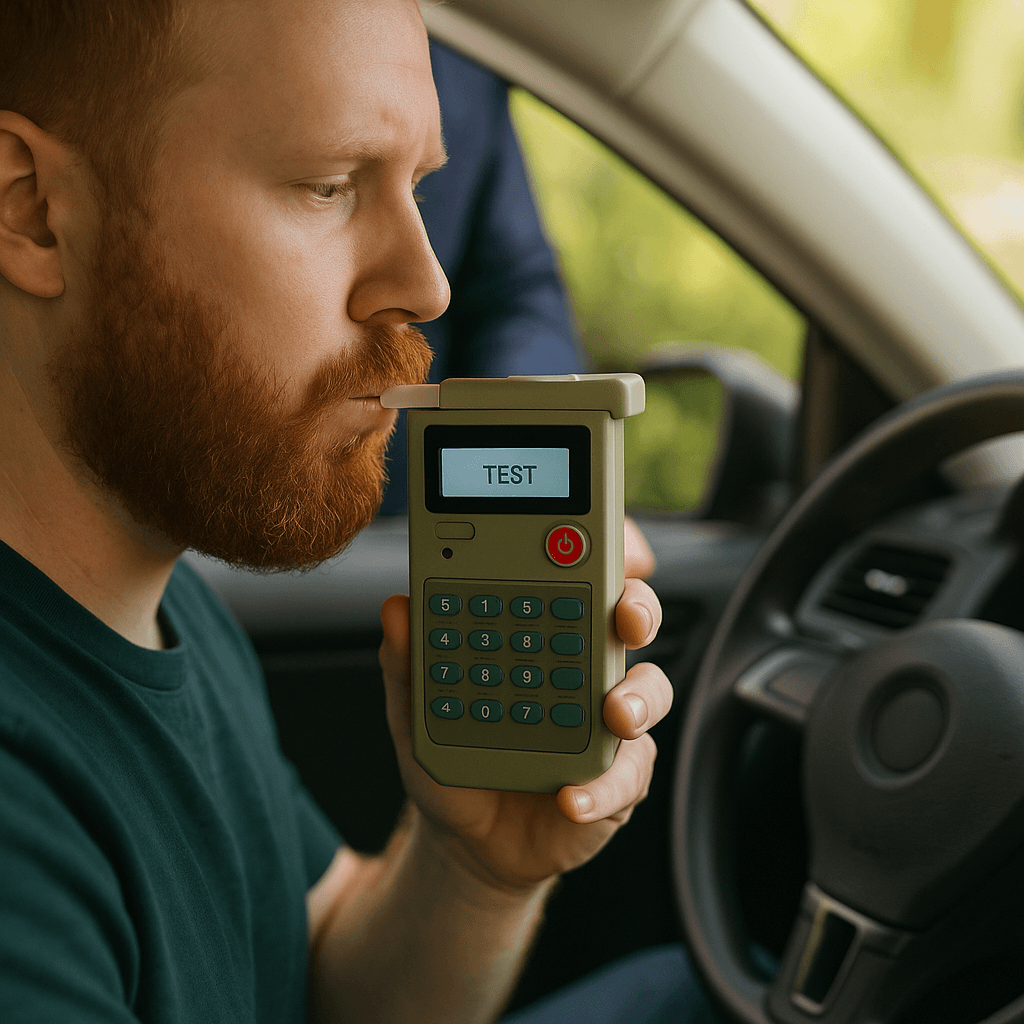
States maintain certified IID vendor lists because hardship license programs require real-time monitoring data transmitted directly from the device to court systems and DMV compliance units. Your IID doesn't just prevent ignition when alcohol is detected. It logs every test, every failed attempt, every circumvention effort, and transmits that data to the state agency supervising your restricted driving privilege.
Unapproved vendors can't integrate with state monitoring platforms. Installing a non-certified device means zero data reaches the court or DMV, which means your hardship application gets denied automatically during the compliance verification phase. The device itself might function perfectly, might cost less, might have better customer reviews—none of that matters if the state's system can't see the data stream.
Most states publish approved vendor lists on their DMV or court services websites. Some states certify three vendors. Others certify twelve. A few states allow any vendor meeting technical specifications, but that's rare. The certification isn't just about device accuracy—it's about data transmission protocol, calibration frequency, service response times, and tamper-alert escalation procedures.
How to Locate Your State's Certified IID Provider List
Start with your state's DMV website. Search for "ignition interlock approved providers" or "IID certified vendors." Most states maintain a dedicated compliance or administrative license suspension section where certified vendor lists live. If your state uses a different agency name—Department of Public Safety in Texas, Bureau of Motor Vehicles in Indiana, Registry of Motor Vehicles in Massachusetts—search that agency's site instead.
If the DMV site doesn't list vendors directly, check your court paperwork. Suspension orders for DUI convictions typically include a reference to the state's IID requirement and sometimes list certified vendors by name. Court clerks in the county where your case was adjudicated can provide the current list if the website is unclear.
Some states publish vendor lists through their Alcohol and Drug Safety Action Program or equivalent oversight body. Virginia uses VASAP. Georgia uses DDS Risk Reduction. Pennsylvania uses ARD coordinators. If your suspension involved a substance-related offense, the program supervising your reinstatement likely has the vendor list and will provide it during intake.
Compare car insurance rates in your state
Get quotes from licensed carriers — no obligation, no spam, results in minutes.
Get Your Free Quote✓ No Obligation Required✓ Licensed Carriers Only✓ Available Nationwide✓ Free to Compare
What Certification Actually Means for Installation and Monitoring
Certified vendors meet specific technical and operational standards set by the state. Devices must test breath samples at 0.02 BAC sensitivity minimum. Most states require rolling retest intervals every 5 to 15 minutes during operation. Devices must record failed tests, missed tests, and attempts to bypass the system. All of this data transmits to the state monthly or in real time, depending on your jurisdiction.
Certification also covers service requirements. Vendors must maintain calibration stations within geographic proximity standards—typically no more than 50 miles from any population center above a certain size. Devices require recalibration every 30 to 60 days. If the nearest calibration station is 200 miles away and your state requires monthly service, you'll miss appointments and violate your hardship license terms through logistical failure alone.
Some certified vendors offer mobile calibration services where technicians travel to your location. This matters for rural drivers or drivers without reliable transportation to service centers. Not all certified vendors offer mobile service. Check vendor service area maps and mobile availability before committing to installation.
Cost Differences Between Certified Vendors in the Same State
Installation fees range from $70 to $150 depending on the vendor and your vehicle type. Monthly monitoring and lease fees typically run $60 to $90. Calibration appointments cost $10 to $40 per visit. If your state requires monthly calibration and you keep the device installed for 12 months, total cost runs $900 to $1,400 before accounting for violation resets or emergency service calls.
Certified vendors in the same state can charge different rates. One vendor might charge $75 installation and $70 monthly. Another charges $100 installation and $65 monthly. Over a year-long restricted license period, that $5 monthly difference adds up to $60—not trivial when you're also paying SR-22 filing fees and higher insurance premiums.
Some vendors waive installation fees if you commit to a 12-month contract. Others offer sliding-scale payment plans for low-income drivers. A few states mandate that certified vendors must offer indigency fee waivers for drivers below federal poverty guidelines. Check with each vendor on your state's certified list and compare total cost over your expected installation period, not just the upfront fee.
What Happens If You Install from an Unapproved Provider
Your hardship license application gets denied during compliance review. The DMV or court compliance unit checks IID installation records against the certified vendor database. If your device serial number doesn't match a certified vendor's submission, the system flags your application as non-compliant before a human ever reviews the file.
You lose the installation fee paid to the unapproved vendor. That device must be uninstalled. You then pay a second installation fee to a certified vendor. If you've already submitted your hardship application and it's denied for vendor non-compliance, most states require you to wait 30 days before reapplying. That's 30 additional days without work driving privileges.
Some unapproved vendors claim their devices meet all technical specs and "work just as well." That's irrelevant. The state's monitoring system doesn't recognize the device, which means the data stream never reaches the compliance unit, which means you're functionally driving without IID from the state's perspective even though a physical device is installed in your car.
IID Requirements for Specific Hardship License Use Cases
Work-only hardship licenses don't exempt you from IID if your underlying suspension was DUI-related. The restriction limits where and when you can drive—commute to work, during work hours if your job requires driving, and sometimes to court-ordered classes or medical appointments. The IID requirement is separate. If your state mandates IID for DUI suspensions, you need both the device and the restricted license to drive legally for work purposes.
Some states allow hardship licenses for non-DUI suspensions without requiring IID. Points accumulation, unpaid tickets, or insurance lapse suspensions might qualify for employment driving privileges without interlock. Check your suspension order. If IID isn't listed as a reinstatement condition, most vendors will still install a device if you request it, but it won't be legally required and won't shorten your suspension period.
CDL holders face additional restrictions. Most states prohibit using a personal-vehicle hardship license to operate commercial vehicles, even if your job requires CDL driving. IID installation in a personal vehicle doesn't transfer to your employer's commercial fleet. If your employment hardship depends on driving commercial vehicles, confirm with your state's commercial driver licensing unit whether hardship privileges extend to CDL operation—in most states, they don't.
How IID Installation Affects Your SR-22 Filing and Insurance
IID installation happens before or immediately after your hardship license is approved, depending on state process. SR-22 filing must be active before you can drive legally under the hardship license. The two requirements run in parallel—neither substitutes for the other.
Your insurance carrier needs to know you have an IID installed. Some carriers increase premiums when interlock is required because it signals DUI history. Others don't adjust rates beyond the SR-22 surcharge itself. A few carriers specialize in high-risk drivers with IID requirements and price competitively within that niche. Compare quotes from carriers experienced with SR-22 and IID cases rather than assuming your current insurer offers the best rate.
If your IID logs a failed test or missed calibration, your insurance carrier typically isn't notified directly. The state compliance unit receives the data. If violations accumulate and your hardship license gets revoked, your SR-22 filing remains active but you lose legal driving privileges. At that point, switching to a non-owner SR-22 policy maintains your filing requirement without paying for vehicle coverage you can't legally use.