Maine requires a court petition for restricted driving privileges, and the process is fundamentally different from states where the BMV grants work permits administratively. Most drivers underestimate the documentation burden or misunderstand that the court defines your hours and routes, not you.
How Maine's Court-Petition Process Works for Work Driving
Maine does not issue work permits through the Bureau of Motor Vehicles. You petition the court that handled your suspension case or has jurisdiction over your license status. The court reviews your hardship claim, evaluates your employment documentation, and decides whether to grant a Restricted License.
Maine's statute governing restricted driving is 29-A M.R.S. § 2412. For OUI cases specifically, § 2412-A controls the process and requires ignition interlock device installation before the court will approve restricted driving. The court has full discretion to deny your petition if your employment claim is weak, your documentation is incomplete, or your driving history suggests noncompliance risk.
The petition process typically takes 30–60 days from filing to decision, depending on court docket load. You must remain off the road entirely until the court grants restricted driving—driving on a suspended license while your petition is pending carries criminal penalties and destroys your petition's credibility.
What Documentation the Court Actually Requires
The court expects proof of employment or essential need, not just your sworn statement. Employers must submit a verification letter on company letterhead confirming your job title, work address, shift hours, and whether driving is essential to your duties. Generic employment verification forms do not satisfy most judges—the letter must explain why you cannot carpool, use public transit, or adjust your work hours.
For OUI cases, you must provide proof of SR-22 insurance filing before the court approves restricted driving. Maine requires SR-22 as proof of financial responsibility for alcohol-related suspensions. Your insurer files the SR-22 certificate with the BMV electronically; you submit a copy to the court as part of your petition documentation.
You also need statements supporting your hardship claim. These can include letters from your employer about termination risk if you cannot drive, lease agreements showing distance from work to home, medical records documenting care responsibilities, or school enrollment verification if education is part of your petition basis. The court weighs the totality of your hardship, not a single factor.
Compare car insurance rates in your state
Get quotes from licensed carriers — no obligation, no spam, results in minutes.
Get Your Free Quote✓ No Obligation Required✓ Licensed Carriers Only✓ Available Nationwide✓ Free to Compare
How the Court Defines Your Approved Routes and Hours
Maine judges define specific routes and time windows in the restricted license order. The court does not grant general work-hours driving—it approves driving from your home address to your work address during the hours necessary for your commute and on-shift job duties. If your petition states you work 8 a.m. to 5 p.m., the court typically restricts driving to 7:30 a.m. to 5:30 p.m. to allow commute buffer time.
If your job requires driving during work hours (delivery, field service, client visits), the employer verification letter must document this explicitly. The court will restrict you to driving within the geographic area your job requires—statewide, county-wide, or city-limits depending on your documented duties. Failing to specify job-related driving in your petition typically results in commute-only approval.
Driving outside approved hours or routes violates the restricted license terms. Maine treats violations as operating after suspension (OAS), a Class E crime carrying up to six months in jail and mandatory license revocation. Most judges revoke restricted privileges on first violation without second chances.
Ignition Interlock Requirements for OUI-Related Suspensions
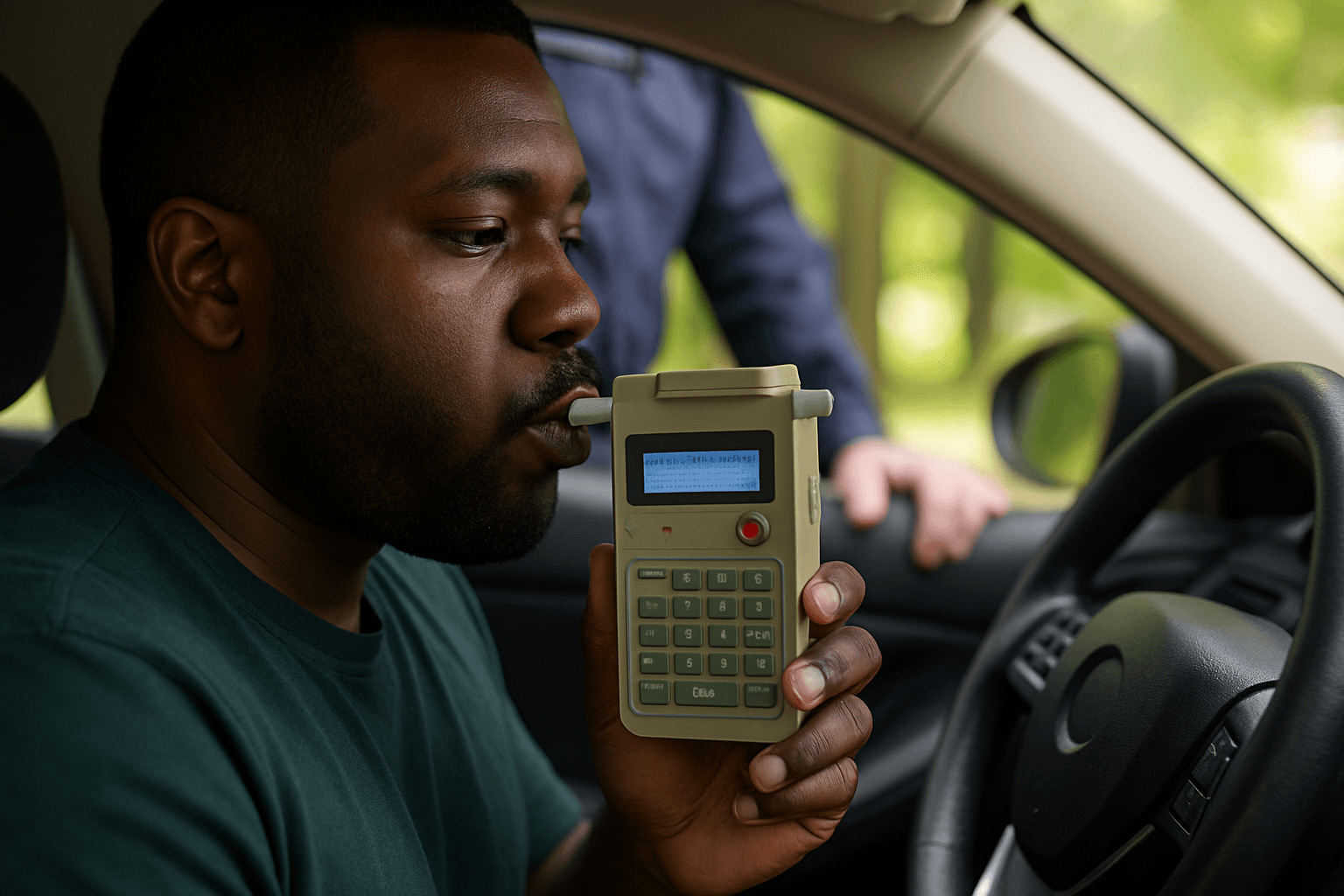
OUI suspensions in Maine trigger mandatory ignition interlock device installation under § 2412-A before the court will grant restricted driving. You must install an approved IID in every vehicle you operate, lease an IID from a state-approved vendor, and provide proof of installation to the court with your petition.
Maine's BMV maintains a list of approved IID vendors. Installation costs approximately $75–$150, monthly lease fees run $60–$90, and removal fees add another $50–$75 at the end of your restriction period. The court typically requires IID for the full restricted driving period, not just the hard suspension portion.
First-offense OUI carries a mandatory 30-day hard suspension before any restricted license petition is viable. The court will not consider your petition until the 30-day hard period expires. Subsequent offenses carry longer mandatory hard suspension periods during which no restricted driving is available under any circumstances.
CDL Holders and Commercial Driving Restrictions
Maine's restricted license applies only to personal driving. If you hold a commercial driver's license, the restricted license does not authorize commercial vehicle operation even if your job requires CDL driving. Federal Motor Carrier Safety Administration rules prohibit restricted commercial driving after disqualifying violations.
If your job requires CDL operation, your employer verification letter must acknowledge that you will be operating personal equipment only or that your job duties can be restructured to non-driving tasks during your restriction period. Most employers cannot retain CDL drivers who lose commercial driving privileges—the restricted license solves your commute problem but does not restore your CDL earning capacity.
Personal-vehicle suspensions still disqualify you from commercial driving even if the violation occurred off-duty. A DUI in your personal car suspends both your personal and commercial driving privileges. The restricted license restores only personal-vehicle privileges.
What Happens If Your Employer Won't Provide Documentation
Some employers refuse to submit verification letters because they do not want liability exposure for employees with restricted licenses. Employer participation is voluntary in Maine—no statute compels your employer to verify your work need or accommodate restricted driving.
If your employer refuses documentation, the court typically denies the petition. Judges view employer refusal as evidence that the employment hardship is not genuine or that your job does not actually require driving. Self-employment claims require business registration documentation, client contracts, and tax records proving income dependence.
Gig economy work (rideshare, delivery apps) does not qualify for restricted driving in most Maine courts. These platforms prohibit drivers with suspended licenses under their service agreements, and judges view the work as discretionary rather than essential employment.
How to Get SR-22 Insurance Before Filing Your Petition
You need SR-22 insurance in place before submitting your restricted license petition. Maine insurers file SR-22 certificates electronically with the BMV, then provide you a copy for court submission. The SR-22 filing fee is typically $25–$50, separate from your premium.
OUI suspensions push most drivers into non-standard insurance markets. Expect premiums in the range of $180–$300/month for minimum liability coverage with SR-22 filing. These are estimates based on available industry data; individual rates vary by driving history, vehicle, coverage selections, and location.
If you do not own a vehicle, you need non-owner SR-22 coverage. Non-owner policies provide liability coverage when you drive a vehicle you do not own—employer vehicles, rental cars, or family members' cars. Premiums for non-owner SR-22 typically run $60–$120/month, lower than standard policies because they cover liability only and exclude physical damage.
Timeline from Petition Filing to Restricted License Issuance
Court petition processing in Maine typically takes 30–60 days from filing to decision, depending on the court's docket and whether the judge requires a hearing. Some courts grant petitions on written submission; others schedule hearings where you appear before the judge to answer questions about your hardship claim and employment need.
Once the court approves your petition, you submit the court order to the BMV along with proof of SR-22 insurance and the $50 reinstatement fee. The BMV processes the restricted license within 5–10 business days after receiving all required documentation. You cannot drive until the physical restricted license is in your possession.
If the court denies your petition, most judges allow re-petition after 30–90 days if your circumstances change or you address deficiencies in the original filing. Denial does not prevent future petitions, but repeated denials with unchanged facts signal the court views your hardship as insufficient.