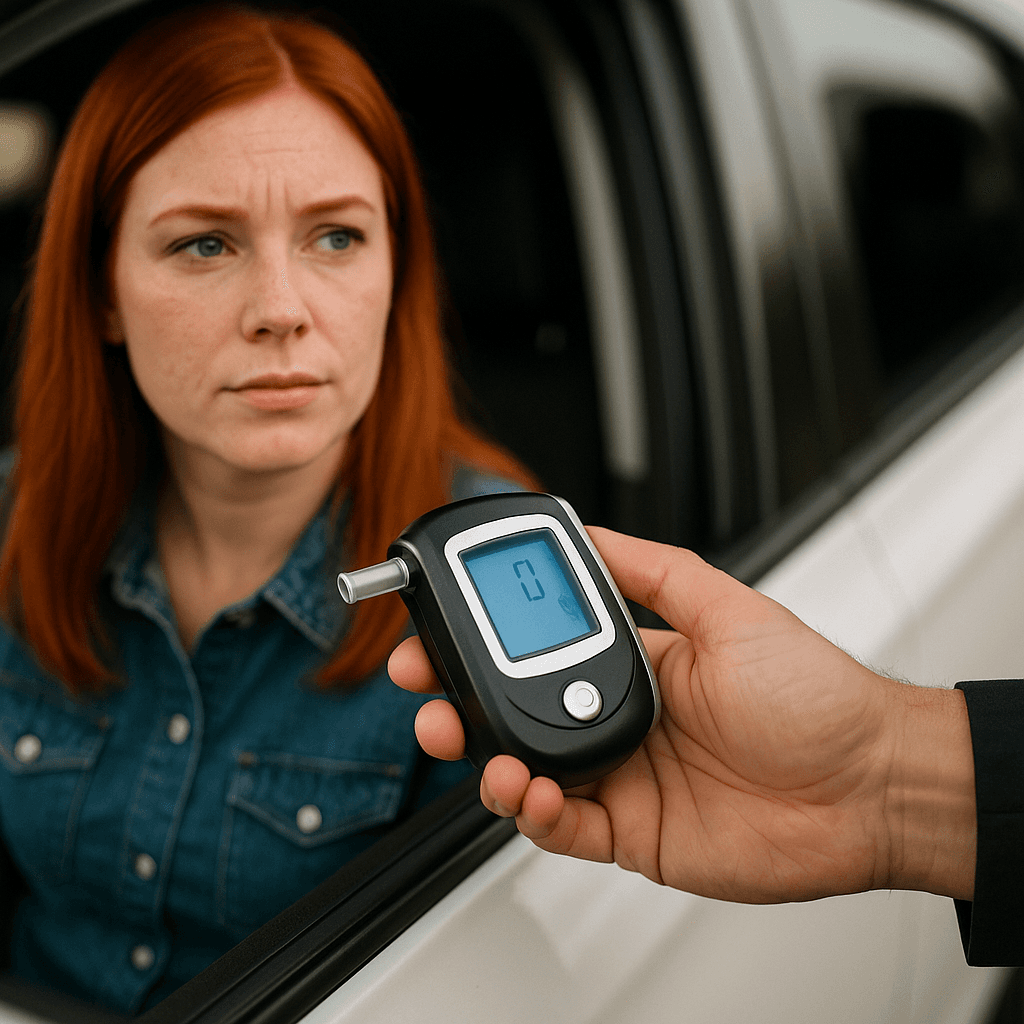
Your restricted license approval doesn't lock your SR-22 rate. California carriers reprice mid-filing when you add ignition interlock or change routes—most drivers learn this after their first policy adjustment notice.
Why Your SR-22 Premium Changes After Restricted License Approval
California restricted licenses require SR-22 filing before DMV approval, but your carrier doesn't know your final IID status or route scope when you first file. Most drivers obtain SR-22 at suspension, then apply for the restricted license weeks later. When DMV approves your restricted license and issues the IID requirement or route documentation, your carrier receives notification through California's Electronic Financial Responsibility (EFR) system under Vehicle Code §16058. That notification triggers a mid-term underwriting adjustment.
The premium change happens because your risk profile shifted. A driver with unrestricted coverage presents different actuarial exposure than a driver limited to work commute with ignition interlock monitoring. Carriers reprice to the restricted-use classification. The adjustment typically appears 30 to 45 days after your restricted license approval, not on your original SR-22 effective date.
California requires SR-22 filing for 3 years from your conviction date for most DUI-triggered suspensions. If your premium adjusts upward at month two after restricted license approval, you'll carry that higher rate through the remainder of your filing period unless you shop. The timing gap between SR-22 filing and restricted license approval creates the repricing window most drivers miss.
How Ignition Interlock Requirement Affects Your Monthly Cost
California Vehicle Code §13353.3 mandates ignition interlock installation for DUI-triggered restricted licenses under the statewide IID program expanded by AB 91 in 2019. The IID requirement carries two cost layers: device rental and insurance adjustment. Device rental runs $70 to $100 per month depending on vendor and monitoring frequency. The insurance adjustment adds $25 to $60 per month to your SR-22 premium in most cases.
Carriers treat IID differently in underwriting. Some classify IID-equipped policies as lower risk because the device prevents impaired operation. Others classify them as higher risk because the IID signals a recent DUI conviction. Progressive and Geico tend toward the risk-reduction view. State Farm and Allstate lean toward the conviction-signal view. The difference shows in rate spread: a 35-year-old male driver in Los Angeles with clean prior history pays approximately $140 to $190 per month for SR-22 without IID, and $165 to $250 per month with IID, based on rate filings reviewed through California Department of Insurance public records.
Your restricted license order specifies IID duration. First-offense DUI under standard restricted license requires 12 months of IID under VC §13353.3(b)(1). Second and subsequent offenses require longer periods, typically two to three years depending on offense count. Your SR-22 premium holds the IID-adjusted rate through that full period even if you complete the IID requirement early. Carriers do not automatically reprice when you remove the device. You must request the adjustment and provide DMV documentation showing IID completion.
Compare car insurance rates in your state
Get quotes from licensed carriers — no obligation, no spam, results in minutes.
Get Your Free Quote✓ No Obligation Required✓ Licensed Carriers Only✓ Available Nationwide✓ Free to Compare
Route Scope and Approved-Purposes Documentation
California restricted licenses limit driving to approved purposes: work commute, DUI treatment program attendance, and within-scope employment driving per Vehicle Code §13353.7. Your employer must provide written verification of work hours, location, and whether your job requires driving during work. That documentation goes to DMV with your restricted license application and determines your approved route scope.
Carriers receive route scope notification through the EFR system after DMV approves your restricted license. A driver approved for straight commute (home to workplace and return) presents different mileage exposure than a driver approved for sales-route driving or job-site travel during work hours. The latter classification increases your SR-22 premium by $15 to $40 per month in most underwriting models. Bristol West, Dairyland, and The General apply explicit route-scope surcharges. State Farm and Farmers fold route scope into broader risk classification but the net effect is similar.
Your restricted license order does not define specific streets or highways. California uses purpose-based restriction rather than route-based. You may drive any reasonable path between approved locations during approved purposes. The insurance impact comes from total mileage exposure and job-function risk, not literal route. A construction worker driving to three different job sites weekly carries higher underwriting weight than an office worker with a fixed 12-mile commute.
When Mid-Filing Premium Adjustments Trigger
Your SR-22 filing establishes continuous coverage monitoring, but it does not freeze your rate. California carriers can adjust premiums mid-term when your risk profile changes due to restricted license approval, IID installation, route scope expansion, or violation during the restricted period. Each triggers underwriting review under California Insurance Code §1861.02, which permits rate adjustments tied to changed risk factors.
The most common adjustment moments: (1) restricted license approval 30 to 60 days after initial SR-22 filing, (2) IID installation requirement confirmed by DMV, (3) employer verification update expanding approved driving scope from commute-only to job-site travel, and (4) any moving violation or lapse notice during the filing period. The first two happen to nearly all DUI-based restricted license holders. The third happens when job duties change. The fourth signals high risk and typically results in non-renewal rather than adjustment.
If your premium increases mid-filing, you can shop without breaking SR-22 continuity. Your new carrier files SR-22 on your effective date and your prior carrier cancels their filing. California law requires continuous SR-22 coverage, not continuous carrier relationship. Drivers who shop after the first adjustment often reduce monthly cost by $40 to $80 compared to accepting the incumbent carrier's new rate. The filing itself transfers cleanly. Request your new carrier file SR-22 at least five business days before your desired effective date to ensure no gap.
What Happens If You Drive Outside Approved Purposes
California restricted licenses carry strict purpose limits. If law enforcement stops you outside approved purposes or hours, you face restricted license revocation under Vehicle Code §13353.3. Revocation is administrative, processed by DMV, and does not require a court hearing. Your driving privilege suspends again and you return to full suspension status. The SR-22 filing remains active but you cannot legally drive.
Your carrier receives DMV notification of the revocation through the EFR system. Most carriers treat restricted license revocation as a high-severity event and non-renew your policy at the next term. A small subset—Bristol West, Dairyland, Acceptance—will continue coverage through the revocation period and into eventual reinstatement, but at significantly higher premium. Expect $80 to $150 per month increase after revocation compared to your restricted-period rate.
The route-violation stop itself may generate a separate citation under VC §14601.2 for driving on a suspended license if the officer determines your purpose did not fall within restriction scope. That citation is a criminal misdemeanor. Conviction adds points to your record, extends your SR-22 filing period in most cases, and creates a second underwriting event. Some drivers face both restricted license revocation and a new criminal case from a single stop. The cost stack: attorney fees ($1,500 to $3,000 for misdemeanor defense), DMV reissue fee when eventually reinstated ($55 per VC §14904), premium increase from the new conviction (typically 40% to 70% above your pre-revocation rate), and extended SR-22 duration if the court or DMV adds filing time.
How to Lock Lowest Rate Before Restricted License Approval
The repricing window opens when DMV approves your restricted license and reports IID or route-scope details to your carrier. You cannot avoid the adjustment if you stay with your original SR-22 carrier. The solution: shop before the restricted license approval processes, and bind with a carrier that prices restricted licenses and IID into their initial quote.
Carriers fall into two groups. Group A (State Farm, Allstate, Farmers, Nationwide) typically quote SR-22 at suspension with no IID or route-scope detail, then reprice 30 to 45 days after restricted license approval when DMV reports final requirements. Group B (Geico, Progressive, Bristol West, Dairyland, The General) will quote restricted license scenarios upfront if you provide your DMV restricted license application documentation. Group B locks the rate at binding. No mid-term adjustment occurs because the IID and route scope were priced from day one.
To use this approach: apply for your restricted license with DMV first, obtain your employer verification letter and DUI program enrollment confirmation, then shop carriers with those documents in hand. Request quotes that include IID requirement and your specific approved driving scope. The quote you receive reflects your actual restricted-use risk profile. When you bind and the carrier files SR-22, that rate holds through your DMV approval and beyond. You avoid the repricing surprise.
This works only if you have not yet filed SR-22 with another carrier, or if you are willing to switch carriers mid-filing. If you already filed SR-22 with a Group A carrier and your restricted license approval is pending, you can still shop now. Your new carrier files SR-22 on your chosen effective date and your old carrier cancels. The filing continuity remains unbroken as long as the new SR-22 effective date is the same day or earlier than your old policy cancellation date.
Cost Stack Example: 12-Month Restricted License Period
A 32-year-old driver in San Diego with first-offense DUI, standard restricted license approval, mandatory IID for 12 months, and work-commute-only restriction faces this cost structure over the restricted period: DMV restricted license application fee $125 per initial filing, SR-22 filing fee $25 (one-time, paid to carrier), monthly SR-22 premium $165 to $250 depending on carrier and route scope, IID device rental $75 to $95 per month for 12 months, and DUI program tuition $500 to $650 for the 9-month first-offender program required by most California courts.
Total first-year cost: $3,500 to $5,200 depending on carrier selection and IID vendor. The SR-22 premium is the largest variable. A driver who accepts their suspension-period carrier's rate without shopping typically pays in the upper half of that range. A driver who shops with restricted license documentation in hand and binds with a carrier pricing IID upfront typically lands in the lower third.
After the 12-month IID period ends, your premium does not automatically drop. You must contact your carrier, provide DMV proof of IID completion, and request the rate adjustment. Most carriers require 10 to 15 business days to process the change. If you do not request it, you continue paying the IID-adjusted rate through the remainder of your SR-22 filing period. The savings: $25 to $60 per month for the remaining 24 months of your 3-year filing requirement, or $600 to $1,440 total.