California lets you bypass the 30-day hard suspension entirely by installing an ignition interlock device immediately, but most drivers miss the SR-22 coordination step that triggers automatic re-suspension.
How California's AB 91 IID Program Changed the Restricted License Pathway for DUI Cases
Since January 1, 2019, California allows first-offense DUI drivers to skip the mandatory 30-day hard suspension by installing an ignition interlock device immediately and obtaining a restricted license. This is a statewide program under Vehicle Code §13353.3, not a pilot. You can drive to work, to your DUI treatment program, and within the scope of your employment starting the day your IID-restricted license is issued.
The trade-off: you must maintain the IID for 12 months and keep SR-22 insurance filing active for 3 years from the date the restricted license is issued. The DMV does not send reminder notices when your SR-22 lapses. Your carrier reports the cancellation electronically through California's Electronic Financial Responsibility system, and the DMV re-suspends your license automatically. Most drivers learn about the lapse when they are pulled over.
This pathway applies only to administrative per se suspensions under Vehicle Code §13353. If you refused the chemical test at arrest, the DMV imposes a longer suspension period and the IID option may not be available. If this is a second or subsequent DUI, the hard suspension period extends to 1 year before restricted license eligibility, and IID installation is required for 2-3 years depending on offense count.
What Documentation Your Employer Needs to Provide for the Restricted License Application
California requires proof of employment as part of the restricted license application, but the DMV does not publish a specific employer verification form. Most DMV field offices accept a signed letter on company letterhead stating your job title, work address, work schedule, and confirmation that driving is necessary to perform your job duties. If your job requires driving during work hours (delivery, sales, service calls), the letter should specify that.
You also need proof of DUI program enrollment. California DUI programs are tiered: 3-month for wet reckless, 9-month for standard first DUI, 18-month for second DUI or high BAC first offense, 30-month for third or subsequent DUI. The program provider will issue an enrollment confirmation letter once you pay the intake fee. The DMV will not process your restricted license application without this proof.
The SR-22 filing must be active before the restricted license is issued. Your insurer submits the SR-22 electronically to the DMV. Expect 3-5 business days for the DMV to process the filing and update your record. The $125 reissue fee must be paid at the same time you submit the restricted license application. Some DMV offices allow online payment; others require in-person or mail payment with a completed DL 44 form.
Compare car insurance rates in your state
Get quotes from licensed carriers — no obligation, no spam, results in minutes.
Get Your Free Quote✓ No Obligation Required✓ Licensed Carriers Only✓ Available Nationwide✓ Free to Compare
What the Route and Time Restrictions Actually Mean in Practice
California's restricted license allows driving to and from work, to and from your DUI treatment program, and within the scope of your employment. There are no court-defined routes and no blanket time-of-day restrictions. The restriction is purpose-based, not clock-based.
If you work a night shift, you can drive during those hours. If your job requires multiple job sites in a day, you can drive between them. If you need to stop for gas on the way home from work, that is within the restriction. What you cannot do: drive to a friend's house after work, drive to the grocery store on a day off, or drive for any personal errand unrelated to work or DUI program attendance.
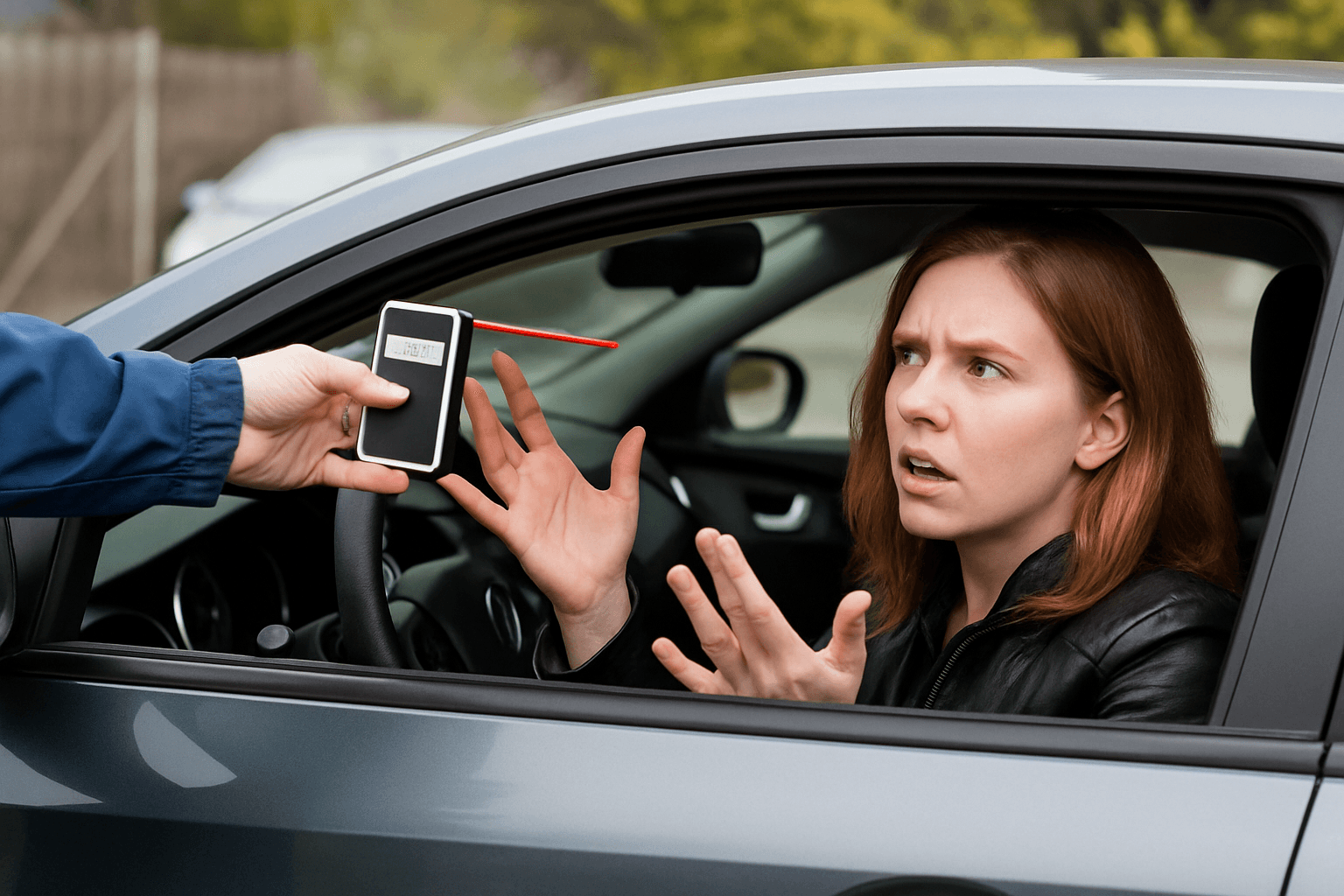
Law enforcement officers who pull you over will ask where you are going. If your answer does not fit the restricted purposes and you are outside the commute window for your documented work schedule, you will be cited for driving on a suspended license under Vehicle Code §14601. That is a misdemeanor, punishable by up to 6 months in county jail and impoundment of your vehicle. The restricted license does not protect you if you are caught driving outside approved purposes.
Why the Ignition Interlock Device Requirement Is Non-Negotiable for This Pathway
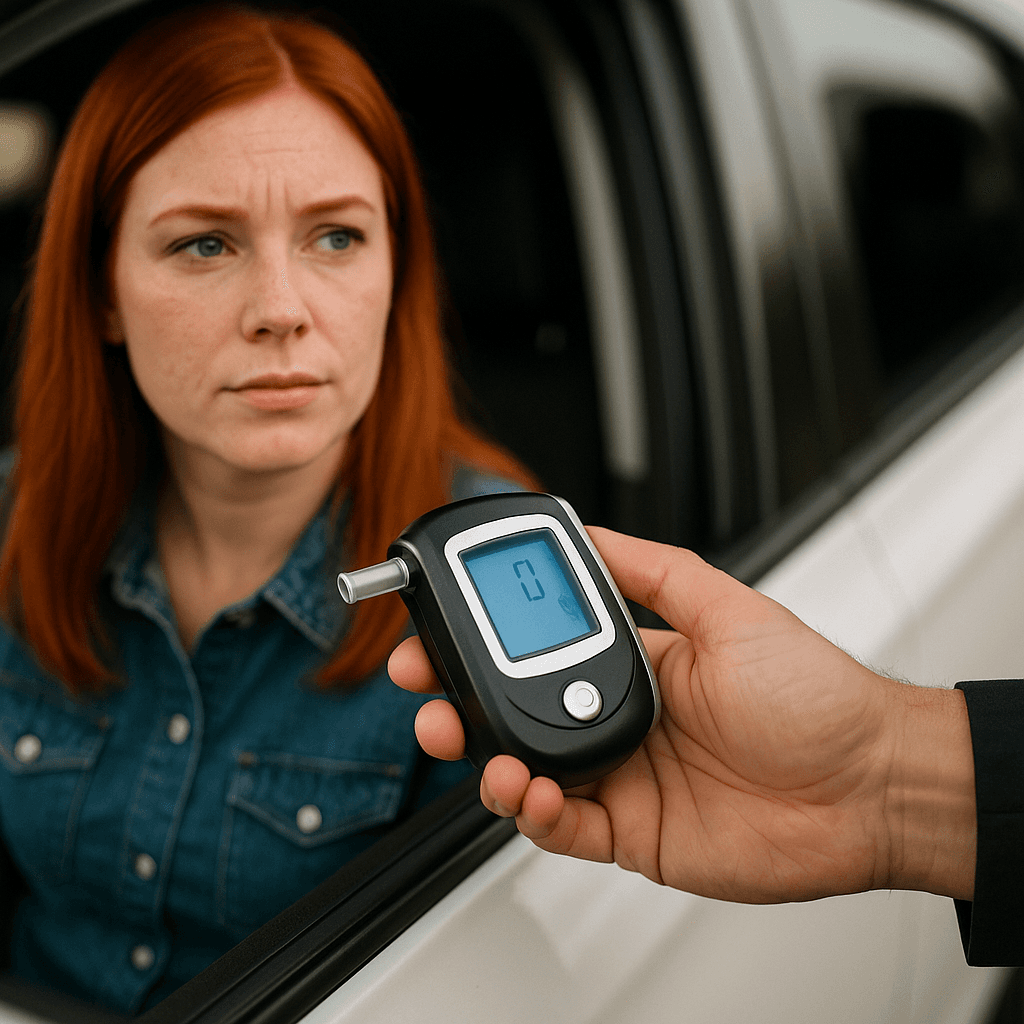
The IID-restricted license pathway requires you to install a state-certified ignition interlock device in every vehicle you own or operate. California maintains a list of approved IID providers on the DMV website. Installation typically costs $75-$150, and monthly lease fees run $60-$90. You are responsible for calibration appointments every 60 days, which cost $20-$40 per visit.
The IID logs every startup attempt, every failed breath test, and every rolling retest. The device transmits this data to the DMV monthly. If the logs show repeated failed tests, attempts to bypass the device, or missed calibration appointments, the DMV can revoke your restricted license without a hearing.
Some employers will not allow employees with IID-restricted licenses to drive company vehicles for liability reasons. If your job requires you to drive a company car, a fleet vehicle, or a rental car during work hours, confirm with your employer and your HR department before applying for the restricted license. The IID requirement follows you to every vehicle you drive, including vehicles you do not own.
How to Coordinate SR-22 Filing When You Do Not Own a Vehicle
If you sold your car after the DUI arrest or never owned a vehicle, you still need SR-22 insurance to obtain the restricted license. California allows non-owner SR-22 policies, which provide liability coverage when you drive a borrowed or rented vehicle. These policies typically cost $25-$60 per month, significantly less than owner SR-22 policies.
Non-owner SR-22 policies do not cover the vehicle you are driving. They cover your liability to others if you cause an accident. If you borrow a family member's car and cause an accident, their insurance pays first, and your non-owner policy provides excess liability coverage if their limits are exhausted. You cannot use a non-owner policy to meet the IID requirement: the IID must be installed in the specific vehicle you will drive for work, and that vehicle must carry its own full-coverage or liability policy with SR-22 filing.
Some carriers write non-owner SR-22 policies but require you to disclose the vehicle you will drive most often. If the vehicle is registered in someone else's name and they carry their own insurance, the carrier may decline to issue the non-owner policy. In that case, the vehicle owner must add you as a named driver on their policy and request SR-22 filing on your behalf. The SR-22 filing must list you as the individual required to maintain proof of insurance, even if the policy is in someone else's name.
What Happens If You Miss DUI Program Classes While Holding the Restricted License
California DUI programs report attendance electronically to the DMV. If you miss two consecutive classes without prior approval, the program notifies the DMV and your restricted license is revoked. You will not receive advance warning from the DMV. The revocation takes effect the day the DMV receives the report.
Most DUI programs allow one or two excused absences per enrollment period if you notify the program director in advance and provide documentation (work schedule conflict, medical emergency). Unexcused absences do not receive the same leniency. If the program drops you for non-attendance, you must re-enroll, pay the intake fee again, and restart the program from the beginning before the DMV will reinstate your restricted license.
The 3-year SR-22 filing period does not pause if your restricted license is revoked for program non-compliance. The clock continues running from the original date the restricted license was issued. If you are revoked and re-enroll 6 months later, you still owe the full 3 years of SR-22 filing from the original start date, not from the reinstatement date.
How to Find Insurance That Writes SR-22 for DUI Restricted License Cases in California
Not all carriers write SR-22 policies for drivers with active DUI suspensions. Standard carriers like State Farm and Allstate may decline or non-renew your policy after the DUI conviction appears on your record. Non-standard carriers specialize in high-risk drivers and write SR-22 policies as a core part of their business.
Carriers confirmed to write SR-22 and after-DUI coverage in California include Acceptance Insurance, Bristol West, Dairyland, Infinity, Kemper, National General, Progressive, and The General. Rates vary by zip code, age, and DUI offense count. Expect monthly premiums between $140 and $280 for liability-only SR-22 coverage after a first-offense DUI. If you need full coverage because you financed your vehicle, premiums typically run $220-$450 per month.
Some carriers require proof of IID installation before issuing the policy. Others will issue the policy but require you to provide IID installation confirmation within 30 days. If you cannot provide proof within that window, the carrier cancels the policy, the SR-22 filing lapses, and the DMV re-suspends your license. Coordinate the IID installation, the insurance policy effective date, and the DMV restricted license application timing carefully to avoid gaps.