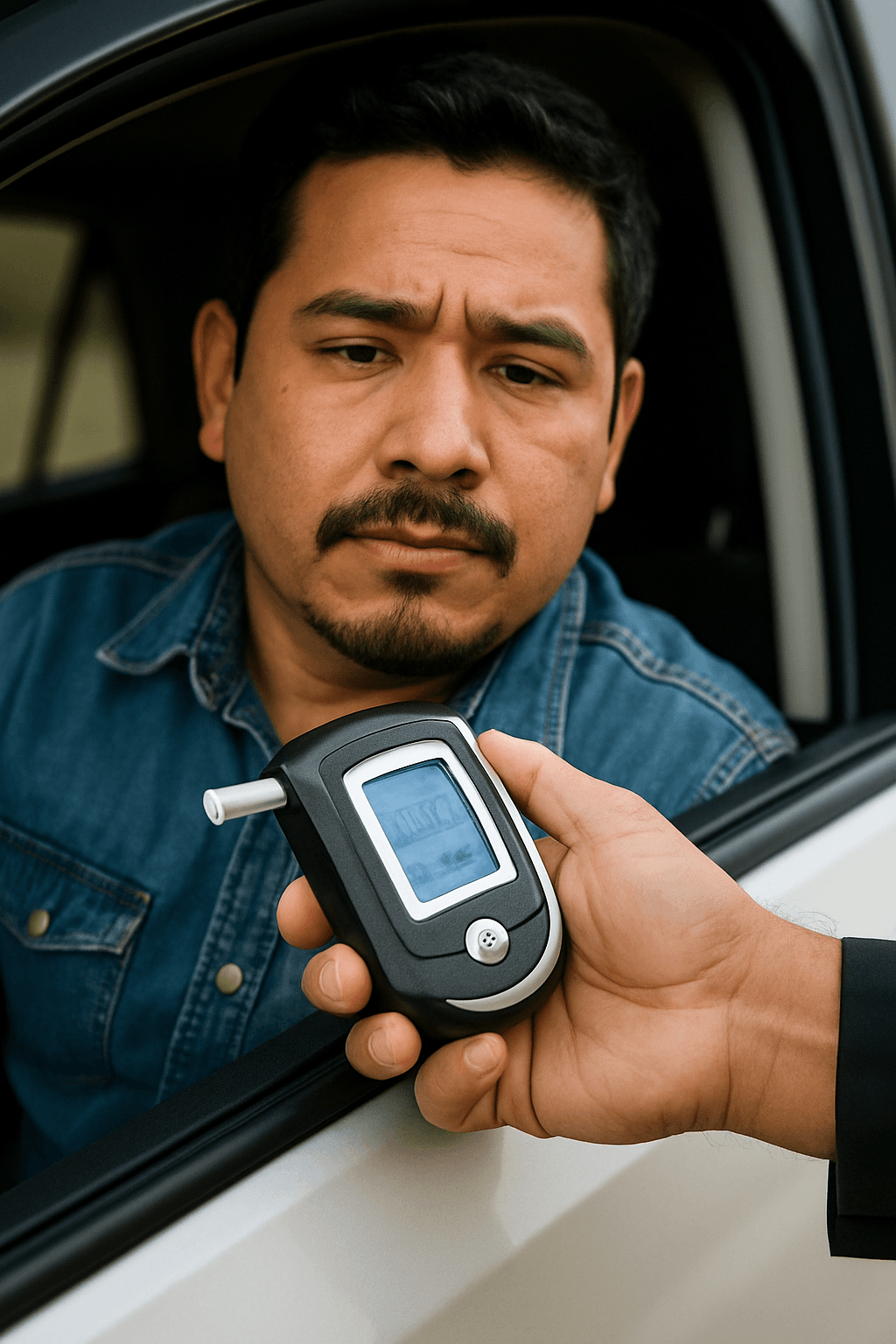
Arkansas requires a circuit court petition to gain work-driving privileges during suspension. Most drivers don't realize the judge sets your route and hours, not the DFA—and ignition interlock is mandatory for DWI-related hardship petitions.
Why Arkansas Hardship Licenses Require Court Approval Before DFA Action
Arkansas is one of the few states where the circuit court—not the Department of Finance and Administration (DFA) Office of Driver Services—has primary authority to grant a Restricted Hardship License. The DFA administers suspensions under Ark. Code Ann. § 27-16-901 and processes reinstatements, but it does not independently issue hardship licenses. You must first petition the circuit court in the county where you reside or where your case was heard, present evidence of hardship (employment records, medical necessity documentation, school enrollment verification), and obtain a court order specifying your approved driving purposes, routes, and hours. Only after the judge signs the order does the DFA issue the physical restricted license that implements those exact terms.
Most drivers assume they file paperwork at a DFA office and receive approval based on standard eligibility criteria. That is not how Arkansas operates. The judge has discretionary authority to approve or deny your petition based on the specific hardship you document, your suspension cause, and your compliance history. If your petition does not clearly articulate why you cannot use public transportation, rideshare, or employer accommodation, the judge can deny it outright. The court's order becomes the controlling document—the DFA cannot broaden or narrow the terms once the judge signs.
This means your preparation for the court hearing matters more than any form you submit to the DFA. You need an employer affidavit stating your work schedule and confirming that remote work or shift changes are not available, proof that your job location is not accessible by bus or rideshare within a reasonable commute window, and documentation of any dependents or medical appointments that require your transportation. The petition is not a checkbox process. It is a request for judicial relief, and judges deny petitions when the hardship is not adequately documented or when the petitioner's violation history suggests non-compliance risk.
What Documentation the Circuit Court Requires for Work-Purposes Petitions
Your petition to the circuit court must include: a written statement of need explaining why you cannot perform your job, attend school, or meet essential household responsibilities without driving; employment verification from your employer on company letterhead confirming your job title, work address, schedule, and a statement that remote work or schedule adjustment is not possible; proof of SR-22 insurance filing showing you meet Arkansas's $25,000 per person / $50,000 per accident bodily injury and $25,000 property damage liability minimums with a filing attached; and a proposed route and time schedule mapping your home address to your work address, any required stops (daycare, medical appointments, or essential errands the court may approve), and the hours you need authorization to drive.
Employers often underestimate the specificity required. A generic letter stating "John works here and needs to drive" will not satisfy most judges. The employer must confirm: your start and end times, whether your position involves driving during work hours (delivery, service calls, client visits), the company's inability to accommodate a non-driving role, and a contact name and phone number the court can verify. If your job requires driving during work hours—not just commuting—the employer letter must itemize the driving duties and explain why those duties cannot be reassigned. Judges frequently deny petitions when the employment letter is vague or when the petitioner's job description does not clearly require transportation.
The proposed route and time schedule section is where most petitioners fail. You cannot request "authorization to drive to work" without specifying the exact route, the days and hours, and whether you need additional stops approved. Arkansas judges typically limit hardship driving to the most direct route between home and work, plus a buffer window of 30–60 minutes before and after your shift to account for traffic or minor delays. If you work irregular hours, rotating shifts, or commission-based schedules with variable start times, you must explain that in the petition and request broader hour authorization—but expect the judge to scrutinize whether your employment genuinely requires that flexibility or whether you are attempting to expand the privilege beyond work necessity.
Compare car insurance rates in your state
Get quotes from licensed carriers — no obligation, no spam, results in minutes.
Get Your Free Quote✓ No Obligation Required✓ Licensed Carriers Only✓ Available Nationwide✓ Free to Compare
How Court-Defined Routes and Hours Differ from Standard State Hardship Programs
In states with administrative hardship programs—Texas, Georgia, Illinois—the DMV or equivalent agency applies standardized eligibility criteria and issues a hardship license with preset restrictions: work and school hours, medical appointments, essential household duties, typically with a 12-hour or all-daylight-hours window. Arkansas does not operate that way. The circuit court judge defines your specific authorized purposes, routes, and hours in the court order, and those terms control your driving privilege. If the judge approves driving only between 6:00 AM and 6:00 PM Monday through Friday for the direct route between your home address and work address, those are your exact limits. Driving at 6:15 PM, taking a detour to a grocery store, or driving on Saturday—even for work—violates the court order and subjects you to immediate revocation and potential criminal charges for driving on a suspended license.
The DFA does not add flexibility to the court's terms. When you bring the signed court order to the DFA to obtain the physical Restricted Hardship License, the DFA prints a license that references the court order by case number and date. Law enforcement officers who stop you will request both the restricted license and a copy of the court order, and they will verify that your current driving activity falls within the approved parameters. If you are driving outside the court-authorized route or hours, the officer will charge you with violating a suspended license under Ark. Code Ann. § 5-65-103, which carries up to 90 days in jail and up to a $500 fine for a first offense, plus immediate revocation of your hardship privilege.
This is the critical distinction Arkansas drivers miss: your hardship license is not a general work-hours license. It is a court-supervised, narrowly tailored privilege tied to the specific facts you presented in your petition. If your work schedule changes, if you move to a new address, or if your job ends and you start a new position at a different location, you must return to the circuit court and petition for modification of the order. The DFA cannot approve route or hour changes on its own authority. Judges rarely grant broad "any work-related driving" authorizations unless your job genuinely requires unpredictable routes—delivery drivers, home health aides, field service technicians with rotating service areas—and you provide documentation proving that variability.
Why Ignition Interlock Is Mandatory for DWI-Related Hardship Petitions
If your suspension stems from a DWI conviction or an implied consent refusal under Ark. Code Ann. § 5-65-202, Arkansas law requires installation of an ignition interlock device (IID) as a condition of any hardship license. The court will not approve your petition without proof of IID installation from an Arkansas-approved vendor. This applies even to first-offense DWI cases. The IID requirement is not discretionary—it is a statutory condition under Ark. Code Ann. § 5-65-118, and judges do not have authority to waive it for DWI-related suspensions.
You must arrange IID installation before your court hearing. Bring the installation receipt and the vendor's certification to the hearing as part of your petition packet. The vendor must be listed on the DFA's approved IID provider list, and the device must be installed on the vehicle you will drive during the hardship period. If you do not own a vehicle and intend to borrow a family member's car or drive an employer-provided vehicle, the IID must be installed on that vehicle, and you must provide written permission from the vehicle owner confirming they consent to the device installation and understand the restrictions. Most judges will not approve a hardship petition when the vehicle ownership or IID installation status is uncertain.
The IID monitors every attempt to start the vehicle and requires you to provide a breath sample before the engine starts. If your breath alcohol concentration registers above the device's preset limit—typically 0.02% in Arkansas—the vehicle will not start, and the device logs the failed attempt. The vendor downloads the device data monthly and reports violations to the DFA. A single failed start attempt, a missed monthly calibration appointment, or evidence of tampering with the device will trigger immediate revocation of your hardship license and referral back to the court. The IID cost—typically $75–$100 for installation, $75–$90 per month for monitoring and calibration, and $50–$75 for removal—is your responsibility and is not waived for financial hardship.
What SR-22 Filing Setup Looks Like for Court-Approved Hardship Licenses
Arkansas requires continuous SR-22 insurance filing throughout your hardship license period and for three years following reinstatement for most DWI-related suspensions. The SR-22 is not a separate insurance policy. It is a certification your insurer files electronically with the DFA confirming you carry at least the state's minimum liability limits: $25,000 per person for bodily injury, $50,000 per accident for bodily injury, and $25,000 for property damage. You must obtain the SR-22 filing before your court hearing and bring proof of the active filing to the petition.
Not every carrier writes employment-hardship SR-22 insurance. Standard carriers—State Farm, Allstate, Nationwide—will sometimes add SR-22 filings to existing policies for current customers but frequently non-renew policies after a DWI conviction. Non-standard carriers write SR-22 policies specifically for suspended-license drivers: Progressive, Geico, The General, Dairyland, Bristol West, Direct Auto, GAINSCO, and National General all write SR-22 coverage in Arkansas and accept hardship license cases. Monthly premiums for SR-22 liability-only coverage in Arkansas typically range from $140 to $240 per month depending on your age, violation history, and county, with the SR-22 filing fee adding $15 to $25 to your first premium payment.
If you do not own a vehicle and intend to borrow cars or drive employer vehicles only, you need non-owner SR-22 for commuters. Non-owner policies provide liability coverage when you drive vehicles you do not own, and the SR-22 filing attaches to the non-owner policy just as it would to a standard auto policy. Non-owner SR-22 premiums in Arkansas typically cost $50 to $90 per month—substantially less than standard SR-22 policies because the insurer is not covering a specific vehicle's collision or comprehensive risk. The court will accept non-owner SR-22 filings as proof of financial responsibility for hardship petitions, but you must confirm the policy covers the vehicle you will actually drive during the hardship period. If you later purchase a vehicle, you must convert the non-owner policy to a standard policy and notify the DFA within 10 days to maintain continuous SR-22 compliance.
Your SR-22 filing must remain active and continuous from the date the court approves your hardship petition through the end of your suspension period and the full three-year post-reinstatement filing period. If your insurer cancels your policy for non-payment or if you allow the policy to lapse, the carrier electronically notifies the DFA within 24 hours. The DFA immediately revokes your hardship license and reinstates the full suspension. There is no grace period. You cannot "fix" the lapse by purchasing a new policy the next day—the revocation is automatic, and you must petition the court again to regain hardship driving privileges, pay a new reinstatement fee, and restart the SR-22 filing clock.
What Happens When You Drive Outside Approved Routes or Hours
The most common cause of hardship license revocation in Arkansas is driving outside the court-authorized route or hours. The restrictions are strict, and law enforcement officers enforce them closely. If an officer stops you for any reason—traffic violation, equipment issue, checkpoint—and your current location or the time of day does not match the court order terms, the officer will charge you with driving on a suspended license under Ark. Code Ann. § 5-65-103. That charge carries up to 90 days in jail and a $500 fine for a first violation, and your hardship license is revoked immediately.
The court order specifies your exact authorized purposes and routes. "Driving to work" does not cover stopping at a gas station, pharmacy, or fast-food restaurant unless the court order explicitly includes language permitting "essential stops reasonably related to authorized purposes." Most Arkansas judges do not include that language. If you need to stop for gas or pick up a prescription on your way home from work, you are technically driving outside the court-authorized purpose. Prosecutors and judges recognize that some incidental stops are necessary, but the burden is on you to prove the stop was brief, directly related to an authorized purpose, and not a detour for personal convenience. Stopping at a bar, a friend's house, or any location unrelated to work, school, or court-approved medical appointments will result in revocation.
Violating your hardship restrictions also jeopardizes your eligibility for full reinstatement. When you complete your suspension period and apply for full license reinstatement, the DFA reviews your hardship compliance record. If your hardship license was revoked for driving outside authorized parameters, the DFA may extend your suspension period or deny reinstatement until you complete a driver improvement course or pay additional penalties. Judges are unlikely to approve a second hardship petition if you violated the first one. The hardship license is a privilege extended based on documented need and judicial trust that you will comply strictly with the terms. Breaking those terms signals non-compliance risk and eliminates the foundation for future relief.
Cost Breakdown: Court Fees, IID, SR-22, and Reinstatement Over the Full Suspension Period
The full cost of obtaining and maintaining a Restricted Hardship License in Arkansas through a DWI suspension typically includes: circuit court filing fees (vary by county, typically $150 to $250 to file the hardship petition); IID installation and monthly monitoring ($75–$100 installation, $75–$90 per month for monitoring and calibration, $50–$75 removal at the end of the suspension); SR-22 filing fee ($15–$25 one-time); SR-22 insurance premiums ($140–$240 per month for standard coverage or $50–$90 per month for non-owner coverage); and the DFA reinstatement fee ($100 when your full suspension period ends and you apply for license reinstatement).
For a first-offense DWI suspension in Arkansas—typically six months under Ark. Code Ann. § 5-65-111—and assuming the court approves your hardship petition after a 30-day hard suspension period, your total cost over the six-month suspension period would be approximately: $200 court filing fee, $75 IID installation, $450 IID monthly fees (5 months at $90), $75 IID removal, $20 SR-22 filing fee, $1,050 SR-22 insurance premiums (5 months at $210 average), and $100 DFA reinstatement fee, totaling roughly $1,970. That figure assumes liability-only coverage, no lapses, and no additional court costs or attorney fees. If you hire an attorney to prepare and present your hardship petition—common when the suspension involves multiple offenses or prior denials—add $500 to $1,500 in legal fees.
Non-owner SR-22 coverage reduces the monthly insurance cost significantly but only applies if you do not own a vehicle and will drive borrowed or employer vehicles exclusively. The IID cost cannot be reduced—it is a statutory requirement for DWI-related hardship licenses. Some Arkansas IID vendors offer payment plans spreading installation and monthly fees across the suspension period, but the total cost remains the same. Financial hardship does not waive the IID requirement or reduce the court filing fees. The cost of compliance is part of the penalty structure, and failure to maintain IID or SR-22 coverage results in immediate hardship revocation and suspension reinstatement.