Arkansas requires circuit court approval for every hardship license, even first-offense DWI cases. Most petitions fail because drivers confuse administrative DFA processing with the judicial petition requirement.
Arkansas Requires Judicial Approval, Not Administrative Processing
The Arkansas Department of Finance and Administration Office of Driver Services cannot issue a Restricted Hardship License on its own authority. You must petition the circuit court in the county where your suspension was ordered. DFA implements the court's order after the judge grants your petition, but the approval decision sits entirely with the circuit court judge. This is the structural difference that derails most first attempts.
Most states allow their licensing agency to approve hardship applications administratively through a hearing officer or designated review process. Arkansas does not. The circuit court holds exclusive authority to grant restricted driving privileges during suspension periods, whether your suspension arose from DWI conviction under Ark. Code Ann. § 5-65-118, accumulation of points, or uninsured operation. DFA processes the paperwork after judicial approval, collects the $100 reinstatement fee when your full license is restored, and monitors your SR-22 filing compliance, but it does not evaluate petitions or grant hardship privileges.
This means hiring an attorney is nearly always necessary. Circuit court petitions follow civil procedure rules. You must file a formal petition document, schedule a hearing, present evidence of hardship necessity, and argue why granting restricted privileges serves the interests of justice while protecting public safety. Judges deny petitions routinely when documentation is incomplete or when the petitioner cannot articulate a legally sufficient hardship. Self-represented petitioners succeed occasionally, but the procedural bar is high enough that most drivers benefit from representation.
What Arkansas Circuit Courts Require in a Hardship Petition
Your petition must include proof of hardship anchored to necessity categories Arkansas courts recognize: employment, medical treatment, school enrollment, or other court-approved necessity. Employment is the most commonly approved category. You need an employer verification letter on company letterhead stating your job title, work hours, work address, and a statement that losing driving privileges will result in job loss or inability to perform essential duties.
Medical necessity requires documentation from a treating physician explaining the condition, frequency of required appointments, and why alternative transportation is unavailable or medically inadvisable. School enrollment requires proof of current enrollment and a statement from the institution confirming class schedule and the lack of practical public transit options. The petition must demonstrate that the hardship is genuine, that no reasonable alternative exists, and that restricted driving will not compromise public safety.
Proof of SR-22 insurance filing is mandatory before the court will consider your petition. Arkansas requires SR-22 for DWI-related suspensions, uninsured operation, and most serious moving violations that result in suspension. The SR-22 certificate must be filed with DFA before your court hearing date. Many judges will not grant a hardship petition without verified SR-22 compliance already in place, even though the hardship license itself has not yet been approved. This creates a sequencing problem: you must secure SR-22 coverage on a suspended license before you can petition for the restricted license that makes that coverage useful. Carriers specializing in non-standard policies understand this sequence and will write coverage on suspended licenses specifically for hardship petition purposes.
Compare car insurance rates in your state
Get quotes from licensed carriers — no obligation, no spam, results in minutes.
Get Your Free Quote✓ No Obligation Required✓ Licensed Carriers Only✓ Available Nationwide✓ Free to Compare
Ignition Interlock Is Required for DWI-Related Hardship Licenses
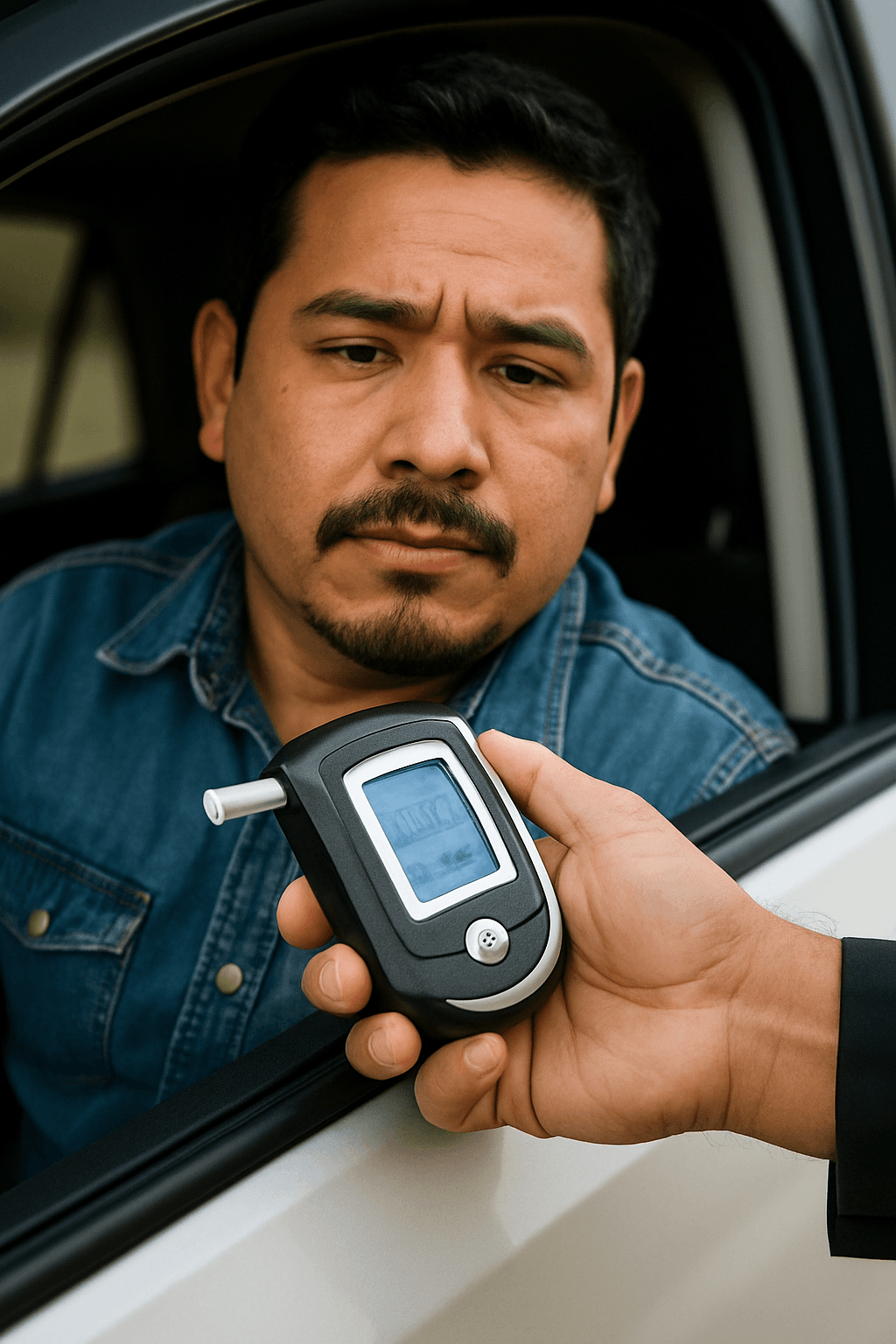
Arkansas mandates ignition interlock device installation as a condition of any Restricted Hardship License granted during a DWI suspension. This applies to first-offense DWI suspensions and all subsequent offenses. The device must be installed in any vehicle you operate under hardship privileges, including employer-owned vehicles if you drive for work purposes. Installation costs typically run $70–$150, plus monthly monitoring fees of $60–$90.
The court order granting your hardship license will specify ignition interlock as a condition. You must arrange installation through an Arkansas-approved IID provider before DFA will issue the physical restricted license. DFA maintains a list of approved vendors. The device logs every start attempt, every passed test, every failed test, and every circumvention attempt. Monthly compliance reports are transmitted directly to DFA. Violations trigger automatic revocation of hardship privileges without further court hearing.
Ignition interlock is not required for non-DWI suspensions such as points accumulation, unpaid tickets, or failure to maintain insurance, unless the court imposes it as a discretionary condition. Most judges do not impose interlock for non-alcohol-related suspensions, but the authority exists. If your petition involves multiple suspension causes and one is DWI-related, expect interlock to apply.
Route and Time Restrictions Arkansas Courts Typically Impose
Arkansas circuit courts define the scope of your restricted driving privileges in the order granting the petition. These are not standard statewide parameters—each judge sets the specific hours, routes, and purposes allowed. The most common pattern is driving to and from work during a defined time window, typically the hours necessary to commute plus a 30-minute buffer on each end. If your work shift is 8:00 a.m. to 5:00 p.m. and your commute is 20 minutes, the judge might authorize driving between 7:00 a.m. and 6:00 p.m. on the direct route between your home address and work address.
Many orders allow additional purposes: medical appointments for yourself or dependents, court-ordered obligations, school attendance if enrolled, and sometimes grocery shopping or essential household errands within a specified window. The order will state whether these purposes are included and what hours apply. Some judges restrict hardship licenses strictly to employment and court appearances, refusing to expand the scope. You must specify every purpose you need in your petition; judges rarely amend orders after issuance unless circumstances change materially.
Driving outside the approved hours, routes, or purposes violates the court order and constitutes a separate offense: driving while suspended. This carries its own criminal penalties independent of your original suspension. Law enforcement officers can verify restricted license terms through DFA's system during a traffic stop. If you are stopped outside your approved window or on a route not covered by the order, you will be arrested for driving on a suspended license even though you hold a hardship license. Arkansas does not treat these violations leniently. The hardship license is revoked immediately, your underlying suspension period is extended, and you face new criminal charges.
How Long Arkansas Hardship Petitions Take and What Denial Means
Circuit court petition timelines vary by county. In urban counties like Pulaski (Little Rock) or Benton (Bentonville), you can typically schedule a hearing within 3–5 weeks of filing. Rural counties may require 6–8 weeks. Your attorney files the petition, serves notice on the prosecuting attorney's office (which may oppose or take no position), and schedules the hearing. The hearing itself lasts 15–30 minutes in most cases. The judge hears your evidence, reviews your documentation, and issues a ruling on the record or takes the matter under advisement for a written order within a few days.
If the judge denies your petition, you must wait a statutorily defined period before refiling, typically 30–90 days depending on the reason for denial. Denials most commonly result from incomplete employment documentation, lack of credible hardship evidence, or a driving record showing repeated violations that persuade the judge restricted driving poses unacceptable risk. You can appeal a denial to the Arkansas Court of Appeals, but this process takes months and requires demonstrating the trial judge abused discretion, a difficult standard to meet.
If the judge grants your petition, the court transmits the order to DFA. DFA processes the order and issues the physical Restricted Hardship License, usually within 5–7 business days. You must carry the license and a copy of the court order whenever you drive. The hardship license remains in effect for the duration specified in the order, typically until your full suspension period ends or until the judge revokes it for cause.
SR-22 Filing and Insurance Costs on a Restricted Hardship License
SR-22 is a financial responsibility certificate your insurer files with Arkansas DFA confirming you carry at least the state minimum liability coverage: $25,000 per person for bodily injury, $50,000 per accident, and $25,000 for property damage. The SR-22 filing itself costs $15–$50 depending on the carrier. The impact on your premium is the larger cost. Drivers on restricted hardship licenses after DWI suspensions typically pay $140–$240 per month for liability-only coverage with SR-22 attached, compared to $60–$100 per month for clean-record drivers.
If you do not own a vehicle, you need non-owner SR-22 coverage. This provides liability protection when you drive vehicles you do not own—employer vehicles, rental cars, or borrowed vehicles. Non-owner policies cost slightly less than standard policies, typically $110–$180 per month with SR-22 filing. Arkansas allows non-owner coverage to satisfy SR-22 requirements as long as the policy meets state minimum limits.
Arkansas requires SR-22 filing for 3 years following DWI conviction, uninsured operation suspension, or most serious moving violations. The 3-year period begins from the date of conviction or administrative action, not from the date you secure coverage. If your license lapses or your insurer cancels the policy during the filing period, the carrier notifies DFA electronically and your license is suspended again immediately. Maintaining continuous coverage without lapses is critical. One missed payment that results in cancellation restarts your suspension and forfeits your hardship privileges.
What Happens After Your Full Suspension Period Ends
When your suspension period expires, your Restricted Hardship License terminates automatically. You must apply for full license reinstatement through DFA. Reinstatement requires payment of a $100 base fee, proof of continuous SR-22 filing during the suspension period, and completion of any court-ordered requirements such as DWI education, victim impact panel, or community service. DWI-related reinstatements may carry additional fees beyond the $100 base; verify the total cost with DFA before submitting your application.
If you completed your suspension with a hardship license and maintained compliance with all court-ordered conditions, reinstatement is usually straightforward. DFA verifies your SR-22 filing history, confirms no new violations occurred during the restriction period, and issues your full unrestricted license. Processing takes 3–5 business days in most cases. Your SR-22 filing obligation continues for the full 3-year period even after your license is reinstated. You must maintain the filing until DFA sends written confirmation that the requirement has been satisfied.
If you violated the terms of your hardship license—drove outside approved hours, committed a new traffic offense, or failed to maintain SR-22 coverage—reinstatement becomes more complicated. DFA may require a hearing, impose an extended suspension, or mandate additional compliance measures before reinstating full driving privileges. The original hardship petition provided a conditional privilege during suspension, not a right. Violating those conditions converts the remaining suspension into a non-restricted hard suspension with no hardship option available.