Most work-purpose hardship licenses restrict you to documented shift hours plus a narrow commute buffer. A handful of states allow broader anytime driving for employment purposes, but the catch is what counts as employment-related.
What Most States Call Work Hours on a Hardship License
When you apply for an employment-hardship license in most states, you submit an employer verification letter listing your exact shift schedule. The restricted license that comes back typically mirrors those hours plus 30 to 60 minutes before and after each shift for commuting. If your employer letter says you work Monday through Friday 8 a.m. to 5 p.m., your approved driving window is approximately 7:30 a.m. to 5:30 p.m. on those days.
This is the dominant model in Illinois, Georgia, Ohio, Michigan, Wisconsin, Indiana, and North Carolina. Your employer must document your schedule in writing, and the judge or DMV hearing officer writes the approved hours into the court order or permit itself. Driving outside that window — even if it's genuinely for work — triggers a violation.
The restriction is not based on where you drive. It's based on when. You can drive to a client meeting during approved hours. You cannot drive to pick up work supplies at 9 p.m., even if your employer asks you to, unless 9 p.m. falls within your documented shift window.
Three States That Allow Broader Employment-Purpose Driving Anytime
Texas Occupational Licenses, Florida Business Purposes Only licenses, and Arkansas Hardship Licenses allow employment-related driving at any time of day without requiring documented shift hours. This does not mean unrestricted driving. It means the restriction is purpose-based rather than time-based.
In Texas, the occupational license statute permits driving for "essential need" categories including work, school, and household duties. If the activity fits the approved purpose, the time of day does not matter. A licensed plumber can drive to an emergency service call at midnight. A commissioned salesperson can drive to a client dinner at 7 p.m. The catch is proving the trip was genuinely work-related if stopped.
Florida's Business Purposes Only license covers business, employment, and medical purposes anytime. The statutory language is broader than most states: if the trip serves a legitimate business or employment function, it is permitted. This includes driving to meet clients, pick up materials, attend work training, or handle job-related errands regardless of the clock.
Arkansas hardship permits allow employment and household duties anytime as well. The permit order does not list specific hours. It lists approved purposes. Enforcement depends on whether the officer believes your explanation of why you were driving fits the approved category.
Compare car insurance rates in your state
Get quotes from licensed carriers — no obligation, no spam, results in minutes.
Get Your Free Quote✓ No Obligation Required✓ Licensed Carriers Only✓ Available Nationwide✓ Free to Compare
The Documentation Problem With Anytime Employment Driving
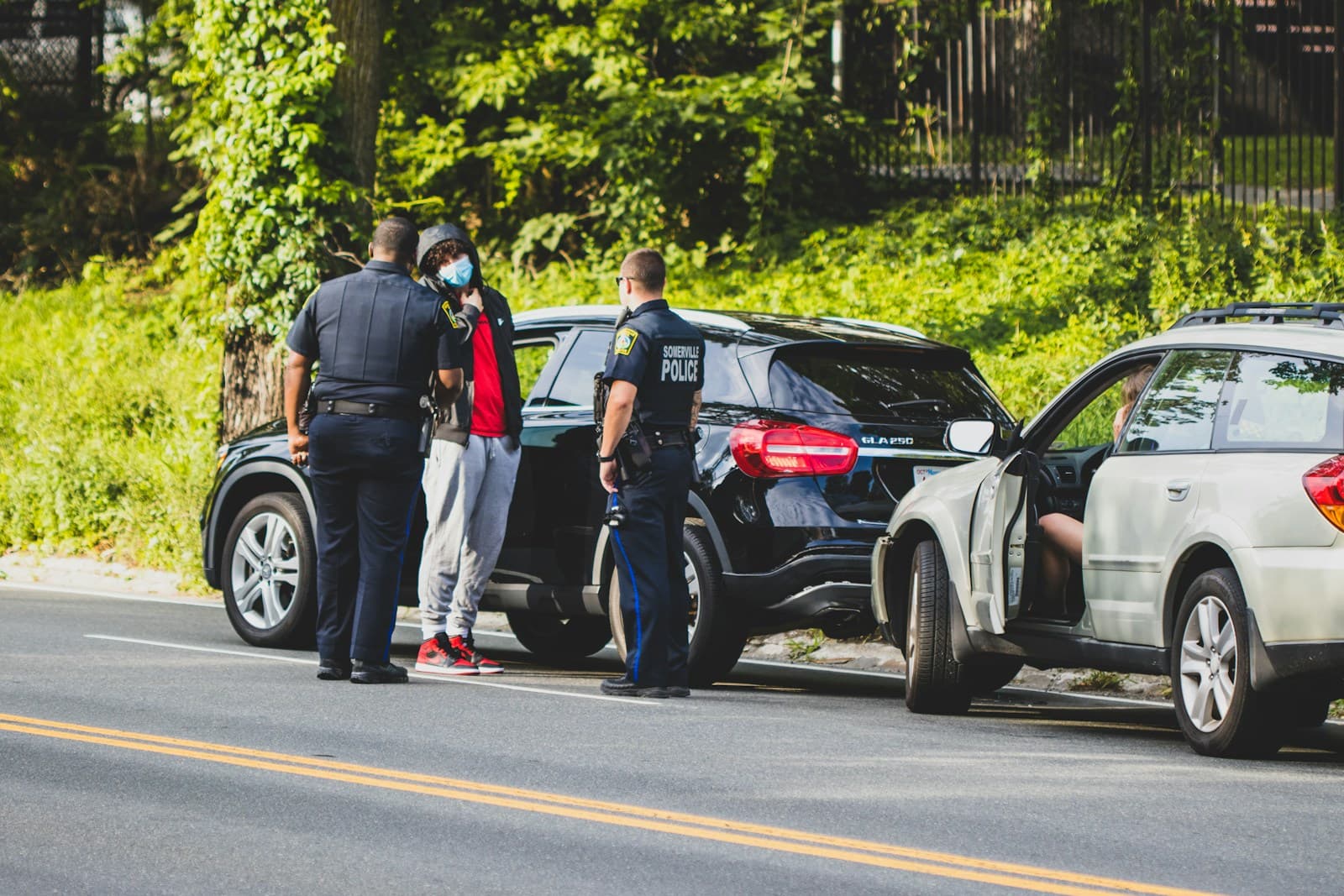
Broader time windows create a documentation burden most drivers do not anticipate. When you are stopped at 10 p.m. on a Texas occupational license, the officer will ask why you are driving. "I'm coming from work" is not enough if your normal shift ended six hours earlier.
Carry job-related documentation in the vehicle: work orders, service tickets, client meeting confirmations, employer emails assigning the task, delivery receipts. If your job involves irregular hours or on-call duties, carry a letter from your employer explaining the nature of your work schedule. Officers have discretion to accept or reject your explanation, and without supporting evidence, the violation risk is real.
Florida BPO license holders face the same challenge. The statute allows business-purpose driving anytime, but proving the trip was business-related at the moment you are stopped is your responsibility. A sales receipt showing you just left a client site supports your case. An empty car and vague explanation does not.
What Happens If Your Job Has No Fixed Schedule
Gig workers, commission-based salespeople, contractors, and on-call employees often cannot provide the fixed-shift documentation most states require. If your state uses the approved-hours model and your income depends on variable-schedule work, your hardship application faces a structural problem.
Some judges in strict-hours states will approve a broader window if the employer letter explains the job requires flexible availability. A delivery driver might get approval for 6 a.m. to 10 p.m. daily rather than specific shift blocks. An on-call HVAC technician might get approval for 24-hour driving if the employer documents the on-call requirement in writing. This is not guaranteed. Some hearing officers deny applications that do not fit the fixed-schedule template.
In Texas, Florida, and Arkansas, gig and commission-based workers have a procedural advantage: the statute does not require fixed hours. The application burden shifts from documenting a schedule to documenting that driving is essential to earning income. Uber and Lyft drivers, however, face a separate exclusion in most states: commercial passenger transport typically does not qualify as an approved employment purpose even under broad-purpose licenses.
Employer Coordination and HR Department Refusals
Some employers will not retain workers with restricted licenses regardless of whether the restriction technically covers the commute. Liability concerns, company vehicle policies, and HR department risk aversion drive these decisions. If your job requires driving a company vehicle or transporting clients, passengers, or materials as part of job duties, your employer may terminate you even if your hardship license allows the commute.
This is common in jobs requiring CDL operation. A personal hardship license does not restore your commercial driving privileges. If your income depends on operating commercial vehicles, the employment-hardship pathway does not solve your problem. You must address the CDL suspension separately, and most states do not offer work-hardship options for CDL holders.
Before investing in the hardship application process, confirm with your employer's HR department that they will accept the restricted license. Some companies require unrestricted licenses as a condition of employment regardless of whether the employee actually drives during work hours. Discovering this after paying the application fee, IID installation cost, and SR-22 setup wastes money and time you cannot afford.
SR-22 Filing and Insurance Setup for Employment Hardship Cases
Employment-hardship licenses in DUI, uninsured driving, and reckless driving suspension cases require SR-22 filing before the hardship license is issued. The SR-22 is not insurance. It is a compliance certificate your insurance carrier files with the state DMV confirming you carry at least the state's minimum liability coverage.
If you own a vehicle, you need standard liability coverage with an SR-22 endorsement. If you do not own a vehicle but need to drive for work (borrowing a family member's car, driving a company vehicle, renting occasionally), you need a non-owner SR-22 policy. Non-owner policies provide liability coverage when you drive vehicles you do not own, and the SR-22 filing attached to that policy satisfies the state's proof-of-insurance requirement.
Typical SR-22 setup cost for employment-hardship cases: $25 to $50 filing fee paid to the carrier, plus a premium increase of approximately $40 to $80 per month over your previous rate. Non-owner SR-22 policies for drivers without a vehicle typically cost $30 to $60 per month total. These are averages. High-risk violations (DUI, multiple at-fault accidents) produce higher increases.
The SR-22 filing period typically matches the suspension period or extends beyond it. In most DUI suspension states, SR-22 is required for three years from the reinstatement date, not the suspension date. If your hardship license is approved six months into a one-year suspension, you will carry SR-22 for three years after the full license is reinstated — approximately 3.5 years total from the date you secure coverage.
What Happens If You Drive Outside Approved Hours or Purposes
Violating the terms of a hardship license — driving outside approved hours in a time-restricted state, or driving for non-approved purposes in a purpose-restricted state — typically triggers immediate revocation of the hardship license and an extension of the underlying suspension period.
In Illinois, Georgia, and Ohio, the statutory penalty for violating an occupational or limited driving permit is revocation of the permit and addition of three to six months to the original suspension. You lose the hardship license, your full reinstatement date is pushed out, and you are back to zero legal driving.
In Texas and Florida, violations are handled at the officer's discretion and the subsequent court hearing. If the officer believes the trip was genuinely work-related but you lack documentation, you may receive a warning. If the officer believes the trip was personal, you face a charge of driving while license invalid or driving on a suspended license — a criminal misdemeanor in most states, carrying jail time, additional fines, and automatic revocation of the hardship license.
The safest rule: if you cannot document the trip as work-related with physical evidence in the vehicle at the time you are stopped, do not make the trip. The short-term convenience is not worth the long-term consequence.