Alabama's court-petition process for work-restricted licenses offers faster relief than full reinstatement, but judicial discretion makes outcomes inconsistent across counties. Understanding which path serves your employment need requires knowing the hard-suspension window, the documentation your employer must provide, and the ignition interlock requirement that applies even to work-only driving.
Why Alabama Splits Authority Between Courts and ALEA
Alabama divides suspension authority in a way that confuses most drivers. The Alabama Law Enforcement Agency (ALEA) administers your driver license and processes reinstatement applications. Circuit courts issue restricted licenses for work purposes during suspension periods. This dual-track system means your path forward depends on whether you need immediate work-driving relief or you can wait out the full suspension.
The restricted license route requires a court petition in your county of residence. The judge decides whether your employment need justifies restricted driving privileges, what hours and routes you can drive, and what conditions apply. ALEA does not grant restricted licenses. The full reinstatement route requires waiting out your suspension period, paying ALEA's reinstatement fee, filing SR-22 proof of insurance, and sometimes completing a driver improvement course or retaking the license exam.
Most drivers facing DUI-related suspensions pursue the restricted license first because Alabama imposes mandatory hard suspension periods before any driving is allowed. During the hard suspension window, no restricted license petition will be approved. Once that window closes, the court petition becomes your only path to drive legally before full reinstatement eligibility arrives.
What Alabama's Restricted License Actually Permits
Alabama's restricted license is court-defined, not standardized statewide. The circuit court judge writes the specific restrictions into your license order. Typical approved purposes include travel between home and work, home and school, home and medical appointments, and sometimes job-related driving during work hours if your employment requires it.
The court does not issue a blanket work permit. You must submit a petition that includes proof of employment, a detailed description of your work schedule, the physical address of your workplace, and the most direct route from your residence. Many counties require your employer to submit a verification letter on company letterhead confirming your job title, work hours, and the necessity of driving for your employment. If your job requires driving during work hours, the employer letter must state that explicitly.
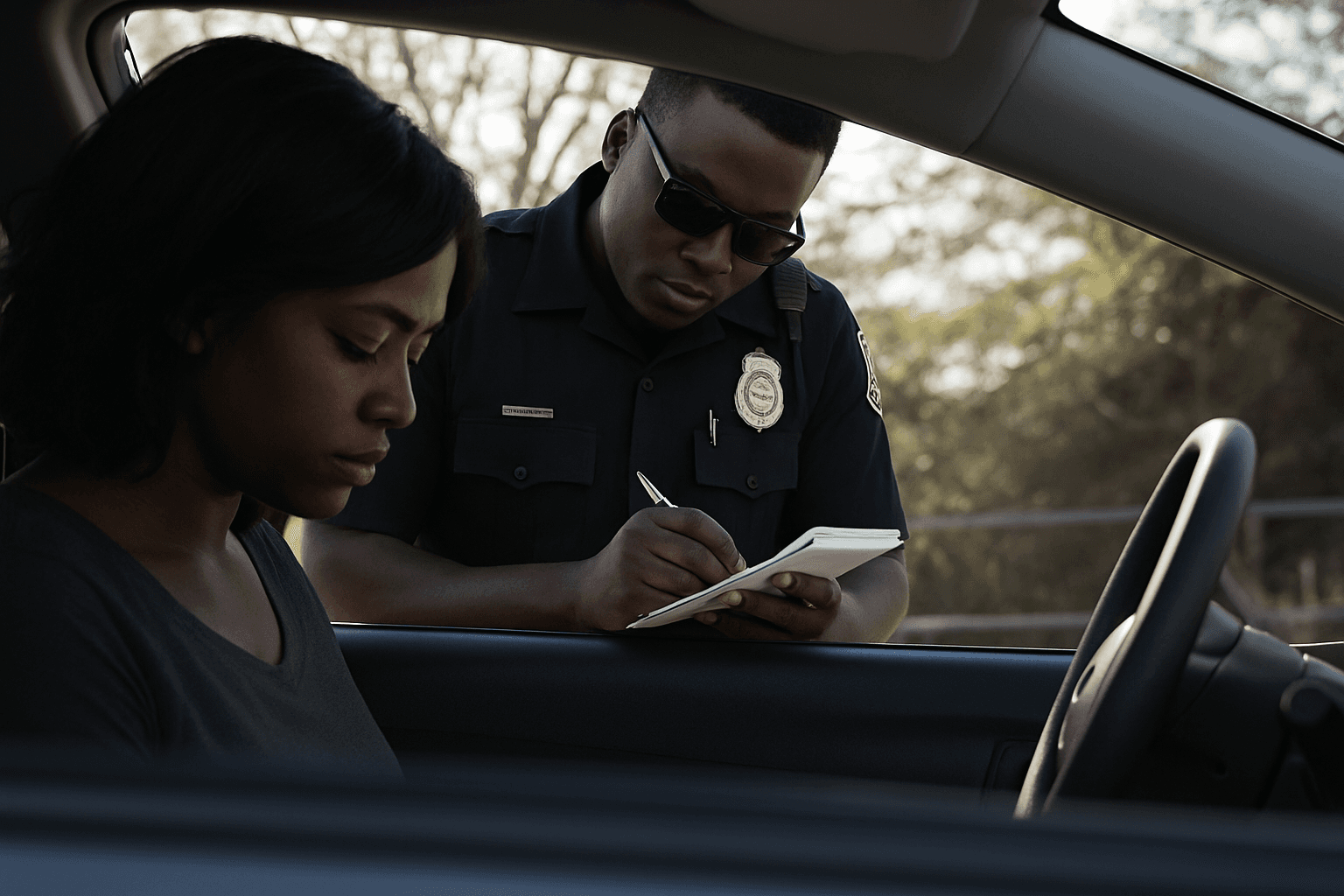
Route and time restrictions are enforced strictly. Alabama law enforcement can verify your restricted license terms through ALEA's system during any traffic stop. Driving outside approved hours or routes, even for an emergency, constitutes driving on a suspended license. That violation triggers immediate revocation of the restricted license and can extend your underlying suspension period. The court order specifies what happens if you violate the terms.
Compare car insurance rates in your state
Get quotes from licensed carriers — no obligation, no spam, results in minutes.
Get Your Free Quote✓ No Obligation Required✓ Licensed Carriers Only✓ Available Nationwide✓ Free to Compare
Ignition Interlock Applies to Work-Restricted Licenses for DUI Cases
Alabama Code § 32-5A-191 requires ignition interlock device (IID) installation for any restricted license issued after a DUI-related suspension. The IID requirement applies even when your restricted license only permits work driving. You cannot petition for a restricted license without agreeing to install the device.
The device must be installed by an ALEA-approved vendor before the court issues the restricted license. Installation costs typically range from $75 to $150, with monthly monitoring fees of $60 to $80. You pay these costs out of pocket. The court will not approve a restricted license petition until ALEA receives verification of IID installation from the vendor.
The ignition interlock requirement remains in effect for the entire duration of your restricted license. If you later pursue full reinstatement, the IID requirement may continue for the remainder of your original suspension period or longer, depending on your offense history. Alabama expanded its ignition interlock mandate in 2011 to cover first-offense DUI cases, not just repeat offenders. Most drivers underestimate the IID cost when calculating whether the restricted license path is financially viable.
How Long the Restricted License Process Takes in Alabama
Alabama does not publish a standard processing timeline for restricted license petitions because each county's circuit court operates on its own docket schedule. In practice, most petitions take 30 to 60 days from filing to hearing, assuming your paperwork is complete and no objections are filed by the district attorney's office.
You file the petition in the circuit court of your county of residence. The filing fee varies by county but typically ranges from $150 to $300. The court schedules a hearing where you appear before the judge, sometimes with your attorney. The judge reviews your petition, your employer verification letter, your SR-22 certificate of insurance, proof of IID installation if required, and any objections from the state.
If the judge grants the petition, the court issues an order to ALEA directing the agency to issue a restricted license with the specific terms the judge wrote into the order. ALEA then processes the physical license, which adds another 7 to 14 days. You cannot drive legally on the court order alone until ALEA issues the physical restricted license. Some counties allow expedited processing for urgent employment cases, but this is not guaranteed and typically requires attorney representation to request.
When Full Reinstatement Is Faster Than Restricted License Petition
Alabama's restricted license process makes sense when your suspension period is long and your employment need is immediate. It does not make sense when your full reinstatement eligibility date is less than 90 days away or when your suspension cause is not DUI-related and carries no hard suspension period.
For insurance lapse suspensions, ALEA typically allows online reinstatement once you file SR-22 proof of insurance and pay the reinstatement fee. The online process takes 3 to 5 business days. Petitioning a circuit court for a restricted license would take longer and cost more. For unpaid-ticket suspensions, ALEA reinstates immediately once the tickets are paid and the reinstatement fee is submitted. Again, the court petition route adds unnecessary time and expense.
Full reinstatement requires a $275 base fee paid to ALEA. DUI-related reinstatements carry an additional $200 fee, bringing the total to $475. You must file SR-22 proof of insurance before ALEA processes the reinstatement. If your suspension was for DUI, you may also need to complete a state-approved DUI education program and provide proof of completion to ALEA. Some suspension types require retaking the written or road test, but this is uncommon for first-offense DUI cases.
Once ALEA processes your reinstatement, your full driving privileges are restored. No route restrictions, no time restrictions, no IID requirement beyond what your original suspension mandated. The SR-22 filing requirement continues for 3 years after a DUI-related suspension, but the license itself is unrestricted.
What Happens If Your Employer Won't Accept a Restricted License
Some Alabama employers refuse to retain employees with restricted licenses because of liability concerns. This is most common in industries where employees drive company vehicles, transport clients, or make deliveries. The employer's HR department sees the restricted license as proof of a suspension, which triggers their internal risk policy.
The circuit court cannot force your employer to accept the restricted license or provide the verification letter required for your petition. If your employer refuses to cooperate, the court will not grant the restricted license. You must either wait for full reinstatement or find employment that does not require driving or that will accommodate a restricted license.
Commercial driver's license (CDL) holders face a separate complication. Alabama's work-restricted licenses do not authorize commercial vehicle operation, even when the underlying suspension was for a personal-vehicle offense. If your job requires operating a commercial vehicle, the restricted license does not solve your employment problem. You must wait for full CDL reinstatement, which follows federal disqualification timelines that often exceed Alabama's state-license suspension periods.
SR-22 Filing Applies to Both Paths
Alabama requires SR-22 proof of financial responsibility for both restricted license petitions and full reinstatement after DUI-related suspensions. The SR-22 is not a separate insurance policy. It is a certificate your insurance carrier files with ALEA confirming you carry at least Alabama's minimum liability coverage: $25,000 per person for bodily injury, $50,000 per accident for bodily injury, and $25,000 for property damage.
Not all carriers file SR-22 in Alabama. Standard-market carriers like State Farm and Allstate file SR-22 but often refuse to write new policies for drivers with recent DUI convictions. Non-standard carriers like The General, Progressive's non-standard division, Bristol West, and Dairyland specialize in high-risk drivers and will write SR-22 policies immediately after suspension. Expect premiums to double or triple compared to your pre-suspension rate.
The SR-22 filing fee ranges from $15 to $50, paid to the carrier. Monthly premiums for SR-22 coverage in Alabama typically range from $140 to $280 for drivers with a single DUI, depending on age, vehicle, and county. The filing remains in effect for 3 years after a DUI-related suspension. If your policy lapses or you cancel coverage during the 3-year period, your carrier notifies ALEA immediately and your license is re-suspended. You must maintain continuous SR-22 coverage for the full 3-year period to avoid another suspension cycle.