Alabama's restricted license process runs through circuit court, not ALEA—and judges have wide discretion over route approval. Most drivers don't realize their petition needs employer documentation, approved-route specifics, and SR-22 filing before the hearing.
Alabama's Restricted License Process Runs Through Circuit Court, Not ALEA
You petition the circuit court in the county where your violation occurred, not the Alabama Law Enforcement Agency (ALEA). ALEA administers driver licensing statewide, but restricted license eligibility decisions belong to individual circuit court judges. This court-dependent process creates county-level variation that drivers moving between Jefferson, Mobile, and Madison counties report experiencing differently.
The petition requires proof of employment or essential need, SR-22 certificate of insurance for DUI-related suspensions, payment of applicable fees, and route documentation specific enough for a judge to approve. Generic language like "home to work and back" gets denied routinely. Judges want employer verification letters stating job address, required work hours, and whether your job requires driving during work (delivery, sales calls, client visits).
Ignition interlock installation is required for DUI-related restricted licenses under Alabama Code § 32-5A-191. The IID provider must submit verification to ALEA before your court hearing. Petitions submitted without IID verification attached are continued to a later hearing date, delaying your work-driving restoration by weeks.
What Hours and Routes Alabama Judges Typically Approve
Court-defined restrictions limit you to travel between home and work, school, or medical appointments. The court order specifies approved addresses and allowable travel windows. If your work shift is 7 AM to 3 PM, your approved driving window might be 6:30 AM to 3:30 PM to account for commute time.
Mid-shift driving for job duties (lunch deliveries, bank runs, client meetings) requires explicit approval language in the court order. Gig workers and commission-based employees face harder approvals because their work hours and routes change daily. Judges in Baldwin and Shelby counties have denied petitions from DoorDash and Uber drivers citing inability to define fixed routes.
Your employer's HR department may not accept a restricted license for liability reasons. Alabama law does not require employers to accommodate restricted licenses. If your job involves a company vehicle, fleet insurance policies often exclude drivers with restricted licenses explicitly. Confirm with HR before you file the petition.
Compare car insurance rates in your state
Get quotes from licensed carriers — no obligation, no spam, results in minutes.
Get Your Free Quote✓ No Obligation Required✓ Licensed Carriers Only✓ Available Nationwide✓ Free to Compare
SR-22 Filing Setup for Alabama Restricted License Petitions
DUI-related suspensions require SR-22 certificate of insurance before the court will grant a restricted license. The SR-22 is filed by your insurer with ALEA, certifying you carry at least Alabama's minimum liability coverage: $25,000 per person, $50,000 per accident for bodily injury, and $25,000 for property damage.
SR-22 filing adds a one-time fee of $15 to $50 depending on your carrier, plus premium increases averaging $40 to $80 per month for drivers with DUI suspensions. You need the SR-22 filed and the certificate in hand before your court hearing. Carriers writing SR-22 in Alabama include GEICO, Progressive, State Farm, The General, Dairyland, Bristol West, Direct Auto, GAINSCO, and National General.
The SR-22 must remain active for 3 years following DUI-related revocations. If your policy lapses or cancels, your insurer notifies ALEA electronically through the Online Insurance Verification System (OIVS), triggering immediate suspension of your restricted license. Reinstatement after SR-22 lapse requires a new $275 base fee plus a separate $200 DUI-related reinstatement fee.
What Documentation Your Employer Must Provide for the Petition
The petition requires an employer verification letter on company letterhead confirming your job title, work address, required work hours, and whether your job involves driving during work. The letter must be signed by a manager or HR representative, not a coworker.
Judges want route specificity. If you work at multiple locations (home health aide, field technician, sales representative), the letter should list all work addresses and explain the driving pattern. If your routes change daily, the employer letter should state that and request broader geographic approval (e.g., "driving within Jefferson County for client appointments").
Self-employed drivers and independent contractors face harder petition approval. Alabama courts require proof of business registration, client contracts, or tax documentation showing the business is active. A DBA filing with the county probate court and a 2024 Schedule C from your federal tax return typically satisfy this requirement.
CDL Holders Cannot Use Restricted Licenses for Commercial Driving
Alabama's restricted license permits personal vehicle operation only. If you hold a Commercial Driver's License and your job requires operating commercial motor vehicles, the restricted license does not cover that driving. Federal Motor Carrier Safety Administration (FMCSA) regulations prohibit states from issuing restricted commercial licenses for DUI-related suspensions.
Your personal restricted license allows you to commute to work in your personal vehicle, but once you arrive and need to operate a CDL-required vehicle (semi-truck, bus, tanker), you are driving without a valid commercial license. Employers with DOT compliance requirements will not retain CDL drivers on restricted personal licenses.
If your CDL was suspended for a personal-vehicle DUI, your commercial driving privileges are suspended separately under federal disqualification rules, typically for one year on a first offense. The restricted license pathway does not shorten that federal disqualification period.
What Happens If You Drive Outside Approved Hours or Routes
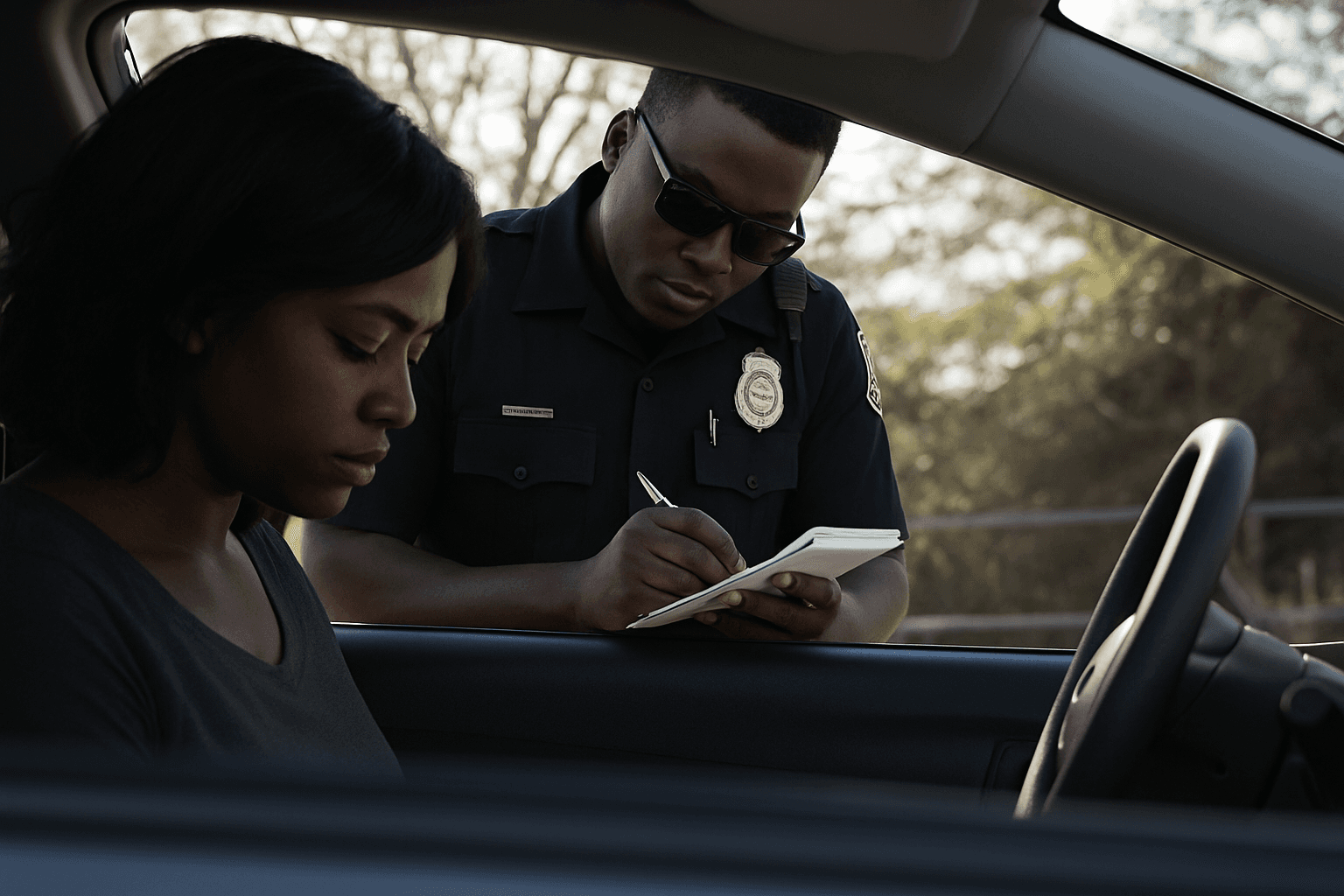
Violation of restricted license terms is a separate criminal offense in Alabama. If you are stopped driving outside approved hours, on unapproved routes, or for unapproved purposes, the restricted license is revoked immediately and you face additional criminal charges for driving while suspended.
ALEA and local law enforcement can verify restricted license terms during traffic stops. Your court order is entered into the state driver license database. Officers see the restriction details when they run your license. Being stopped at 9 PM when your approved driving window ends at 6 PM results in arrest in most Alabama jurisdictions.
Revocation after a restricted license violation adds months to your total suspension period and disqualifies you from petitioning for another restricted license for the remainder of the suspension term. Jefferson County circuit court records show second restricted license petitions are denied routinely when the first was revoked for violation.
Total Cost Stack: Petition, IID, SR-22, and Premium Impact
Circuit court petition filing fees vary by county but typically range from $150 to $300. Ignition interlock installation costs $75 to $150, with monthly monitoring fees of $60 to $90 for the duration of your restricted license period. SR-22 filing adds $15 to $50 one-time, plus monthly premium increases of $40 to $80.
Over a 12-month restricted license period with IID and SR-22 requirements, total additional costs range from $1,500 to $2,400 beyond your base insurance premium. This does not include the $275 base reinstatement fee or the $200 DUI-specific reinstatement fee due when your full license is restored.
Employers sometimes reimburse IID costs for employees whose jobs require driving, particularly in sales, delivery, and field service roles where the company depends on the employee's mobility. HR policies vary widely. Ask before assuming you will carry the full cost.