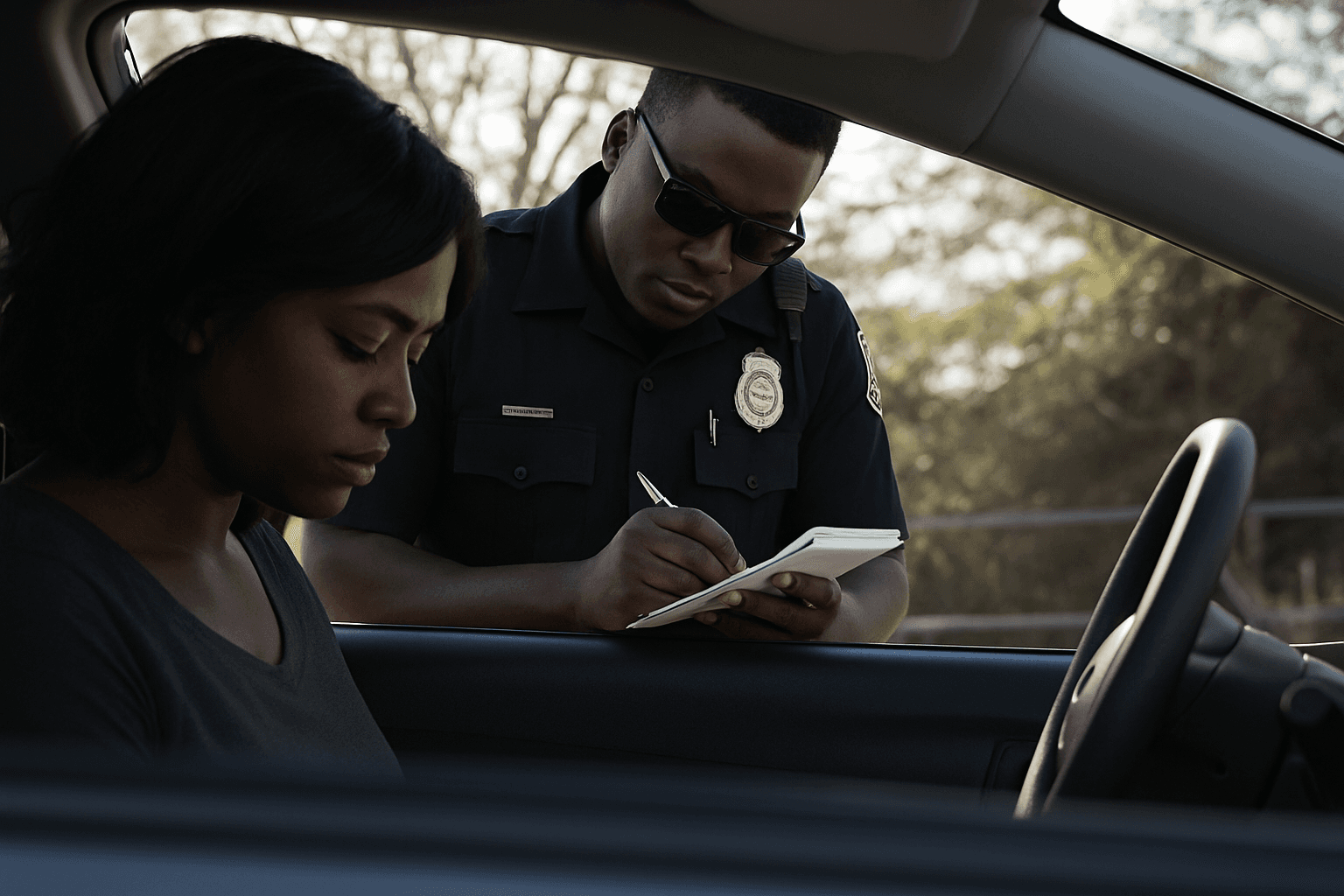
Alabama requires a circuit court petition for a work-restricted license, even for first-offense DUI or points suspensions. Most applicants underestimate the employer affidavit burden and judicial discretion that dominates the approval process.
Why Alabama's Work-Restricted License Requires a Court Petition, Not an ALEA Application
Alabama routes hardship license applications through circuit court judges, not the Alabama Law Enforcement Agency (ALEA). You file a petition with the circuit court in the county where you were charged or where you reside, and a judge decides whether to grant a Restricted License for work purposes.
ALEA administers driver licensing under Alabama Code Title 32, but the agency does not process hardship applications directly. The court-based system means individual circuit judges hold wide discretion over eligibility, approved hours, and route restrictions. A petition approved in Jefferson County may include broader work-hour allowances than a similar case in Mobile County, even when the underlying suspension trigger is identical.
This division of authority confuses applicants who assume ALEA handles all license matters. ALEA suspends the license when you fail to maintain SR-22 insurance, accumulate points, or receive a DUI conviction. The circuit court decides whether to restore limited driving privileges during the suspension period. The two agencies do not coordinate on a unified hardship timeline.
What Documentation Alabama Circuit Courts Require for Work-Restricted License Petitions
Your petition must include proof of employment or essential need, typically in the form of an employer affidavit on company letterhead. The affidavit states your job title, work address, required hours, and whether your job duties require driving during work hours (beyond the commute itself).
For DUI-related suspensions, you must attach an SR-22 certificate from an Alabama-authorized insurer before the court will consider the petition. Alabama Code § 32-5A-191 requires ignition interlock device (IID) installation for DUI-based restricted licenses, so most courts also require proof of IID installation or a signed agreement with an IID vendor.
Payment of applicable fees is required at filing. The circuit court clerk collects the petition filing fee, which varies by county. Separately, ALEA charges a $275 base reinstatement fee for most suspensions, plus an additional $200 fee for DUI-related reinstatements. These fees are cumulative, not alternative.
Missing documentation delays the hearing or results in denial. Courts do not issue provisional restricted licenses while you gather paperwork. The employment affidavit is the single most common missing document, particularly when applicants assume a paystub or offer letter suffices without the employer's formal statement of driving need.
Compare car insurance rates in your state
Get quotes from licensed carriers — no obligation, no spam, results in minutes.
Get Your Free Quote✓ No Obligation Required✓ Licensed Carriers Only✓ Available Nationwide✓ Free to Compare
How Alabama Judges Define Approved Routes and Hours for Work-Restricted Licenses
Alabama law does not specify universal route or hour restrictions for restricted licenses. The circuit court judge defines them in the order granting the petition. Most orders limit driving to travel between home and work, home and school, or home and medical appointments, during hours necessary for the stated purpose.
If your job requires driving during work hours (delivery, sales calls, site visits), the employer affidavit must state this explicitly and justify the business need. Judges scrutinize broad work-hour requests more closely than fixed-shift commute patterns. A petition for unrestricted daytime driving Monday through Friday is more likely to be denied than a petition for 7:00 a.m. to 6:00 p.m. driving limited to documented client site addresses.
The court order becomes the legal boundary. Driving outside approved hours or routes violates the restricted license terms, even if the purpose seems work-related after the fact. Alabama does not allow verbal amendments or one-time exceptions. If your work schedule changes after the order is issued, you must petition the court again to modify the restrictions.
ALEA does not track approved routes or enforce time-of-day restrictions during traffic stops. The enforcement mechanism is post-violation: if you are cited for driving outside permitted hours, the restricted license is revoked and the underlying suspension period restarts. There is no warning letter or cure period.
Why DUI-Suspended Drivers Face a Mandatory Hard Suspension Period Before Restricted License Eligibility
Alabama imposes a mandatory hard suspension period (no driving at all) before a DUI-suspended driver can petition for a restricted license. The exact length varies by offense number and whether the suspension stems from administrative license suspension (ALS) under Alabama Code § 32-5A-304 or a criminal court conviction.
For first-offense DUI with administrative suspension triggered by breath test failure, the hard suspension is typically 90 days. For test refusal, the administrative suspension is 90 days with no hardship license available during the refusal period. For second-offense DUI, the hard suspension extends to one year before restricted license eligibility opens.
The hard suspension period is non-negotiable. Circuit courts will not grant restricted licenses during this window, regardless of employment hardship. Applicants who file petitions prematurely receive automatic denials and must refile after the hard period elapses.
This structure means a first-offense DUI driver with an ALS suspension cannot drive for work until the 91st day post-suspension at the earliest, assuming the petition is filed and approved immediately when eligibility opens. In practice, processing delays and court scheduling push the restricted license start date to 120-150 days post-suspension for most applicants.
What Happens When Your Alabama Employer Will Not Provide a Work-Affidavit for the Restricted License Petition
Some employers decline to provide work affidavits for restricted license petitions due to liability concerns. If an employee with a restricted license causes an accident during approved work hours, the employer may face increased exposure in civil litigation, particularly if the underlying suspension was DUI-related.
Alabama law does not compel employers to provide affidavits or accommodate restricted license holders. At-will employment rules allow termination for license suspension in most private-sector roles, except where a collective bargaining agreement or written employment contract specifies otherwise.
If your employer refuses the affidavit, you cannot file a work-restricted license petition. Circuit courts require documented employment need, and personal statements or unsigned letters do not meet the threshold. Self-employed applicants face additional scrutiny: the court typically requires business formation documents, tax returns, and client contracts to verify that the claimed employment is genuine and requires driving.
Commission-based workers and gig economy drivers have difficulty meeting the affidavit requirement because the work schedule is non-standard and employers (or platform companies) often decline to issue formal driving-need statements. Alabama courts have not established a clear alternative documentation path for these cases.
How Alabama's SR-22 Requirement Interacts With Work-Restricted License Insurance Coverage
Alabama requires SR-22 filing for DUI-related suspensions and most uninsured-driving suspensions. The SR-22 certificate must be active before the circuit court will consider a restricted license petition in these cases, and it must remain active for three years following DUI-related revocations.
SR-22 is not a separate insurance policy. It is a certificate filed by your insurer with ALEA confirming you carry at least Alabama's minimum liability limits: $25,000 bodily injury per person, $50,000 bodily injury per accident, and $25,000 property damage. If your policy lapses or is canceled, the insurer notifies ALEA electronically, and your restricted license is revoked immediately.
Carriers writing SR-22 policies for restricted license holders in Alabama include Employment-Hardship SR-22 Insurance specialists such as Acceptance Insurance, Bristol West, Dairyland, Direct Auto, GAINSCO, The General, and Progressive. Non-standard carriers typically quote $140-$190/month for liability-only SR-22 policies for drivers with DUI suspensions, plus a one-time $25-$50 SR-22 filing fee. Estimates based on available industry data; individual rates vary by county, age, and violation history.
If you do not own a vehicle, Non-Owner SR-22 for Commuters coverage provides the liability insurance and SR-22 filing required for a restricted license while you drive an employer's vehicle or a borrowed car. Non-owner policies cost $50-$90/month in Alabama, significantly less than standard vehicle policies for high-risk drivers.
What Alabama CDL Holders Need to Know About Work-Restricted Licenses and Commercial Driving
Alabama's work-restricted license typically excludes commercial driving, even for CDL holders whose jobs require commercial vehicle operation. Federal Motor Carrier Safety Administration (FMCSA) rules disqualify drivers from operating commercial motor vehicles during periods of license suspension, and a state-issued restricted license does not override this federal disqualification.
If your personal-vehicle DUI triggers both an Alabama driver license suspension and a CDL disqualification, the restricted license allows you to drive a personal vehicle to and from a commercial driving job, but you cannot operate a commercial vehicle during work hours. This creates an impossible situation for CDL-dependent roles (truck driver, bus driver, delivery driver).
Some CDL holders assume Alabama's restricted license restores their ability to drive commercially because the underlying suspension was not in a commercial vehicle. This assumption is incorrect under 49 CFR Part 383. The CDL disqualification period runs independently of the personal license suspension, and no state hardship program can shorten a federal disqualification.
CDL holders facing suspension should consult an attorney specializing in commercial driver defense before filing a restricted license petition. In some cases, negotiating a non-CDL plea disposition at the criminal case stage preserves commercial driving eligibility, but this option closes once the DUI conviction is final.